Potaje de Frijoles Colorados: Cuba's Most Comforting Red Bean Stew
Learn how to make authentic Cuban potaje de frijoles colorados, a hearty red bean stew with pumpkin, pork, and Creole spices.
4 min read
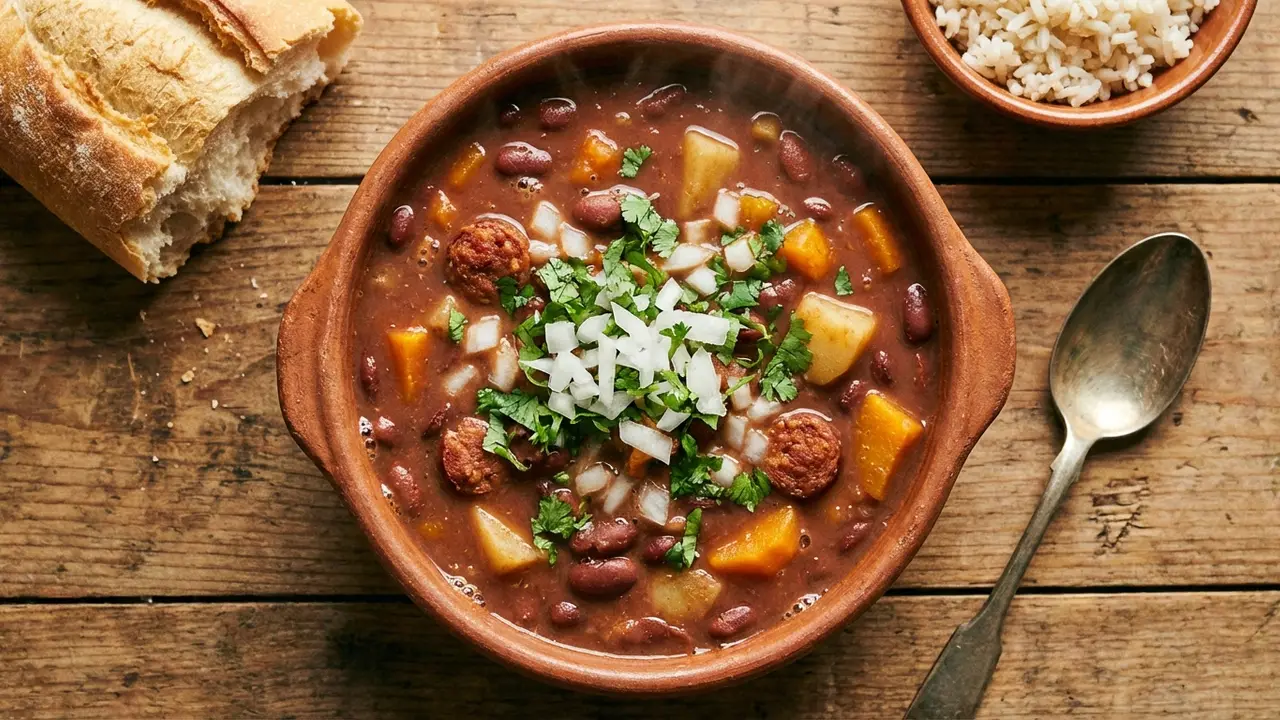
Illustration: Aroma de Cuba (AI)
Potaje de Frijoles Colorados: Cuba’s Most Comforting Red Bean Stew
If there’s one dish that defines the everyday Cuban lunch, it’s potaje de frijoles colorados. It doesn’t have the international fame of the mojito or the festive glamour of lechón asado, but ask any Cuban what food they miss most and the answer is almost always: “a good potaje with white rice.”
A Dish Born from Necessity and Ingenuity
Red kidney beans (Phaseolus vulgaris) arrived in Cuba with Spanish colonizers, but it was Creole creativity that transformed them into potaje. Unlike the fabadas of Asturias that inspired them, Cuban potaje incorporated tropical root vegetables — pumpkin, sweet potato, green plantain — and the sofrito criollo that forms the foundation of all Cuban cuisine.
During the Special Period of the 1990s, red bean potaje became the undisputed star of the Cuban table. With meat scarce, families stretched a pound of beans with backyard root vegetables to feed the entire household. The potaje didn’t just fill stomachs: it filled souls.
The Recipe for Perfect Potaje
Ingredients (serves 6-8)
- 1 pound (450 g) dried red kidney beans
- 200 g pork (ribs, bacon, or pork chunks)
- 1 medium calabaza/tropical pumpkin (about 300 g), peeled and cubed
- 2 medium potatoes, peeled and cubed
- 1 medium boniato (white sweet potato), peeled and cubed
- 1 large green bell pepper
- 1 large onion
- 6 garlic cloves
- 3 tablespoons oil (preferably olive oil)
- 1 teaspoon ground cumin
- 1 teaspoon dried oregano
- 2 bay leaves
- 2 tablespoons white vinegar or dry cooking wine
- Salt and pepper to taste
- A pinch of sugar (optional — a Cuban grandmother’s secret)
Step-by-Step Preparation
1. Soaking and cooking the beans
Soak the beans overnight (8-12 hours) in cold water. Drain, place in a large pot with fresh water covering them by about 3 inches. Add the bay leaves and bring to a boil over medium-high heat, then lower the flame and cook covered for 1.5 to 2 hours until tender but not mushy.
2. The sofrito criollo
In a separate pan, heat the oil and sauté the diced onion until translucent. Add the crushed garlic, diced pepper, cumin, and oregano. Cook 3-4 minutes until the aroma fills the kitchen. This sofrito is the heart of the potaje.
3. Bringing it together
Add the sofrito to the pot with the beans. Add the pork, pumpkin, potato, and sweet potato. The calabaza is key: as it cooks, it partially breaks down and gives the broth its signature creamy texture.
4. Final cooking
Cook over medium heat for another 30-40 minutes. The pumpkin will have dissolved to thicken the broth, the potatoes will be tender, and the pork will have released all its flavor. Add the vinegar, salt, pepper, and that pinch of sugar Cuban grandmothers never forget.
How to Serve Cuban Potaje
The classic presentation is unmistakable: white rice mounded in the center of the plate with the potaje ladled around it, forming a volcano of flavor. Many families add a bistec de palomilla on the side or avocado slices when in season.
Perfect accompaniments include:
- Tostones or sweet plantains
- Avocado salad with onion and lime
- Cuban bread for dipping in the broth
Potaje in Cuban Culture
In Cuba, every family has their potaje recipe, passed down through generations. The differences spark passionate debates: with or without pumpkin? Potato or sweet potato? Pork or jerked beef? Vinegar or dry wine?
Potaje transcends cooking. It’s the dish of family reunions, of domino afternoons, of comfort after a bad day. As Cuban novelist Leonardo Padura has observed: Cuban food tells the story of a people who learned to make much from little.
Regional Variations
- Eastern Cuba (Santiago, Guantánamo): Spicier, with ají cachucha peppers and sometimes green plantain
- Havana: The classic version with pumpkin and potato
- Camagüey: Known for adding Spanish chorizo when available
- Rural Cuba: Made with tasajo (dried salted beef) instead of fresh pork
Tips from a Cuban Cook
- Never add salt at the beginning — it toughens the beans during cooking
- Always crush the garlic, never mince it fine — it releases more essential oils
- Cook over low heat — patience is the secret ingredient
- Potaje tastes better the next day — the flavors concentrate as it rests
Potaje de frijoles colorados isn’t just food: it’s liquid memory, a Cuban grandmother’s hug turned into a recipe. As long as there’s a pot on the stove, Cuba lives on. 🫘
Frequently asked questions
What is the difference between potaje and Cuban black beans?
How long should you soak red beans for Cuban potaje?
What root vegetables go in Cuban potaje?
Can you make potaje de frijoles colorados in a pressure cooker?
How we got here
Background
The first thing we published on this topic.
Cuban Coffee Harvest Promises to Be the Best in Decades
The mountains of the Sierra Maestra produce an exceptional harvest thanks to new agricultural techniques.
Ropa Vieja: The Soul of Cuban Cuisine on a Plate
Discover the history, secrets, and traditional recipe of ropa vieja, Cuba's national dish that has conquered palates around the world.
Related articles
Cuban Shrimp Enchilado: A Creole Heritage from the Caribbean
Recipe and history of Cuban enchilado de camarones, a Creole stew of Haitian origin with tomato sauce, wine, and spices.

The Cuban Guayabera: History, Style & Tropical Elegance
Discover the Cuban guayabera, the Caribbean's most iconic shirt. Its history from Sancti Spíritus, features, how to choose one, and where to buy.
Masitas de Puerco: Cuba's Crispy Fried Pork Chunks You'll Never Forget
Learn the authentic recipe for Cuban masitas de puerco fritas, their peasant roots, and the mojo criollo secrets that make them irresistible.
Cuban Flan: The Caramel Custard That Steals the Show at Every Table
Traditional Cuban flan recipe with condensed milk and caramel. History, tips, and step-by-step guide to this iconic Cuban dessert.
Cuban Medicinal Plants: A Guide to Cuba's Green Medicine Tradition
Discover Cuba's most popular medicinal plants, from aloe vera to lemongrass. History, uses, and traditions of Cuban green medicine.

Cuban Coffee: Complete Guide to Brands, Types & Preparation
Discover the best Cuban coffee brands, preparation styles, and the coffee culture that defines Cuba. Cubita, Serrano, Turquino and more.