Masitas de Puerco: Cuba's Crispy Fried Pork Chunks You'll Never Forget
Learn the authentic recipe for Cuban masitas de puerco fritas, their peasant roots, and the mojo criollo secrets that make them irresistible.
5 min read
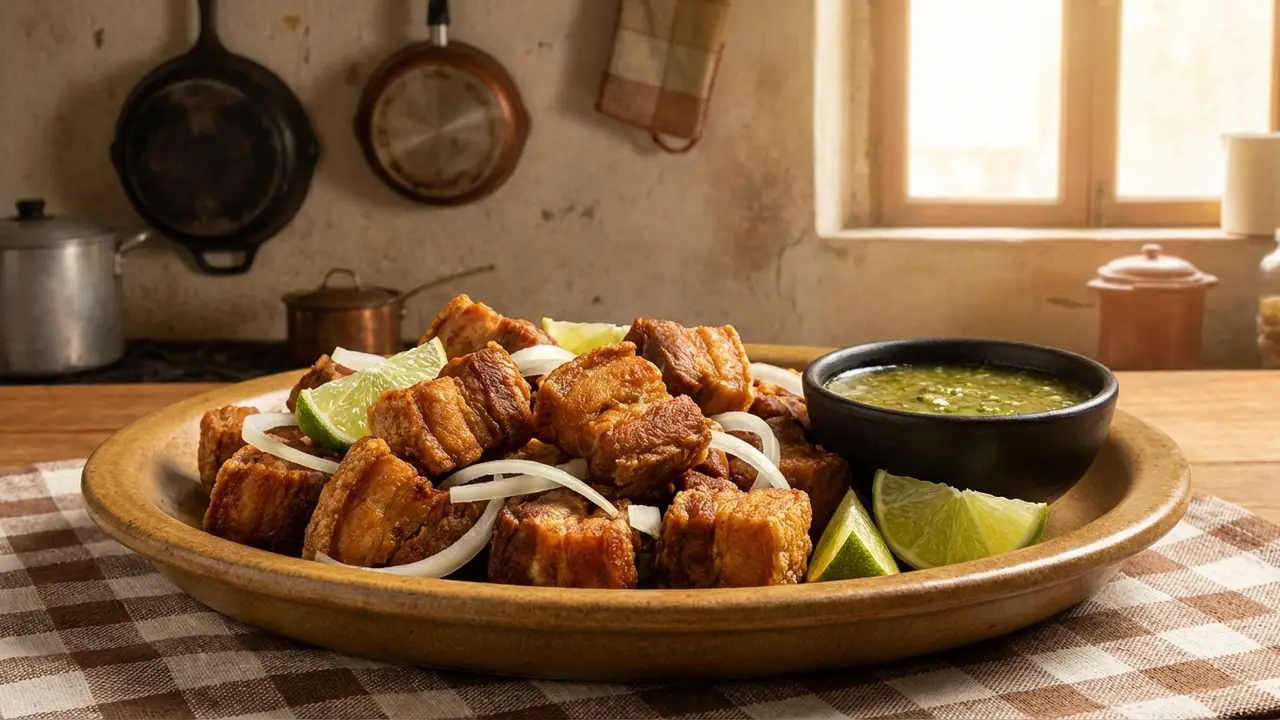
Illustration: Aroma de Cuba (AI)
The art of frying pork the Cuban way
Some dishes need no introduction at a Cuban table. Masitas de puerco fritas are one of them: golden chunks of pork that crackle when you bite in, bathed in the unmistakable aroma of mojo criollo, served with raw onion rings and a generous squeeze of lime.
This isn’t fancy restaurant food. It’s farm food, country party food, Sunday family food for when someone decides today we eat well. And in Cuba, eating well almost always means pork.
From Eastern farms to the national plate
Masitas de puerco have deep roots in Cuban peasant tradition, especially in the eastern provinces where pig farming was a fundamental part of rural life. Unlike lechón asado — which required a whole pig and hours of preparation — masitas were the practical version: pork chunks any family could prepare on any given day.
The technique is simple but precise: marinate, boil, and fry. That three-step process is what distinguishes Cuban masitas from similar preparations across the Caribbean. The mojo marinade — built on sour orange, crushed garlic, and cumin — doesn’t just season the meat, it tenderizes it through the citrus acid.
In Havana, masitas became stars of the fondas and cafeterías that fed workers from the 1940s onward. Served on brown paper with a piece of Cuban bread, they were the perfect lunch: hearty, flavorful, and cheap.
The authentic recipe: no shortcuts
Ingredients (serves 6-8)
- 2.5 lbs pork shoulder, cut into 2-inch chunks
- 1 cup sour orange juice (or 50/50 mix of orange and lime juice)
- 10 garlic cloves, crushed in a mortar
- 1 teaspoon ground cumin
- 1 teaspoon dried oregano
- Salt and black pepper to taste
- 2 cups water
- ¼ cup lard (or vegetable oil)
- 1 large onion, sliced into rings
- 2 limes, cut into wedges
The mojo marinade
In a mortar — or a blender if you don’t have one — crush the garlic with salt into a paste. Mix with sour orange juice, cumin, oregano, and pepper. This is your raw mojo, the soul of the masitas.
Step-by-step preparation
-
Marinate: Place the pork chunks in a deep container, cover with the mojo, and refrigerate for at least 4 hours, ideally overnight. Turn the meat at least once.
-
Boil: Transfer the pork with all its marinade to a large pot. Add 2 cups of water. Cook over medium-low heat for 45 minutes until the meat is tender and the liquid has reduced almost completely.
-
Fry: Here’s where the magic happens. In a heavy skillet (a Cuban caldero is ideal), heat the lard over medium-high heat. Fry the pork chunks without crowding, turning until golden and crispy on all sides, about 8-10 minutes per batch.
-
Serve: Arrange the masitas on a platter, top with raw onion rings, and squeeze lime all over. Some cooks prepare an additional hot mojo — garlic fried in olive oil with sour orange — to drench the masitas just before serving.
Secrets not written in the recipe
The lard matters. Masitas fried in lard have an unmatched flavor. Vegetable oil will give you good results, but not Cuban results.
Don’t rush the boil. The pork needs to cook slowly so the collagen breaks down and the meat turns tender before frying. If you fry it raw, it’ll be tough outside and flavorless inside.
The size of the cut. Not too big, not too small: 2-inch chunks allow the center to stay juicy while the surface gets golden. It’s the same philosophy behind Mexican carnitas, close cousins of masitas.
The onion stays raw. You don’t fry it, you don’t sauté it. Raw onion in thick rings is the fresh, sharp counterpoint that balances the richness of fried pork.
What to serve alongside
Masitas want company:
- Moros y cristianos — the classic black beans and rice
- Yuca con mojo — the perfect side, with its own garlic-citrus bath
- Tostones — because in Cuba, fried food with fried food isn’t a sin, it’s tradition
- Plátanos maduros — the sweet contrast that completes the spread
- Avocado salad with salt, oil, and lime — the freshness that cuts through the fat
Masitas in the diaspora
In Miami, masitas de puerco are a mandatory presence at the ventanitas on Calle Ocho and in Cuban restaurants across Hialeah. Versailles, the gastronomic cathedral of Cuban exile, serves them with their house mojo — they never leave the menu.
In Tampa, where the Cuban community has roots stretching back to the 19th century, masitas share the table with the Cuban sandwich at lunch counters feeding Ybor City workers.
What’s remarkable is that the recipe has barely changed. Unlike other dishes that adapt and fuse, masitas de puerco are prepared today in Hialeah exactly as they were in Camagüey 80 years ago. Perhaps because perfection doesn’t need innovation.
More than food: identity
Masitas de puerco fritas aren’t just a dish. They’re an act of culinary memory, a connection to the rural Cuba that lives on in every kitchen where garlic is crushed in a mortar and sour orange is squeezed over freshly cut pork.
Every golden chunk tells a story of families raising their own pigs, of parties where the scent of mojo floated over sugarcane fields, of grandmothers who measured garlic by the fistful and love by the spoonful.
Make them this weekend. Your kitchen will smell like Cuba. 🐷
Frequently asked questions
What cut of pork is best for Cuban masitas?
Can I substitute sour orange in the mojo?
How long should you marinate masitas de puerco?
What's the difference between masitas de puerco and chicharrones?
How we got here
Background
The first thing we published on this topic.
Cuban Coffee Harvest Promises to Be the Best in Decades
The mountains of the Sierra Maestra produce an exceptional harvest thanks to new agricultural techniques.
Ropa Vieja: The Soul of Cuban Cuisine on a Plate
Discover the history, secrets, and traditional recipe of ropa vieja, Cuba's national dish that has conquered palates around the world.
Related articles
Cuban Flan: The Caramel Custard That Steals the Show at Every Table
Traditional Cuban flan recipe with condensed milk and caramel. History, tips, and step-by-step guide to this iconic Cuban dessert.
Cuban Medicinal Plants: A Guide to Cuba's Green Medicine Tradition
Discover Cuba's most popular medicinal plants, from aloe vera to lemongrass. History, uses, and traditions of Cuban green medicine.
Potaje de Frijoles Colorados: Cuba's Most Comforting Red Bean Stew
Learn how to make authentic Cuban potaje de frijoles colorados, a hearty red bean stew with pumpkin, pork, and Creole spices.
The Cuban Guayabera: History, Style & Tropical Elegance
Discover the Cuban guayabera, the Caribbean's most iconic shirt. Its history from Sancti Spíritus, features, how to choose one, and where to buy.
The Daiquiri: Story of the Cocktail Born in Cuba's Iron Mines
Discover the history of the Daiquiri, the Cuban cocktail Hemingway loved. From Santiago's mines to El Floridita in Havana.
Arroz Imperial: Cuba's Showstopping Layered Rice Casserole
Discover arroz imperial, the Cuban layered rice casserole with chicken, mayo, and melted cheese. History, step-by-step recipe, and tips.