Cuban Chicken Fricassee: From France to the Criollo Kitchen
Authentic Cuban fricasé de pollo recipe and history. A French technique transformed by Caribbean flavors with olives, potatoes, and dry wine.
5 min read
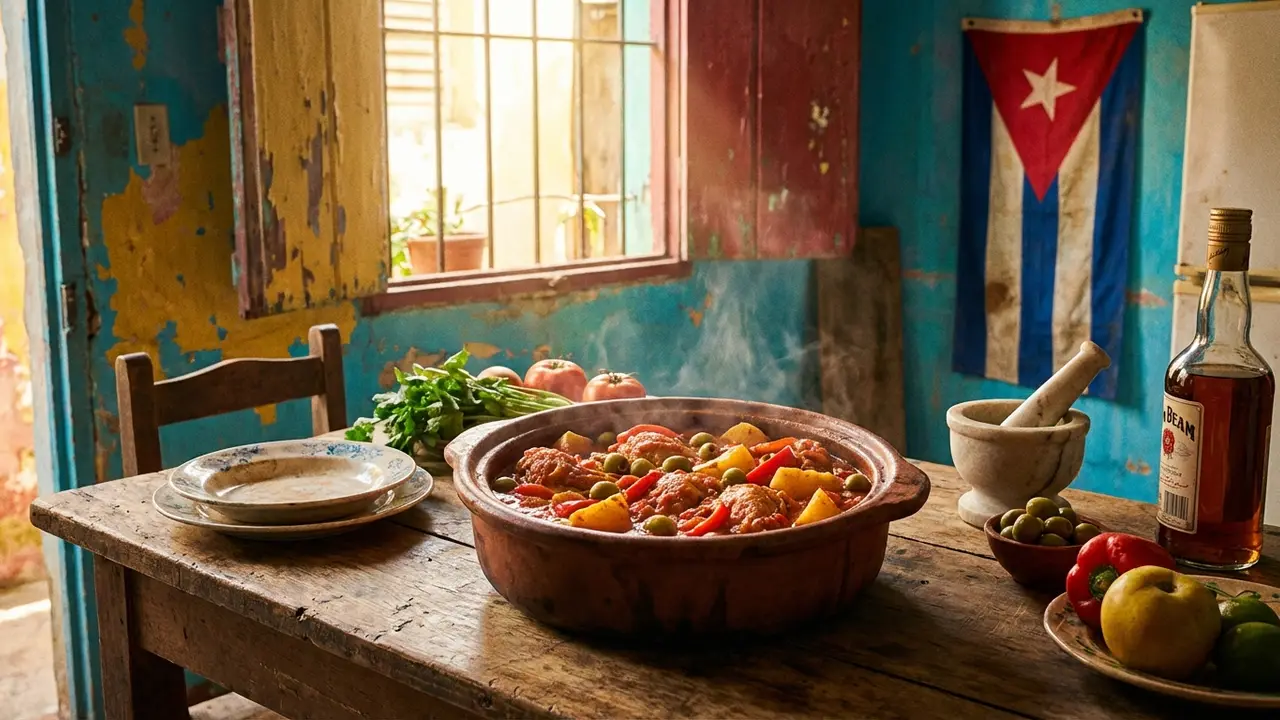
Illustration: Aroma de Cuba (AI)
A Stew with a French Accent and a Cuban Soul
Fricasé de pollo is one of those dishes every Cuban family recognizes by smell before they see it. That unmistakable aroma of chicken browning in oil, the sofrito of onion and garlic deepening in color, the potatoes starting to soften in a thick tomato sauce studded with green olives. It’s Sunday food. Rainy day food. “Grandma cooked today” food.
What few people know is that this humble criollo stew has aristocratic roots. Its name comes from the French fricassée, a cooking technique that arrived in the Caribbean during European colonization. But between Havana and Paris lies an ocean of difference — and flavor.
From French Fricassée to the Cuban Caldero
The original French fricassée is a delicate affair: chicken simmered in a creamy white sauce with butter, mushrooms, and fine herbs. Elegant, restrained, refined. Everything the Cuban version decided not to be.
When the technique crossed the Atlantic, Cuba made it her own. Out with the white sauce, in with tomato. Out with butter, in with olive oil. Out with mushrooms, in with green olives and capers. And most importantly: in with potatoes, which soak up that sauce like flavor sponges.
The result keeps only the essence of its ancestor — meat braised in sauce — but sounds, smells, and tastes entirely Cuban.
The Authentic Cuban Fricasé Recipe
Ingredients (serves 6)
- 1 whole chicken, cut into pieces (or 8 thighs/drumsticks)
- 4 medium potatoes, peeled and quartered
- 1 large onion, finely diced
- 6 garlic cloves, crushed
- 1 green bell pepper, cut into strips
- 1 can tomato sauce (8 oz)
- ½ cup dry white wine (vino seco)
- ½ cup pimiento-stuffed green olives
- 2 tablespoons olive oil
- 1 bay leaf
- ½ teaspoon ground cumin
- ½ teaspoon dried oregano
- Salt, pepper, and lime juice to taste
Instructions
1. Marinate the chicken. Mix crushed garlic with salt, cumin, oregano, and lime juice. Rub each piece thoroughly and let rest at least 30 minutes (a few hours in the fridge is better).
2. Brown the chicken. In a large dutch oven or heavy pot, heat olive oil over medium-high heat. Brown the chicken on all sides without cooking through, about 3-4 minutes per side. Remove and set aside.
3. Build the sofrito. In the same fat, sauté onion and pepper until translucent, about 5 minutes. Add remaining garlic and cook one more minute.
4. Create the sauce. Add tomato sauce, dry wine, and bay leaf. Stir well, scraping up the browned bits from the bottom of the pot (that’s where the flavor lives). Simmer 2-3 minutes.
5. Braise. Return the chicken to the pot. Add water or chicken broth until pieces are nearly covered. Cover and cook over medium-low heat for 20 minutes.
6. Add potatoes and olives. Add the potatoes and olives. Cover again and cook another 20-25 minutes until potatoes are tender and the sauce has thickened. Adjust salt and pepper.
7. Serve. With a mountain of white rice. There is no other way.
The Secret Is Patience
Fricasé cannot be rushed. The magic happens when the chicken has spent enough time in that thick sauce for every fiber to absorb the flavor of tomato, garlic, and wine. The potatoes, half-dissolved at the edges but firm inside, act as a natural thickener.
And those olives — those pimiento-stuffed green olives that appear in every self-respecting Cuban stew — bring a salty, briny punch that balances the sweetness of the tomato.
A Family Dish
As My Big Fat Cuban Family recounts, fricasé is the dish Cuban mothers make when they want to impress without appearing to try. It’s the answer to “what should I cook?” when unexpected guests arrive, when the budget is tight but culinary pride won’t negotiate.
In the fondas of Havana and the kitchens of Miami, Hialeah, and Union City, fricasé remains an essential reference. It doesn’t need expensive ingredients or complicated techniques. Just a heavy pot, time, and that criollo instinct that turns the simple into the unforgettable.
Variations Worth Trying
- With capers: Add two tablespoons alongside the olives for extra tang.
- With beer: Replace the wine with half a can of light beer for a subtle bitterness.
- With raisins: Some families from eastern Cuba add a handful, following Spanish tradition.
- Pork fricasé: The same recipe works beautifully with pork chops or pork chunks.
From France to Your Table, Via Cuba
Cuban chicken fricassee is living proof that Cuban cuisine doesn’t copy — it transforms. It took a refined European recipe and turned it into people’s food, daily sustenance, emotional memory. Every spoonful of that thick sauce over white rice tells a story of culinary mestizaje that’s been simmering for centuries.
Make your fricasé. And when the aroma fills your house, you’ll know Cuba is in your kitchen.
Frequently asked questions
What is Cuban chicken fricassee (fricasé de pollo)?
What makes Cuban fricassee different from French fricassée?
Can you make Cuban fricasé without dry wine?
What do you serve with Cuban chicken fricassee?
How we got here
Background
The first thing we published on this topic.
Cuban Coffee Harvest Promises to Be the Best in Decades
The mountains of the Sierra Maestra produce an exceptional harvest thanks to new agricultural techniques.
Ropa Vieja: The Soul of Cuban Cuisine on a Plate
Discover the history, secrets, and traditional recipe of ropa vieja, Cuba's national dish that has conquered palates around the world.
Related articles
The Cuban Guayabera: History, Style & Tropical Elegance
Discover the Cuban guayabera, the Caribbean's most iconic shirt. Its history from Sancti Spíritus, features, how to choose one, and where to buy.
Casquitos de Guayaba: Cuba's Sweetest Guava Shell Dessert
Traditional Cuban guava shells in syrup with cream cheese. Learn the authentic recipe, history, and secrets of this beloved Caribbean dessert.

The Cuban Sillón: History & Tradition of Cuba's Rocking Chair
Guide to the Cuban sillón, the rocking chair that defines Caribbean life. History, types, craftsmen, superstitions, and where to buy Cuban rocking chairs.
Ropa Vieja: The Story Behind Cuba's Beloved National Dish
Discover ropa vieja, Cuba's national dish. From Sephardic origins to Caribbean kitchens, the history and authentic recipe.
Baracoa Chocolate: Cuba's Best-Kept Sweet Secret
Baracoa produces 75% of Cuban cacao. Discover the history, farms, and delicious chorote of this Caribbean chocolate capital.
Cuban Picadillo: The Ultimate Comfort Food Recipe from Havana
Master authentic Cuban picadillo with olives and raisins. Learn the history, ingredients, and secrets of this beloved Caribbean dish.