Cuban Peanut Turrón: The Beloved Street Sweet You Need to Try
Discover turrón de maní, Cuba's iconic peanut nougat. History, traditional 2-ingredient recipe, and where to buy it.
5 min read
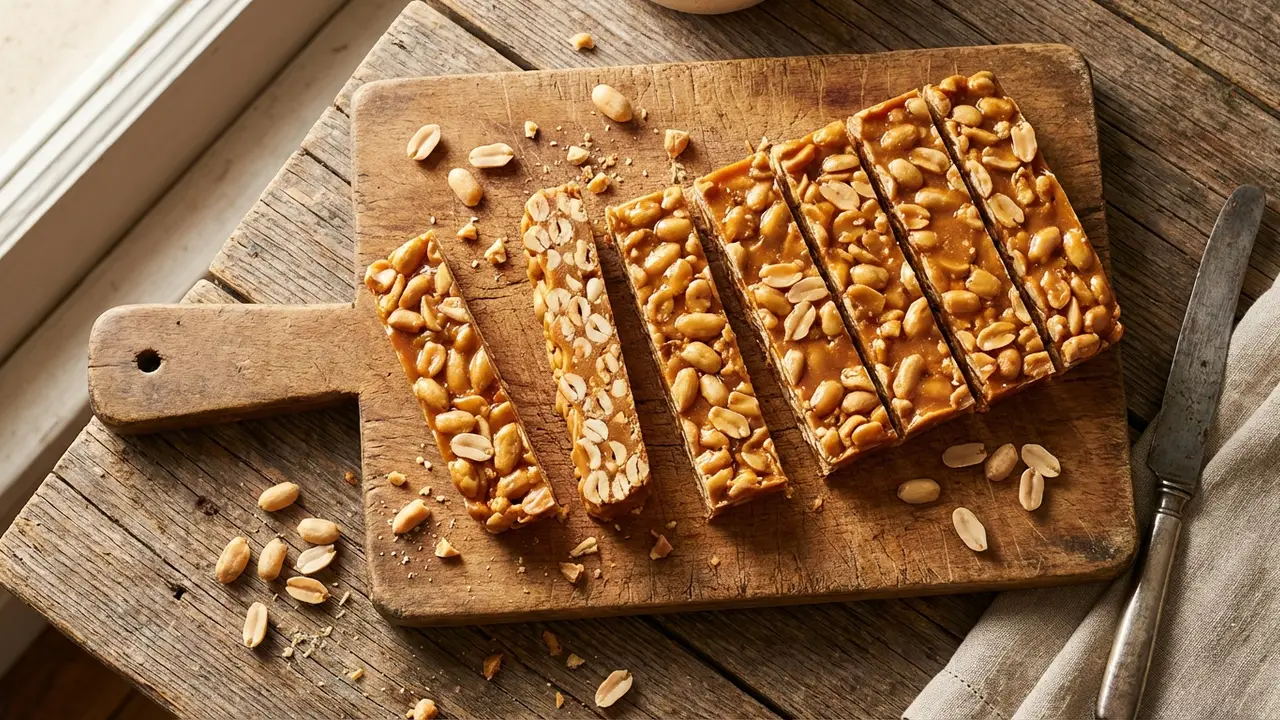
Illustration: Aroma de Cuba (AI)
If there’s one sweet that defines street-level Cuba — the flavor of Havana doorways and schoolyard recesses — it’s turrón de maní. Two ingredients, zero pretension, and a taste no Cuban, wherever they live, can ever forget.
A Sweet with Deep Roots
Turrón traces its origins to the Spanish turrón de Alicante, a Christmas confection made with almonds and honey that arrived in the Caribbean during colonization. But in Cuba, as with everything, the island made it its own: almonds were swapped for peanuts — abundant, affordable, and delicious — and an entirely new candy was born.
Peanuts (Arachis hypogaea) were already cultivated by the Taíno peoples long before the Spanish arrived. The fusion of Spanish nougat-making techniques with the native nut created one of Cuban gastronomy’s most democratic products: accessible to everyone, from rural farmers to city dwellers.
The Peanut Vendor’s Song
You can’t talk about turrón de maní without mentioning the manicero — that iconic figure of Cuban streets who sells roasted peanuts and turrón with an unmistakable call. Composer Moisés Simons immortalized this tradition in 1928 with his song “El Manisero” (The Peanut Vendor), which became the first Cuban musical hit to conquer the world, selling over one million copies.
“Maní, maní… if you want some fun for your lips, eat a little cone of peanuts…”
That melody, recorded by Rita Montaner and popularized internationally by Antonio Machín, put the humble peanut vendor on the global music map.
Two Versions, One Love
Whole Peanut Turrón
The classic version: whole roasted peanuts bathed in golden, hard caramel. Sold in rectangular bars that crack with every bite. This is the one you find at bus stops and street vendors, wrapped in paper or cellophane.
Texture: Crunchy, with peanut chunks that break off as you bite.
Ground Peanut Turrón (Molido)
The quintessential homemade version: peanuts are ground before mixing with melted sugar, creating a compact, dense mass. Cut into smaller squares or rectangles. Many Cuban families have their own recipe, passed down from grandmothers to granddaughters.
Texture: Softer, like a granulated bar that melts in your mouth.
The Traditional Recipe (Just 2 Ingredients)
The beauty of Cuban peanut turrón lies in its absolute simplicity:
Ingredients
- 2 cups roasted peanuts (unsalted, skinless)
- 1 cup white sugar
Instructions
- Toast the peanuts in a dry skillet over medium heat, stirring constantly until golden and fragrant (5-7 minutes).
- Melt the sugar in a saucepan over medium-low heat without stirring. Let it melt on its own until it forms a golden caramel (hard ball stage).
- Add the peanuts to the caramel all at once and mix quickly with a wooden spoon.
- Pour immediately onto a greased surface or wax paper.
- Flatten with the spoon or a greased rolling pin to 1-2 cm thickness.
- Cut into bars before it cools completely.
- Let cool completely before serving.
The Cuban secret: Some families add a few drops of lime juice to the caramel to prevent crystallization, or a pinch of salt to enhance the peanut flavor.
Popular Variations
- With honey: Replace some sugar with Cuban bee honey for a deeper flavor
- With milk: Add condensed milk for a creamier version
- With coconut: Mix toasted shredded coconut with the peanuts — an irresistible tropical fusion
- With sesame: Add sesame seeds for extra texture
More Than a Candy: A Cultural Heritage
Peanut turrón is part of Cuba’s popular gastronomic heritage. It represents:
- The economy of survival: With just two basic ingredients, any family could prepare a delicious treat during times of scarcity.
- Street entrepreneurship: Generations of Cubans have earned their livelihood selling turrón door to door or on street corners.
- The universal snack: In Cuban schools, peanut turrón was (and still is) the quintessential recess treat.
- Diaspora nostalgia: For Cubans in exile, the taste of turrón evokes childhood, the island, and family.
Where to Buy Cuban Peanut Turrón
In Cuba
Turrón is found literally on every corner. Street vendors offer individual bars at accessible prices. Agricultural markets and artisanal candy shops also sell it by weight.
In the United States
- Cuban Food Market — Authentic individual bars
- Amazon — Cuban turrón packs with Prime shipping
- Pintón Peanut — Traditional recipe, specialized brand
- Etsy (artisanal) — Handmade homestyle versions
- Sabroso Miami — Ground turrón Cuban style
- Sedano’s and South Florida bodegas — In the Latin candy aisle
In Spain
Latin product stores and some supermarkets with Caribbean sections carry imported or artisanal versions.
Peanuts in Cuban Culture
Peanuts transcend turrón. In Cuba, the humble nut appears in:
- El Manisero by Moisés Simons — the song that changed Latin music
- Cucuruchos de maní — salted roasted peanuts sold in paper cones
- Maní garrapiñado — peanuts coated in red or pink candy
- Homemade peanut butter — a tradition that survives in Cuban kitchens
- The Cuban sweet tradition — where peanuts star alongside guava and coconut
A Flavor You Never Forget
Cuban peanut turrón proves that culinary greatness doesn’t need expensive ingredients or complicated techniques. It needs tradition, roasted peanuts, and the right caramel temperature. Like guarapo or Cuban coffee, it’s one of those flavors that transports you directly to the island.
Wherever there’s a Cuban, there’s someone who knows how to make turrón de maní. And wherever someone tries it for the first time, a new fan is born.
Do you have your own family recipe for peanut turrón? The tradition stays alive in every Cuban kitchen around the world.
Frequently asked questions
What is Cuban turrón de maní?
How many ingredients does turrón de maní need?
Where can I buy Cuban peanut turrón in the United States?
What's the difference between whole and ground peanut turrón?
How we got here
Background
The first thing we published on this topic.
Cuban Coffee Harvest Promises to Be the Best in Decades
The mountains of the Sierra Maestra produce an exceptional harvest thanks to new agricultural techniques.
Ropa Vieja: The Soul of Cuban Cuisine on a Plate
Discover the history, secrets, and traditional recipe of ropa vieja, Cuba's national dish that has conquered palates around the world.
Related articles
Yarey Hat: Cuba's Iconic Countryside Symbol and National Heritage
Discover the Cuban yarey hat, an intangible national heritage. History, artisanal craft process, origins in Camajuaní, and where to buy one.
The Cuban Guayabera: History, Style & Tropical Elegance
Discover the Cuban guayabera, the Caribbean's most iconic shirt. Its history from Sancti Spíritus, features, how to choose one, and where to buy.
Bistec de Palomilla: Cuba's Beloved Steak Cooked with Pure Love
Authentic Cuban palomilla steak recipe with onions, garlic, and lime. History, technique, and secrets of this criolla kitchen classic.
Cuban Beer: Complete Guide to Cristal, Bucanero, and Hatuey
Discover Cuba's most popular beers: Cristal, Bucanero, Hatuey, and Polar. History, flavors, and where to find them worldwide.
Cuban Flan: The Caramel Custard That Steals the Show at Every Table
Traditional Cuban flan recipe with condensed milk and caramel. History, tips, and step-by-step guide to this iconic Cuban dessert.
Cuban Medicinal Plants: A Guide to Cuba's Green Medicine Tradition
Discover Cuba's most popular medicinal plants, from aloe vera to lemongrass. History, uses, and traditions of Cuban green medicine.