Yarey Hat: Cuba's Iconic Countryside Symbol and National Heritage
Discover the Cuban yarey hat, an intangible national heritage. History, artisanal craft process, origins in Camajuaní, and where to buy one.
5 min read
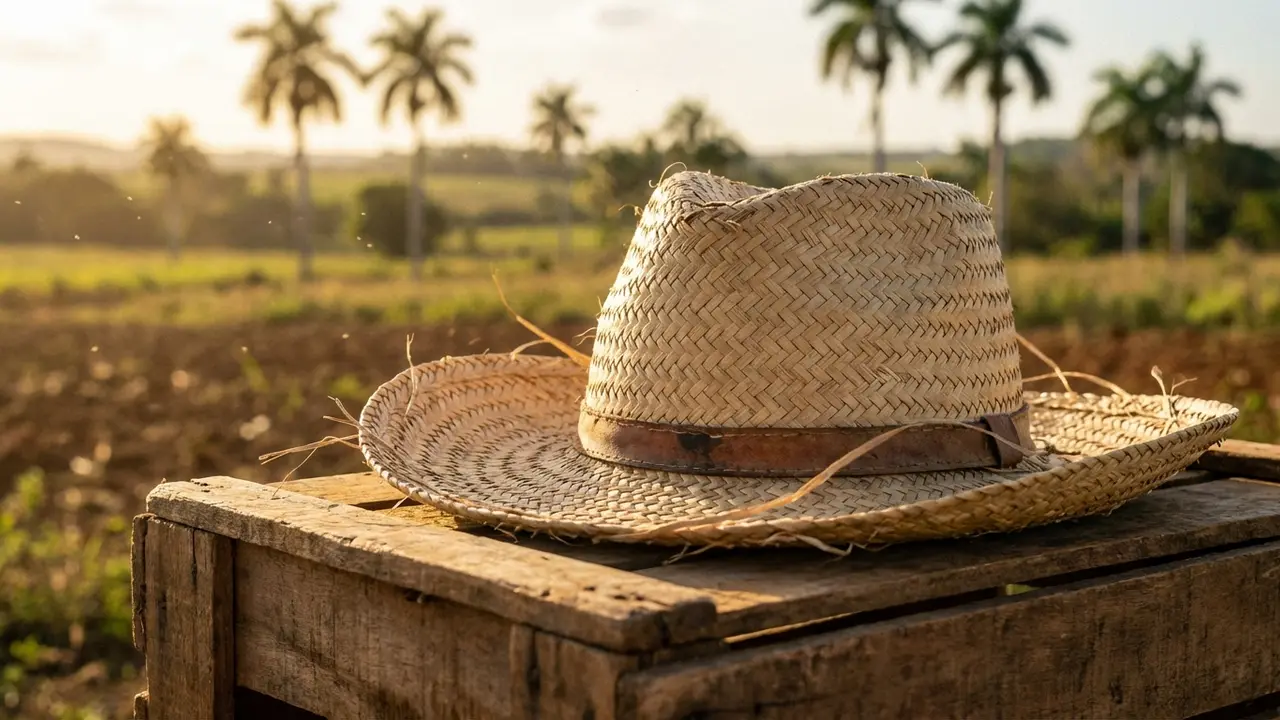
Illustration: Aroma de Cuba (AI)
The Hat That Tells Cuba’s Story
If one garment defines the Cuban farmer, it’s the yarey hat. Wide-brimmed, light as a breeze, and cool under the relentless Caribbean sun, this hat isn’t just an accessory — it’s a symbol of national identity that has accompanied Cuba since its earliest days.
The mambises wore it during the wars of independence with the Cuban cockade. Guajiros (farmers) have used it for generations to shield themselves from the sun in sugarcane and tobacco fields. Today, tourists and Cubans alike wear it as an emblem of cubanía.
Origin: Camajuaní, Cradle of Yarey
The yarey hat was born in Camajuaní, a municipality in Villa Clara province, in the heart of Cuba. Cultural and sociological research traces it to this central region, where farmers first began weaving fibers from the yarey palm (Copernicia yarey) into practical, affordable hats.
The yarey palm — also called guano — is an endemic species that grows abundantly across Cuban plains and savannas. From its leaves come the fibers that give life to this unique hat.
The Art of Weaving Yarey
Making a yarey hat is an artisanal process passed down through generations:
Harvesting
Yarey leaves are preferably cut at night during a waning moon, following a farming tradition believed to ensure greater fiber flexibility. They’re left to mature for about ten days before working.
Preparation
The leaves are split into thin strips and sorted by quality and thickness. The finest fibers produce tighter braids and more valuable hats.
Weaving
The strips are braided into long strands that are then sewn in a spiral, shaping the crown and brim. Only three tools are needed: yarey fibers, strong thread, and a large needle.
Finishing
The hat may feature colored ribbons around the crown base, be dyed or left in its natural straw color. Some artisans add pins, flowers, or decorative designs.
More Than a Hat: Intangible Heritage
The yarey hat isn’t just any garment. Along with other crafts from central Cuba, it was declared intangible national heritage — recognizing the knowledge, skills, and customs it represents.
It fuses past and present, speaking to:
- The economic and social origins of rural Cuba
- Artisanal skills passed through generations
- Rural customs that define campesino identity
- The resourcefulness of a people who transform nature into art
Varieties and Styles
Not all yarey hats are the same. Artisans craft them in multiple styles:
| Style | Features | Use |
|---|---|---|
| Classic farmer | Wide, straight brim, tall crown | Agricultural work |
| Dress | Moderate brim, fine finish | Country fiestas, outings |
| Women’s | Upturned brim, flower decorations | Daily wear, events |
| Tourist | Colored ribbons, smaller size | Souvenir, fashion |
Beyond hats, the same weaving technique produces baskets, handbags, fans, and placemats — an entire artisanal industry built around the yarey palm.
Yarey in Cuban Culture
In Music
The yarey hat stars in countless country songs. The celebrated Cándido Fabré immortalized the line “¿Quién ha visto por ahí mi sombrero de yarey?” (Who’s seen my yarey hat?), and in punto cubano — a UNESCO heritage tradition — the hat is the improvising poet’s inseparable prop.
In the Wars of Independence
The mambises adopted the yarey hat as part of their improvised uniform during the wars against Spain (1868-1898). They decorated it with the Cuban cockade — a symbol of rebellion that turned a peasant garment into an emblem of freedom.
In the 20th Century
The 1959 Peasant Rally in Havana brought hundreds of thousands of yarey hats to the capital, creating one of the most iconic images of revolutionary Cuba.
Where to Buy Yarey Hats
In Cuba
- Havana Craft Market (by the harbor): Wide variety of styles and prices
- Trinidad: Local artisans sell directly on the cobblestone streets
- Camajuaní, Villa Clara: The birthplace of yarey, where you’ll find the most authentic hats
- ANAP Fairs (National Association of Small Farmers): Direct campesino products
Abroad
- Miami, Calle Ocho: Cuban craft shops
- Etsy: Independent artisans sell hand-woven hats
- Latin markets: In cities with Cuban communities like Union City, NJ and Houston, TX
Care and Conservation
To make your yarey hat last for years:
- Store in a cool, dry place — excess humidity can cause mold
- Don’t crush it — place it upside down or on a hat stand
- Clean with a damp cloth — yarey can be gently washed
- Avoid prolonged water exposure — while resistant, excess water weakens the fibers
- Reshape with steam if it loses its form — yarey is malleable
A Living Legacy
In an era of factory hats and imported caps, the yarey hat survives as testimony to the relationship between Cubans and their land. Each hand-woven hat carries centuries of tradition, the aroma of the Cuban countryside, and the skill of hands that refuse to let an art form die.
As José Martí wrote: “I am a child of the Americas, and to them I owe myself.” The yarey hat is a child of Cuba — of its palms, its farmers, and its history — and to Cuba it belongs.
Do you own a yarey hat? Read more about traditional Cuban crafts and the guayabera, another iconic Cuban garment.
Frequently asked questions
What is a Cuban yarey hat made of?
Where did the yarey hat originate?
Is the yarey hat part of Cuba's cultural heritage?
Where can I buy an authentic yarey hat?
How we got here
Background
The first thing we published on this topic.
Habanos: Complete Guide to the Most Prestigious Cuban Cigars
Cohiba, Montecristo, Romeo y Julieta — discover the legendary Cuban cigar brands, how to choose them, and where to buy them.
Cuban Rum: Complete Guide to Brands, History, and How to Enjoy It
Discover the world of Cuban rum: from Havana Club to Santiago de Cuba. History, legendary brands, aging types, and secrets to tasting it like an expert.
Related articles
The Cuban Guayabera: History, Style & Tropical Elegance
Discover the Cuban guayabera, the Caribbean's most iconic shirt. Its history from Sancti Spíritus, features, how to choose one, and where to buy.
Cuban Medicinal Plants: A Guide to Cuba's Green Medicine Tradition
Discover Cuba's most popular medicinal plants, from aloe vera to lemongrass. History, uses, and traditions of Cuban green medicine.
Cuban Casabe: The Ancient Taíno Cassava Bread, UNESCO Heritage
Complete guide to Cuban casabe, the cassava flatbread inherited from the Taínos. History, preparation, UNESCO 2024 recognition, and where to buy.
Cuban Bread: History, Recipe, and the Palmetto Leaf Secret
Discover the history of Cuban bread from Ybor City to your table. Traditional recipe, palmetto leaf technique, and where to find it.
Cuban Chocolate and Baracoa Cacao: The Caribbean's Best-Kept Secret
Discover Baracoa cacao, the heart of Cuban chocolate. History, international brands, and the new Baracocoa venture reviving Cuba's chocolate industry.
The Cuban Sillón: History & Tradition of Cuba's Rocking Chair
Guide to the Cuban sillón, the rocking chair that defines Caribbean life. History, types, craftsmen, superstitions, and where to buy Cuban rocking chairs.