Batido de Mamey: The Cuban Milkshake That Tastes Like the Tropics
Discover the Cuban batido de mamey — its history, traditional recipe, and why this tropical fruit milkshake is the soul of Cuban fruterías.
5 min read
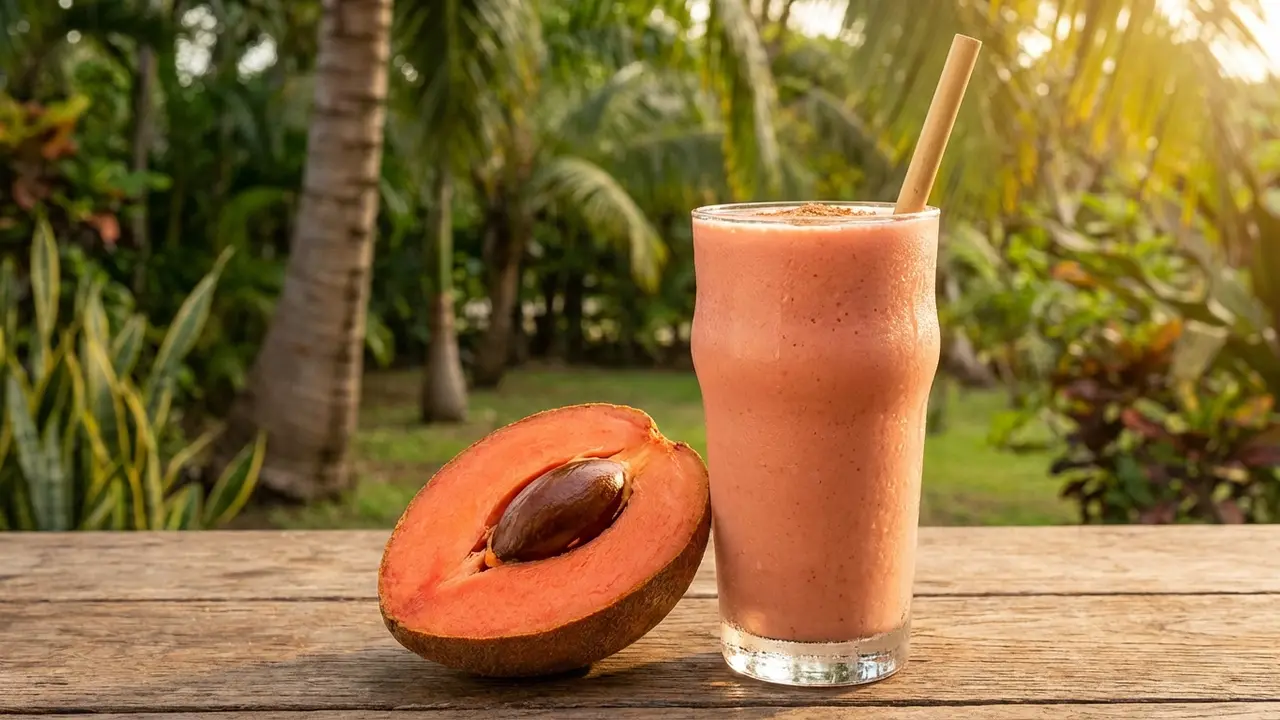
Illustration: Aroma de Cuba (AI)
The fruit that defines the Cuban tropics
Some fruits nourish. Some fruits transport you. Mamey sapote (Pouteria sapota) does both. In Cuba, where mamey trees have grown in backyards and farms for centuries, this rough-skinned fruit with its sunset-colored flesh is far more than an ingredient — it’s a symbol of identity.
And its most perfect expression is the batido de mamey — that thick, creamy, pink milkshake served at fruterías in Havana, through the ventanitas of Miami, and in the kitchens of any Cuban family lucky enough to find a ripe one.
History: from Taíno tree to Cuban glass
Mamey sapote is native to Mesoamerica and the Caribbean. The Taíno people — Cuba’s original inhabitants — ate it long before the Spanish arrived. Its name comes from the Taíno word mamey, documented by Spanish chroniclers in the 16th century.
Friar Bartolomé de las Casas wrote of “a large fruit with red flesh, of very sweet and pleasant flavor” — almost certainly the mamey. During the colonial era, mamey trees were planted across the island, becoming one of the most common fruit trees in the Cuban countryside.
The batido as a preparation was born in 20th-century Cuban fruterías and cafeterías, where the electric blender transformed tropical fruits into refreshing drinks. After the Cuban emigration to Miami following 1959, the batido de mamey crossed the Florida Strait and became an icon of Cuban-American cuisine.
How to choose the perfect mamey
Mamey requires patience. It’s a fruit that won’t be rushed — it can take up to two years to ripen on the tree. To tell if it’s ready:
- The scratch test: lightly scrape the skin with your fingernail. If green appears underneath, it’s not ripe; if it’s pink or orange, it’s ready.
- Texture: it should yield slightly to pressure, like a ripe avocado.
- Aroma: a ripe mamey gives off an unmistakable sweet, earthy perfume.
In Cuba, street vendors calling out “¡Mameeey!” know these secrets by heart. In Miami, Latin markets along Calle Ocho carry fresh mamey in season (February through September) and frozen pulp year-round.
Recipe: Cuban Batido de Mamey
Ingredients (2 large glasses)
- 1 ripe mamey sapote (about 2 cups of flesh)
- 1 cup cold whole milk
- ½ cup condensed milk (or sugar to taste)
- 1 cup ice
- ½ teaspoon vanilla extract
- Pinch of cinnamon (optional)
Instructions
- Cut the mamey in half lengthwise. Remove the large, dark seed from the center (in Cuba it’s kept as decoration — its polished surface looks like burnished wood).
- Scoop out the flesh with a spoon. It should be soft and deep salmon-colored.
- Blend the flesh with milk, condensed milk, ice, and vanilla for 30-40 seconds until smooth and creamy.
- Taste and adjust sweetness. Ripe mamey is naturally sweet, so start with less sugar.
- Serve immediately in tall glasses. Sprinkle cinnamon on top if desired.
Popular variations
- Mamey batido with Cuban coffee: add a shot of Cuban espresso for a caffeinated batido.
- Frozen version: freeze the pulp in cubes and blend without extra ice — it comes out like a smoothie bowl.
- With María crackers: some Cuban families blend in crushed María crackers to thicken it. The ultimate comfort drink.
- Goya Foods style: use frozen pulp when fresh mamey isn’t available — the result is surprisingly good.
Mamey in Cuban culture
Mamey isn’t just food — it’s woven into Cuban vocabulary and daily life:
- “Ser un mamey” is a Cuban expression meaning to be a sweet, kind, agreeable person.
- Mamey seeds were traditionally used to make an oil that Cuban women applied to their hair for shine and strength.
- In Cuban Santería, mamey is associated with Oshún, the orisha of love and sweetness, because of its orange color and sweet taste.
- The National Botanical Garden of Cuba preserves ancestral mamey varieties as part of the island’s agricultural heritage.
Where to drink the best batido de mamey
In Cuba
The fruterías of Havana — especially those in Vedado and Centro Habana — make batidos with fresh mamey when it’s in season. The corner frutería with no name or sign is almost always the best one.
In Miami
The ventanita at Versailles Restaurant on Calle Ocho is legendary for its batidos. La Carreta and the countless cafés in Hialeah also stand out, where the batido de mamey competes with batido de trigo for the title of favorite.
At home
With frozen pulp (available in the freezer section of any Hispanic supermarket), you can recreate the batido anywhere in the world. Brands like Goya and La Fe distribute mamey pulp across the United States.
Nutritional value
Mamey is a tropical nutritional powerhouse:
| Nutrient | Per cup (175g) |
|---|---|
| Calories | 217 |
| Fiber | 9.5g |
| Vitamin C | 35% daily value |
| Vitamin A | 25% daily value |
| Vitamin B6 | 45% daily value |
| Potassium | 15% daily value |
According to the USDA Food Data Central, mamey sapote is one of the tropical fruits with the highest fiber and vitamin B6 content, surpassing even mango and papaya.
The batido de mamey is Cuba in a glass: sweet, tropical, comforting, and with roots reaching back to the Taínos. Make one, close your eyes, and let it take you to the tropics. If you love Cuban drinks, don’t miss our guide to guarapo and tropical juices.
Frequently asked questions
What is mamey sapote and what does it taste like?
How do you make a traditional Cuban batido de mamey?
Where can I find mamey outside of Cuba?
Does the mamey milkshake have nutritional benefits?
How we got here
Background
The first thing we published on this topic.
Cuban Coffee Harvest Promises to Be the Best in Decades
The mountains of the Sierra Maestra produce an exceptional harvest thanks to new agricultural techniques.
Ropa Vieja: The Soul of Cuban Cuisine on a Plate
Discover the history, secrets, and traditional recipe of ropa vieja, Cuba's national dish that has conquered palates around the world.
Related articles
Cuban Tropical Fruits: Mamey, Mango, Guava and Caribbean Flavors
Discover Cuba's tropical fruits: mamey sapote, Cuban mango, guava, sugar apple and papaya. Complete guide to Caribbean flavors.
Natilla Cubana: The Creamy Cuban Custard That Tastes Like Home
Discover natilla cubana, the cinnamon-infused custard that defines Cuban comfort. History, step-by-step recipe, and abuela's secrets.
Cuban Bread: History, Recipe, and the Palmetto Leaf Secret
Discover the history of Cuban bread from Ybor City to your table. Traditional recipe, palmetto leaf technique, and where to find it.
Coquitos Acaramelados: Cuba's Most Beloved Coconut Sweet
Discover the history, traditional recipe, and varieties of Cuban caramelized coconut balls — the treat that defined childhood on the island.
Cuban Casabe: The Ancient Taíno Cassava Bread, UNESCO Heritage
Complete guide to Cuban casabe, the cassava flatbread inherited from the Taínos. History, preparation, UNESCO 2024 recognition, and where to buy.

The Cuban Sillón: History & Tradition of Cuba's Rocking Chair
Guide to the Cuban sillón, the rocking chair that defines Caribbean life. History, types, craftsmen, superstitions, and where to buy Cuban rocking chairs.