Caldosa Cubana: The Community Soup That Feeds the Block
History, traditional recipe, and secrets of Cuban caldosa, the hearty stew that unites neighbors at every celebration on the island.
5 min read
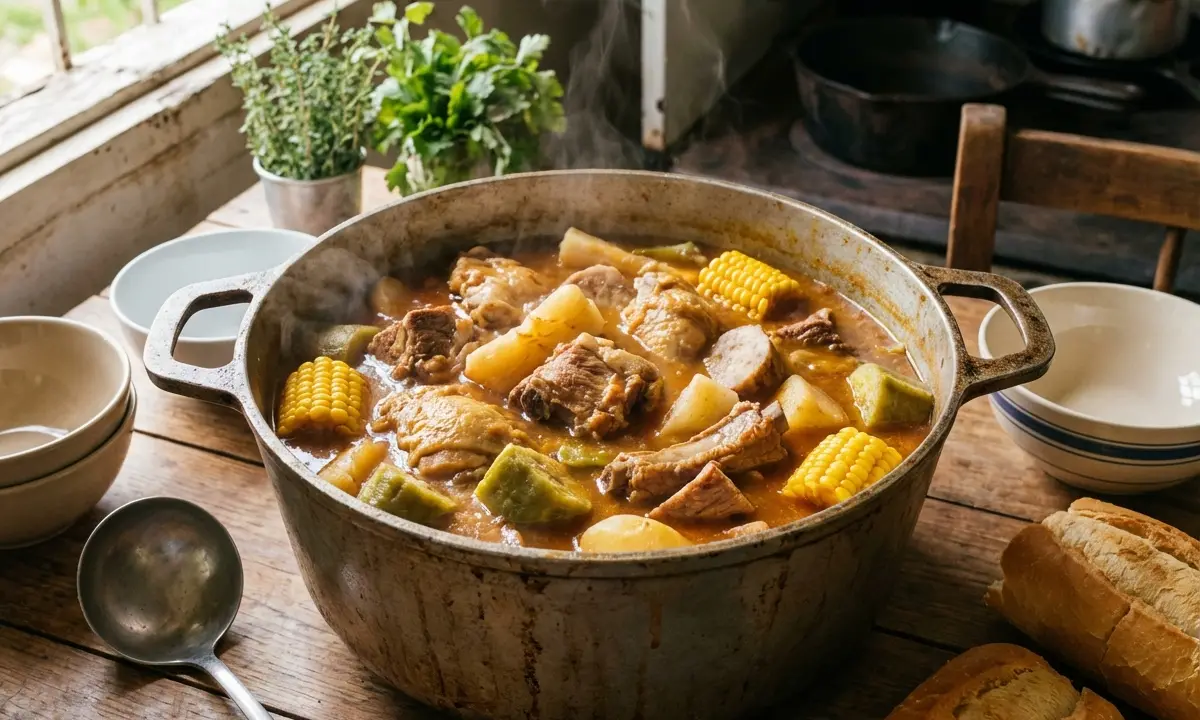
Illustration: Aroma de Cuba (AI)
The stew that everyone cooks together
In Cuba, few things bring a neighborhood together like a caldosa. It’s not just a soup — it’s a collective ritual where each neighbor contributes what they have. One brings the chicken, another the yuca, someone else the corn — and together they build an enormous pot that feeds the entire block.
Cuban caldosa is a direct descendant of the ajiaco criollo, that mestizo stew that historian Fernando Ortiz called “the perfect symbol of Cuban identity.” But while ajiaco is an ancestral dish with indigenous roots, the caldosa as we know it today was born in the 1980s in Las Tunas, when a couple known as Kike and Marina reinvented the recipe for neighborhood celebrations.
From Las Tunas to all of Cuba
In 1982, at a restaurant in Las Tunas, Kike and Marina began serving their version of ajiaco: more abundant, more festive, designed for sharing. They called it caldosa, and the name stuck. Within a few years, the dish became synonymous with community celebration across the entire island.
Caldosa became especially popular during September 28th celebrations, the anniversary of the Committees for the Defense of the Revolution (CDR). That night, on every block in Cuba, an enormous pot appears, bubbling with caldosa while neighbors chat, play music, and children run between chairs.
But you don’t need an official date. Any birthday, New Year’s Eve, or simple excuse to gather is reason enough to make one.
The ingredients: whatever the neighborhood has
The beauty of caldosa lies in its flexibility. There’s no single recipe — every neighborhood, every family, every province has its version. But the pillars are:
The meats (at least two)
- Chicken (the most common)
- Pork (preferably bone-in for the broth)
- Beef (in the more generous versions)
The root vegetables (the soul of the stew)
- Yuca (cassava) — adds texture and thickness
- Fresh corn — cut into rounds
- Malanga (taro root) — dissolves and thickens the broth
- Calabaza (Cuban squash) — natural sweetness
- Boniato (Cuban sweet potato) — another sweet note
- Green plantain — body and substance
- Potato — soft texture
The sofrito
- Onion, garlic, bell pepper, cumin, oregano, bay leaves
- Tomato puree
- Pork lard (the criollo touch)
If you enjoy fufú de plátano, you’ll notice they share the same philosophy: humble root vegetables transformed into something extraordinary.
The traditional recipe
Ingredients (serves 10-12)
- 1 whole chicken, cut into pieces
- 2 lbs pork with bone
- 1 lb beef (optional)
- 6 ears of corn, cut into chunks
- 2 lbs yuca, peeled and chopped
- 1 lb malanga, peeled and chopped
- 1 lb calabaza (or butternut squash), in large chunks
- 3 medium sweet potatoes, peeled and cut
- 3 green plantains, in thick rounds
- 6 medium potatoes, peeled and cut
- 2 medium onions, chopped
- 8 garlic cloves, crushed
- 1 large bell pepper, in strips
- 2 cups tomato puree
- 2 tablespoons pork lard
- 1 teaspoon cumin
- 1 teaspoon oregano
- 2 bay leaves
- Salt and pepper to taste
Instructions
-
The base broth (40 min): In a large pot, cover the pork and beef with water. Add bay leaves and cook over medium heat for 40 minutes.
-
The chicken (30 min): Add the chicken pieces and cook for another 30 minutes.
-
The hard root vegetables (15 min): Add the yuca and corn. Cook for 15 minutes.
-
The soft root vegetables (15 min): Add potatoes, sweet potato, squash, malanga, and green plantain. Cook for another 15 minutes.
-
The sofrito: In a skillet with pork lard, sauté the onion, pepper, garlic, cumin, and oregano for 2 minutes. Add the tomato puree, mix well, and pour into the pot.
-
The final simmer (45 min): Stir gently and cook on low heat for 45 more minutes. The root vegetables should start breaking down, naturally thickening the broth.
-
Adjust salt and pepper. Serve hot in generous bowls.
Total time: 2.5 - 3 hours | Servings: 10-12
Cuban tip: Caldosa tastes even better the next day. If there are leftovers (rare), reheat it — the root vegetables keep thickening the broth and the flavors intensify.
More than food: identity
Caldosa doesn’t appear on upscale restaurant menus or in gourmet cookbooks. It lives in the streets, in courtyards, on front porches. It’s food of the people in the most literal sense: made by the people, for the people.
In times of scarcity — and Cuba has known many — caldosa is also an act of solidarity. When each neighbor contributes the little they have, the result feeds everyone. It’s the philosophy of ajiaco criollo taken to its highest social expression.
For Cubans in the diaspora, making a caldosa is invoking the block, the neighbors, the noise of that September night. Whether you’re in Miami, Madrid, or Montreal — the aroma of squash melting into the broth takes you home.
Regional variations
- Eastern Cuba (Santiago, Las Tunas): Spicier, with ají guaguao pepper and more pork
- Western Cuba (Havana, Pinar del Río): Milder, with chicken predominating
- Central Cuba (Camagüey, Villa Clara): Balanced, sometimes served with tostones on the side
- Modern diaspora version: With more accessible ingredients like butternut squash and chicken thighs
Caldosa isn’t measured in servings but in neighbors fed. Because in Cuba, cooking has always been a collective act.
Frequently asked questions
What is the difference between caldosa and Cuban ajiaco?
How long does it take to make Cuban caldosa?
Why is caldosa associated with CDR celebrations?
What root vegetables are essential in a good caldosa?
How we got here
Background
The first thing we published on this topic.
Cuban Coffee Harvest Promises to Be the Best in Decades
The mountains of the Sierra Maestra produce an exceptional harvest thanks to new agricultural techniques.
Ropa Vieja: The Soul of Cuban Cuisine on a Plate
Discover the history, secrets, and traditional recipe of ropa vieja, Cuba's national dish that has conquered palates around the world.
Related articles
Cuban Shrimp Enchilado: A Creole Heritage from the Caribbean
Recipe and history of Cuban enchilado de camarones, a Creole stew of Haitian origin with tomato sauce, wine, and spices.
Arroz Imperial: Cuba's Showstopping Layered Rice Casserole
Discover arroz imperial, the Cuban layered rice casserole with chicken, mayo, and melted cheese. History, step-by-step recipe, and tips.

The Daiquiri: Story of the Cocktail Born in Cuba's Iron Mines
Discover the history of the Daiquiri, the Cuban cocktail Hemingway loved. From Santiago's mines to El Floridita in Havana.
Cuban Casabe: The Ancient Taíno Cassava Bread, UNESCO Heritage
Complete guide to Cuban casabe, the cassava flatbread inherited from the Taínos. History, preparation, UNESCO 2024 recognition, and where to buy.
Cuban Medicinal Plants: A Guide to Cuba's Green Medicine Tradition
Discover Cuba's most popular medicinal plants, from aloe vera to lemongrass. History, uses, and traditions of Cuban green medicine.
Cuban Flan: The Caramel Custard That Steals the Show at Every Table
Traditional Cuban flan recipe with condensed milk and caramel. History, tips, and step-by-step guide to this iconic Cuban dessert.