Tropicana: The Paradise Under the Stars That Dazzled the World
The history of Havana's Tropicana cabaret from 1939 to today. Architecture, shows, and its enduring Cuban cultural legacy.
4 min read
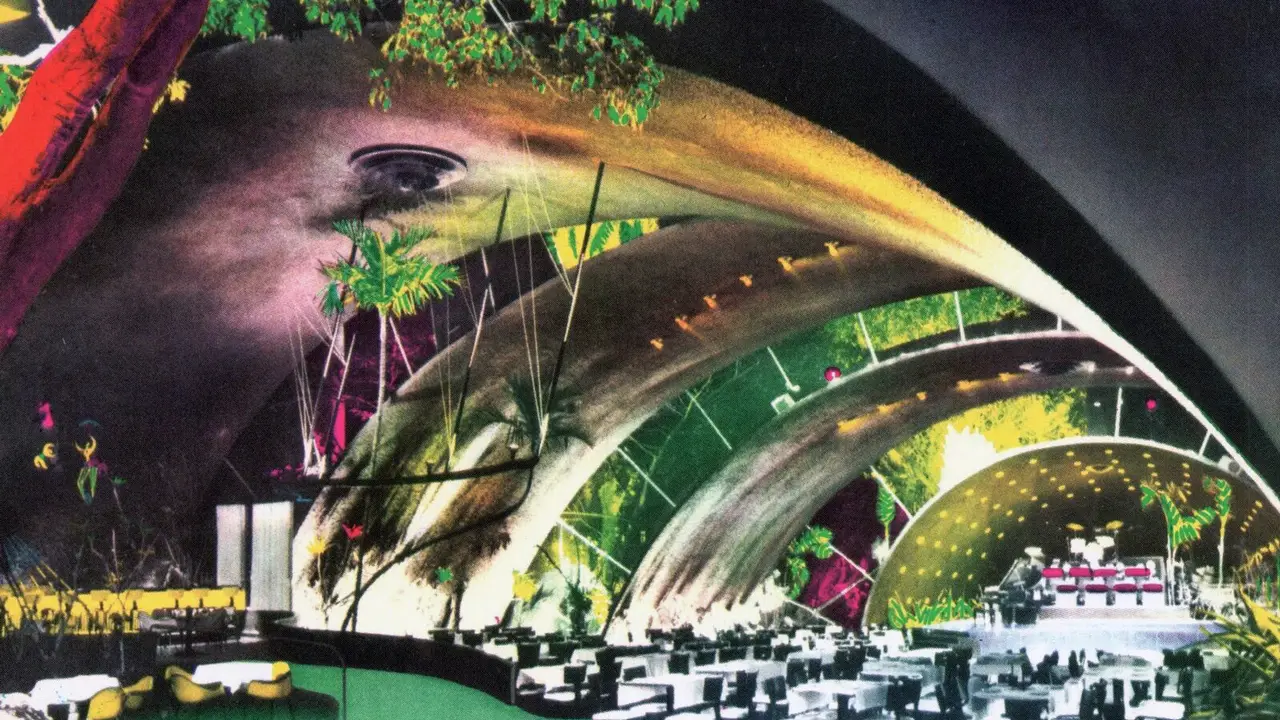
In the neighborhood of Marianao, on the outskirts of Havana, there exists a place where Cuban nightlife reached its highest artistic expression. The Tropicana, known as “Paradise Under the Stars,” has been for over eight decades the most iconic stage for Cuban entertainment — a place where modernist architecture merges with music, dance, and tropical exuberance.
The Origins: From Edén Concert to Tropicana
The story begins with Víctor de Correa, a Cuban impresario who operated a nightclub called Edén Concert in the late 1930s. In December 1939, de Correa moved his company of singers, dancers, and musicians into a converted mansion within Villa Mina, a 36,000-square-meter estate owned by Guillermina Pérez Chaumont.
The natural setting of the tropical gardens was perfect for an outdoor cabaret. With a fanfare from the Alfredo Brito Orchestra, the venue — rechristened as Tropicana — opened its doors on December 30, 1939.
Martín Fox and the Transformation
The real leap came with Martín Fox, a gambling entrepreneur who rented table space in the Tropicana’s casino. By 1950, Fox had taken full control and had an ambitious vision: to turn it into the most spectacular cabaret in the world.
Fox hired architect Max Borges Jr., fresh from Harvard’s Graduate School of Design, to design a revolutionary expansion. The result was Los Arcos de Cristal (The Crystal Arches), an indoor cabaret that opened on March 15, 1952, and forever changed entertainment architecture.
The Crystal Arches: A Modernist Masterpiece
The Arcos de Cristal consist of five parabolic arches of thin-shell reinforced concrete with glass walls that create a seamless integration between the indoor space and the tropical gardens. The furniture was designed by Charles and Ray Eames, the legendary American designers.
The structure won the Annual Prize from Cuba’s National College of Architects in 1953 and was included in the Museum of Modern Art (MoMA) exhibition Latin American Architecture since 1945 in 1954, as one of only six Cuban buildings selected. It can even be seen in the film Our Man in Havana (1959).
With a seating capacity of 1,700 between the indoor salon and outdoor areas, the Tropicana offered an unprecedented experience: shows featuring over 50 dancers performing among royal palms beneath a canopy of stars.
The Golden Age: Glamour, Music, and Celebrities
During the 1940s and 1950s, the Tropicana was the undisputed epicenter of Havana’s nightlife. In an era when Cuba was the favorite destination of Hollywood and the international elite, the Tropicana’s tables hosted Marlon Brando, Ernest Hemingway, Rita Hayworth, and Nat King Cole, among others.
The shows combined the best of Cuban music — son, mambo, rumba — with elaborate choreography, dazzling costumes designed by Juan Emilio Daudinot, and staging that used the tropical landscape as a natural backdrop.
The orchestras that played at the Tropicana read like a who’s who of Cuban music: from the Alfredo Brito Orchestra to legends like Benny Moré, Celia Cruz, and Arsenio Rodríguez.
The Revolution and Beyond
When the Cuban Revolution triumphed in 1959, the casinos were shut down, but the Tropicana survived as a state-run cultural institution. While other cabarets disappeared, the Tropicana continued operating, adapting to new circumstances while preserving its essence: Cuban entertainment at its finest.
In 1992, the American Academy of Restaurant Industry honored the Tropicana with the “Best of the Five Stars Diamond” award as the best cabaret in the Americas, validating more than half a century of artistic excellence.
The Tropicana Today
The current show, “Tambores en Concierto” (Concert Drums), choreographed by master Tomás Morales, is a visual ballad through Cuba’s most authentic rhythms: rumba, mambo, danzón, danzonete, and Latin jazz, celebrating the Spanish and African heritage that defines the island’s musical identity.
The Tropicana is also on the UNESCO World Heritage tentative list, recognizing both its architectural value and its cultural importance as a living space for Cuban artistic tradition.
More Than a Cabaret
The Tropicana is not just an entertainment venue. It is a living monument to Cuba’s capacity for creating beauty, fusing traditions, and turning the night into art. From its humble origins as a bohemian club to its consecration as architectural and cultural heritage, the Tropicana embodies something essential about Cuba: the conviction that spectacle, music, and joy are as fundamental as bread itself.
More than 85 years after that first night under the stars of Marianao, the palms still sway to the rhythm of the drums. And Paradise remains open.
Interested in the music that played at the Tropicana? Read about Cuban son, Benny Moré, and Cuban rumba.
Frequently asked questions
When was the Tropicana cabaret in Havana founded?
What are the Arcos de Cristal at the Tropicana?
Can you still visit the Tropicana today?
What celebrities visited the Tropicana during its golden age?
How we got here
Background
The first thing we published on this topic.
Old Havana Restoration Reaches a New Milestone
Rehabilitation work in the historic quarter reveals colonial frescoes from the 18th century.
Governments Issue Travel Warnings for Cuba Amid US Tensions
Canada, Argentina, Spain and other countries warn citizens about Cuba's crisis as Washington's oil blockade and prolonged blackouts affect the island.
Related articles
Cuban Poster Art: The Graphic Design Movement That Changed the World
The history of Cuban cartelismo, from ICAIC film posters to OSPAAAL solidarity art. How Cuba created a revolutionary graphic design language.
Carlos Acosta Reinvents The Nutcracker with Cuban Flavor
The legendary Cuban dancer transforms the holiday classic with Nutcracker in Havana, fusing classical ballet with Afro-Cuban rhythms.
Jazz Plaza 2026: Havana Beats to Jazz Rhythms Amid Crisis
Jazz Plaza celebrated its 40th edition in Havana (Jan 25-Feb 1) with 286 international artists, proving Cuban music endures despite blackouts.
Leo Brouwer: The Cuban Master Who Reinvented Classical Guitar
Meet Leo Brouwer, the Cuban composer and guitarist who revolutionized classical guitar from Havana to Carnegie Hall.
Callejón de Hamel: Havana's Open-Air Afro-Cuban Art Gallery
Discover Callejón de Hamel, the vibrant epicenter of Afro-Cuban art in Centro Habana with murals, sculptures, and Sunday rumba.
Cuban Hip-Hop: From Alamar to the World, Cuba's Rap Revolution
The history of Cuban hip-hop from Alamar to today. How rap became the voice of a generation during Cuba's Special Period crisis.