Leo Brouwer: The Cuban Master Who Reinvented Classical Guitar
Meet Leo Brouwer, the Cuban composer and guitarist who revolutionized classical guitar from Havana to Carnegie Hall.
4 min read
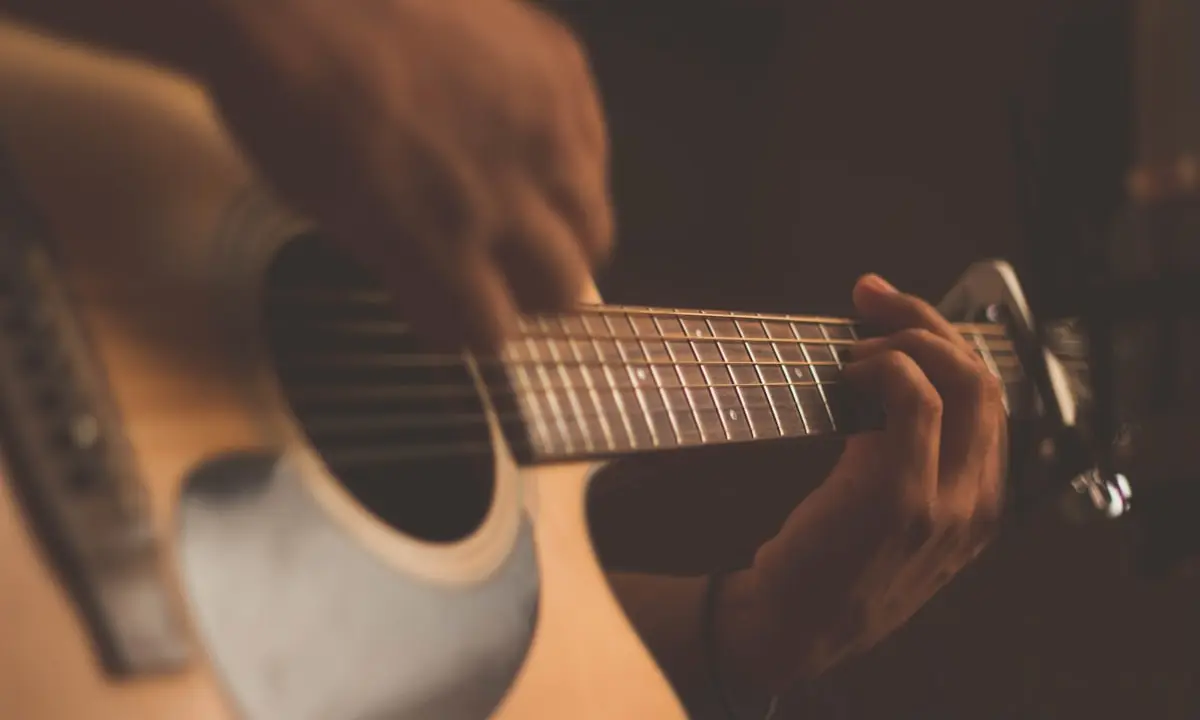
The genius born in Havana
On an island known for son cubano, salsa, and rumba, a musician emerged who conquered the most exclusive stages of the classical world. Juan Leovigildo Brouwer Mezquida, known as Leo Brouwer, was born in Havana on March 1, 1939, and became the most important Latin American composer for classical guitar of the 20th century.
His story begins with a Havana boy who picked up a guitar at age 13, encouraged by his amateur guitarist father. Four years later, he was already composing and performing publicly. By 17, Cuba was no longer enough.
From Havana to Juilliard
Brouwer traveled to the United States to study at the Hartt College of Music at the University of Hartford and later at the prestigious Juilliard School in New York, where he studied under Vincent Persichetti and took composition classes with Stefan Wolpe.
But unlike many Cuban musicians who emigrated, Brouwer returned to Cuba. He joined the Grupo de Experimentación Sonora del ICAIC, the same creative laboratory that gave birth to the Nueva Trova Cubana alongside Silvio Rodríguez and Pablo Milanés. While they reinvented protest song, Brouwer reinvented classical guitar.
Three periods, one genius
Musicologists divide Brouwer’s work into three clearly defined creative periods:
Cuban roots (1950s-60s)
His early compositions are steeped in Afro-Cuban rhythms. The Etudes Simples, written during this period, became mandatory pieces for every classical guitar student worldwide. They are to guitar what Chopin’s études are to piano: technically demanding and musically beautiful.
Avant-garde and experimentation (1960s-70s)
Influenced by composers like Luigi Nono and Iannis Xenakis, Brouwer explored aleatoric and atonal music. Works like La espiral eterna (1971) and Canticum (1968) pushed the boundaries of what a guitar could express.
Return to tonality (1980s-present)
His masterpiece El Decamerón Negro (1981), composed for American guitarist Sharon Isbin, marked a return to melody and narrative. The Sonata of 1990, dedicated to legendary Julian Bream, is considered one of the great guitar sonatas of the modern repertoire.
Beyond the guitar
Brouwer was never limited to one instrument. He composed for orchestra, ballet, percussion, and piano. He conducted the Berlin Philharmonic, the BBC Concert Orchestra, and founded the Córdoba Orchestra in Spain.
His film work is equally impressive: over 100 film scores, including Like Water for Chocolate (1992), one of the most successful Latin American films in history. He also composed the music for Lucía (1968), a classic of Cuba’s new cinema from ICAIC.
A detail that bridges seemingly opposite worlds: Brouwer transcribed Beatles songs for classical guitar, proving that the boundaries between popular and academic music are artificial.
The Lecuona legacy
Music literally runs through Brouwer’s veins. He is the grandson of Ernestina Lecuona y Casado, a Cuban composer and sister of the great Ernesto Lecuona, author of Siboney and Malagueña. His second cousin, Margarita Lecuona, composed Babalú, immortalized by Desi Arnaz.
This family connection between Lecuona and Brouwer represents a thread spanning over a century of Cuban musical genius.
The injury that didn’t stop him
In the early 1980s, an injury to the tendon of his right hand middle finger ended his performing career. For any other guitarist, it would have been the end. For Brouwer, it was a transformation: he devoted himself entirely to composition and orchestral conducting, multiplying his impact on world music.
In 2025, his music was performed at Carnegie Hall in New York, confirming that at 86 years old, Leo Brouwer remains a living force of Cuban culture.
A universal Cuban
Leo Brouwer has received the Tomás Luis de Victoria Prize (Spain’s equivalent of the classical Grammy), France’s Order of Arts and Letters, and is an Honorary Member of the International Music Council. Yet he never left Cuba.
Unlike the simplistic narrative that associates Cuba only with dance music, Brouwer represents another equally authentic Cuba: one of rigorous training, intellectual experimentation, and dialogue with European classical traditions, all filtered through an unmistakable Caribbean sensibility.
Like the zunzuncito that gives our publication its name, Leo Brouwer proves that Cuban art knows no limits of size or genre. From a small island, his guitar resonated across the entire world.
Were you familiar with Leo Brouwer’s work? What’s your favorite piece? Share in the comments.
Frequently asked questions
Who is Leo Brouwer and why is he important?
What are Leo Brouwer's most famous works?
How is Leo Brouwer related to Ernesto Lecuona?
Is Leo Brouwer still active in 2026?
How we got here
Background
The first thing we published on this topic.
Cuban Music Conquers the Latin Grammys
Cuban artists sweep the ceremony with awards in multiple tropical music categories.
Son Cubano: The Rhythm That Conquered the World
From the mountains of Oriente to Broadway stages. History, instruments, and legends of the musical genre that defines Cuba.
Related articles

Callejón de Hamel: Havana's Open-Air Afro-Cuban Art Gallery
Discover Callejón de Hamel, the vibrant epicenter of Afro-Cuban art in Centro Habana with murals, sculptures, and Sunday rumba.
Carlos Acosta Reinvents The Nutcracker with Cuban Flavor
The legendary Cuban dancer transforms the holiday classic with Nutcracker in Havana, fusing classical ballet with Afro-Cuban rhythms.

Tropicana: The Paradise Under the Stars That Dazzled the World
The history of Havana's Tropicana cabaret from 1939 to today. Architecture, shows, and its enduring Cuban cultural legacy.
Jazz Plaza 2026: Havana Beats to Jazz Rhythms Amid Crisis
Jazz Plaza celebrated its 40th edition in Havana (Jan 25-Feb 1) with 286 international artists, proving Cuban music endures despite blackouts.
Cimarrones and Palenques: Slave Resistance in Cuba
The history of Cuban maroons who escaped slavery and built free communities called palenques in the mountains, forging a legacy of resistance.
The Cuban Bolero: The Music of Love Born in Santiago de Cuba
Discover the history of the Cuban bolero, from Pepe Sánchez to Olga Guillot. How this romantic genre conquered Latin America.