Nueva Trova: Silvio Rodríguez, Pablo Milanés and Cuba's Revolution
The history of Cuba's Nueva Trova movement, where Silvio Rodríguez and Pablo Milanés fused poetry, guitar, and revolution into songs that shaped Latin America.
4 min read
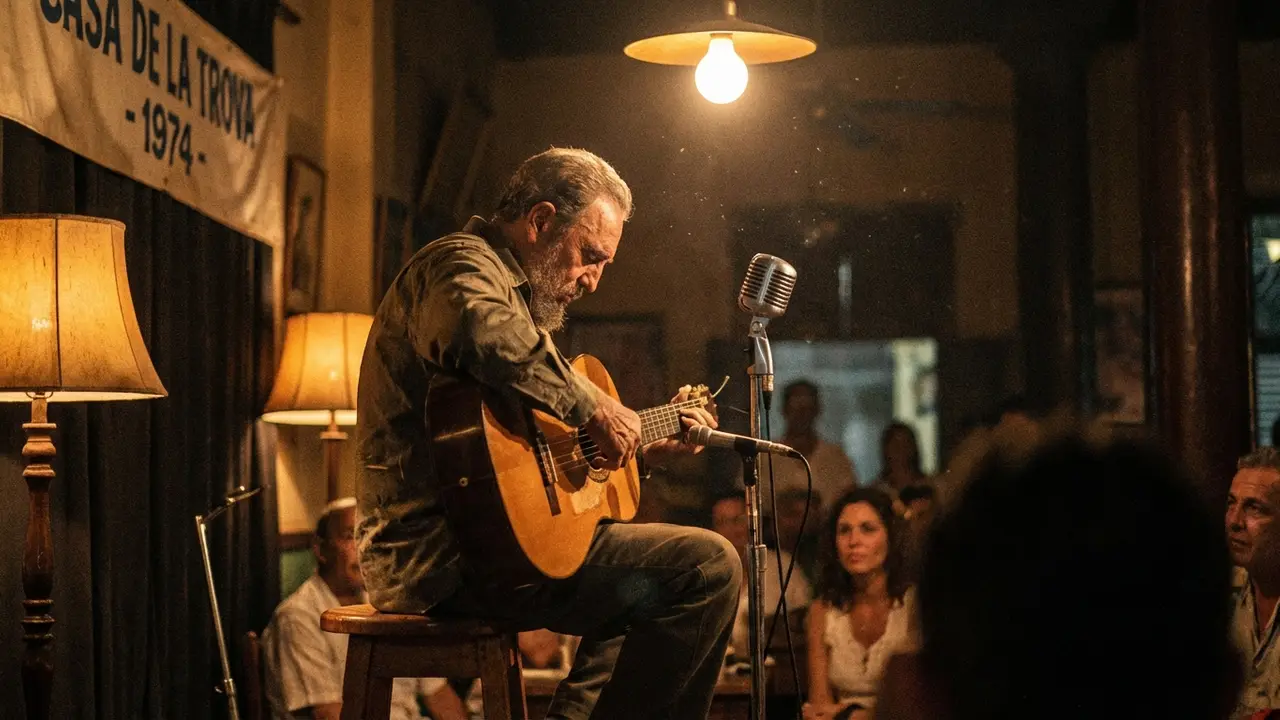
Illustration: Aroma de Cuba (AI)
The movement that turned a guitar into a poetic weapon
In late-1960s Cuba, while the world seethed with social movements and counterculture, a group of young Cuban musicians created something no revolution had achieved before: they turned the popular song into the most intimate and universal voice of a generation.
Nueva Trova wasn’t just a music genre. It was an act of faith in the power of a guitar, a voice, and words that refused to be banal.
Origins: from trova to commitment
Cuba had a troubadour tradition dating back to the 19th century in Santiago de Cuba. Trovadores like Sindo Garay and Manuel Corona had established a canon of poetic guitar-based song that defined Cuban musical identity.
But by the 1960s, that tradition needed renewal. Young people who had grown up with the 1959 Revolution wanted to express their reality — not just romantic love, but social justice, anti-colonialism, Latin American identity.
The spark came on February 18, 1968, when three young musicians — Silvio Rodríguez, Pablo Milanés, and Noel Nicola — gave a concert now considered the official birth of the movement. There was no name yet, but the energy was unmistakable.
Silvio Rodríguez: poet of the impossible
Born in San Antonio de los Baños in 1946, Silvio Rodríguez transformed Cuban song with unprecedented poetic language. Songs like Ojalá, Unicornio, La era está pariendo un corazón, and Playa Girón proved you could be profoundly lyrical and socially committed at the same time.
His influence transcends Cuba: entire generations across Latin America, Spain, and beyond grew up humming his melodies. His albums Días y flores (1975) and Mujeres (1978) are pillars of 20th-century Spanish-language music.
“The era is giving birth to a heart / it can’t go on, it’s dying of pain / and we must come running, for the future is falling…”
Pablo Milanés: the voice of feeling
If Silvio was the hermetic poet, Pablo Milanés (Bayamo, 1943 – Madrid, 2022) was the movement’s open heart. Trained in filin — Cuba’s romantic song movement of the 1950s — Pablo brought a melodic warmth that made even the most complex themes accessible.
Yolanda, perhaps Cuba’s most famous love song, is his. But so are deeply committed pieces like Yo pisaré las calles nuevamente (written for Chile after Pinochet’s coup) and Cuba va.
Pablo passed away in November 2022 in Madrid, leaving an irreplaceable void in Latin American music. His legacy lives on in every trovador who picks up a guitar with something to say.
The ICAIC Sound Experimentation Group
In 1969, under the auspices of the Cuban Institute of Cinematographic Art and Industry (ICAIC), the Grupo de Experimentación Sonora (GESI) was formed. Led by Leo Brouwer, the renowned Cuban classical guitarist, the group brought together Silvio, Pablo, Noel Nicola, Sara González, Eduardo Ramos, and other young musicians.
GESI was a laboratory: they composed soundtracks for ICAIC documentaries while exploring fusions of trova, jazz, rock, and Afro-Cuban music. This experimentation gave the movement a musical sophistication that set it apart from other Latin American protest song movements.
Continental connections
Nueva Trova didn’t exist in a vacuum. It drew from and fed into Chile’s Nueva Canción of Violeta Parra and Víctor Jara, Argentina’s new song movement of Mercedes Sosa, Catalonia’s nova cançó of Joan Manuel Serrat, and Brazilian tropicalismo of Caetano Veloso.
They all shared an ideal: song as a tool for social transformation, the guitar as companion to peoples in struggle. But Cuban Nueva Trova had a unique ingredient — Caribbean rhythm, the heritage of son cubano, and the island’s poetic tradition.
Beyond the founders
The movement transcended its three pillars. Figures like Sara González (trova’s most powerful female voice), Amaury Pérez, Vicente Feliú, and Carlos Varela (considered the bridge between Nueva Trova and later generations) expanded the Cuban trovador universe.
Carlos Varela, in particular, introduced a more introspective and critical gaze from the 1980s onward, with songs like Guillermo Tell that resonated deeply with Cuban youth during the Special Period.
Trova today: alive and transforming
Nueva Trova as a formal movement no longer exists, but its spirit beats on every corner of Cuba. Trova gatherings in cultural centers, young people with guitars on the Malecón, and a new generation of Cuban singer-songwriters who recognize Silvio and Pablo as inescapable roots.
The movement’s deepest legacy wasn’t political but human: it proved that a well-written song, sung with truth, can cross oceans and decades without losing its power.
From Aroma de Cuba, we celebrate the music that defines us. If Nueva Trova moves you, explore our guide to Cuban rumba and Cuban hip-hop, two movements that also used music as the people’s voice.
Frequently asked questions
What is Cuba's Nueva Trova movement?
What is the difference between trova and Nueva Trova?
When did the Nueva Trova officially begin?
What are the most iconic Nueva Trova songs?
How we got here
Background
The first thing we published on this topic.
Cuban Music Conquers the Latin Grammys
Cuban artists sweep the ceremony with awards in multiple tropical music categories.
Son Cubano: The Rhythm That Conquered the World
From the mountains of Oriente to Broadway stages. History, instruments, and legends of the musical genre that defines Cuba.
Related articles
Nueva Trova Cubana: The Revolution Made Song That Shaped History
History of the Cuban musical movement that united poetry, guitar and social commitment. Silvio Rodríguez, Pablo Milanés and their legacy.
The Cuban Bolero: The Music of Love Born in Santiago de Cuba
Discover the history of the Cuban bolero, from Pepe Sánchez to Olga Guillot. How this romantic genre conquered Latin America.
Art Deco Architecture in Havana: Hidden Gems from the 1930s
Discover Havana's most stunning Art Deco buildings, from the Bacardí Building to the América Theater — Cuba's overlooked architectural treasures.

EGREM and Cuban Music Labels: Guide to Cuba's Musical Catalog
Discover EGREM, Areíto and Cuban record labels. History, iconic artists, recording studios and where to buy Cuban music on vinyl and digital.
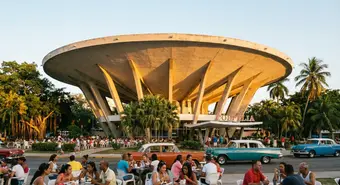
Coppelia Ice Cream: Cuba's Cathedral of Ice Cream Turns 60
The history, flavors, and current state of Havana's iconic Coppelia ice cream parlor, Cuba's sweetest institution since 1966.
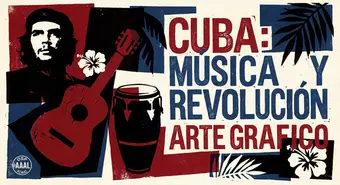
Cuban Poster Art: The Graphic Design Movement That Changed the World
The history of Cuban cartelismo, from ICAIC film posters to OSPAAAL solidarity art. How Cuba created a revolutionary graphic design language.