The Cuban Bolero: The Music of Love Born in Santiago de Cuba
Discover the history of the Cuban bolero, from Pepe Sánchez to Olga Guillot. How this romantic genre conquered Latin America.
4 min read
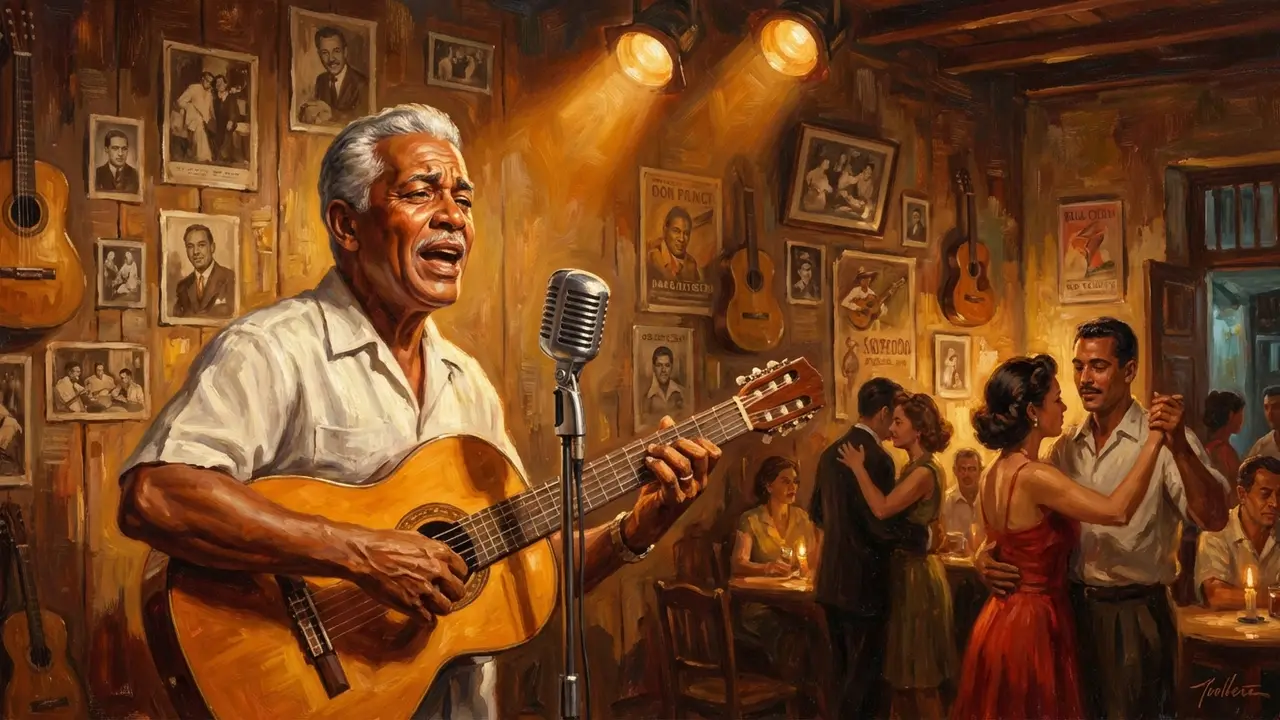
Illustration: Aroma de Cuba (AI)
On Valentine’s Day, there’s no better time to explore the musical genre that turned love into sonic art: the Cuban bolero. Born in the streets of Santiago de Cuba in the late 19th century, this intimate and passionate genre became the romantic soundtrack of all Latin America.
The Origins: Pepe Sánchez and the Trovadores
It all began with José “Pepe” Sánchez (1856-1918), a self-taught guitarist from Santiago de Cuba who in 1883 composed “Tristezas” (Sorrows), considered the first formal bolero in history. Sánchez never learned to read music — his compositions survive thanks to his disciples, who transcribed them from memory.
The bolero didn’t emerge in a vacuum. It was the child of the Cuban trova, that tradition of poet-singers who wandered the cities with their guitars, singing of love, heartbreak, and daily life. Santiago de Cuba, with its warm nights and open courtyards, was the perfect stage for this musicalized poetry.
Unlike the Spanish bolero — a courtly dance in 3/4 time — the Cuban bolero is a vocal genre in 2/4 time, closer to the danzón and son cubano in its rhythmic structure.
The Golden Age: From Havana to the Continent
In the 1920s and 1930s, the bolero traveled from Santiago to Havana, where it merged with big orchestras and new media: radio and recordings. Cuban composers of this era created an immortal repertoire:
- Nilo Menéndez — Aquellos ojos verdes (Those Green Eyes, 1929), one of the first boleros to cross borders
- Osvaldo Farrés — Quizás, quizás, quizás (Perhaps, Perhaps, Perhaps, 1947), recorded in dozens of languages
- Isolina Carrillo — Dos gardenias (Two Gardenias, 1945), a hymn of Cuban romanticism
- Gonzalo Roig — Quiéreme mucho (Love Me Dearly), which became a worldwide standard
- Pedro Junco Jr. — Nosotros (Us, 1943), a heartbreaking bolero the author composed before dying young of tuberculosis
Cuban radio, especially stations like CMQ and Radio Progreso, carried these songs across the island and beyond. Mexico became the bolero’s second home, where Cuban and Mexican artists created a shared golden age.
The Great Voices
Beny Moré: The Barbarian of Rhythm
Beny Moré (1919-1963) could sing any genre, but his boleros had a unique emotional depth. Cómo fue, Hoy como ayer, and Mucho corazón show why they called him “the Barbarian of Rhythm” — even in tenderness, he was unmatched.
Olga Guillot: The Queen of Bolero
Olga Guillot (1922-2010) broke barriers as one of the first women to sing boleros, a genre dominated by male voices. Her dramatic, passionate interpretation earned her the title of Queen of Bolero. After her exile in 1961, Mexico adopted her as its own.
Other Essential Voices
- Fernando Albuerne — the silky voice of romantic bolero
- Esther Borja — refined interpreter of Ernesto Lecuona’s repertoire
- Blanca Rosa Gil — the voice of Cuban feeling in exile
- Omara Portuondo — who carried the bolero into the 21st century with Buena Vista Social Club
The Bolero Today: Living Heritage
In 2021, Cuba declared the bolero National Cultural Heritage. This isn’t just symbolic recognition — it reflects that this genre lives on in the Casas de la Trova of Santiago, in the bars of Old Havana, and in the memory of millions of Latinos who grew up listening to these love songs.
The Cuban bolero also found new life through contemporary artists like Diego el Cigala, who fused bolero with flamenco, and through the reinterpretations by Ibrahim Ferrer and Compay Segundo that introduced the world to Cuba’s romantic soul.
A Genre for Valentine’s Day
Today, as the world celebrates love, it’s worth remembering that Cuba gave the continent its most intimate musical language. The bolero doesn’t speak of abstract love — it speaks of green eyes, of gardenias, of nights in Havana. It’s concrete, sensory, passionate. Like Cuba itself.
Want to explore more Cuban music? Read about chachachá, son cubano, or Cuban musical instruments.
Frequently asked questions
Where was the Cuban bolero born?
Who is the Queen of Bolero?
What's the difference between Cuban bolero and Spanish bolero?
What are the most famous Cuban boleros?
How we got here
Background
The first thing we published on this topic.
Cuban Music Conquers the Latin Grammys
Cuban artists sweep the ceremony with awards in multiple tropical music categories.
Son Cubano: The Rhythm That Conquered the World
From the mountains of Oriente to Broadway stages. History, instruments, and legends of the musical genre that defines Cuba.
Related articles
Pepe Sánchez: The Santiago Tailor Who Invented the Cuban Bolero
Meet José Pepe Sánchez, the trovador from Santiago who created the bolero and founded Cuban trova without ever reading music.
The Cuban Bolero: UNESCO Heritage and the Universal Language of Love
From Santiago de Cuba to the world, the bolero was born as a love song and is now a UNESCO Heritage. Its history, voices, and lasting power.
Leo Brouwer: The Cuban Master Who Reinvented Classical Guitar
Meet Leo Brouwer, the Cuban composer and guitarist who revolutionized classical guitar from Havana to Carnegie Hall.
Cimarrones and Palenques: Slave Resistance in Cuba
The history of Cuban maroons who escaped slavery and built free communities called palenques in the mountains, forging a legacy of resistance.
Fusterlandia: The Cuban Neighborhood Turned Living Mosaic Art
Discover Fusterlandia, the Cuban village transformed into mosaic art by José Fuster. History, naïve art, and the magic of Jaimanitas.
Elpidio Valdés: The Animated Hero Who Defined Cuban Childhood
Meet Elpidio Valdés, the mambí colonel created by Juan Padrón who became an icon of Cuban animation and a national symbol.