Cuban Cha-Cha-Chá: The Rhythm That Conquered Dance Floors Worldwide
The history of cha-cha-chá, created by Enrique Jorrín in 1950s Cuba. From Havana to the world with Orquesta América and Aragón.
4 min read
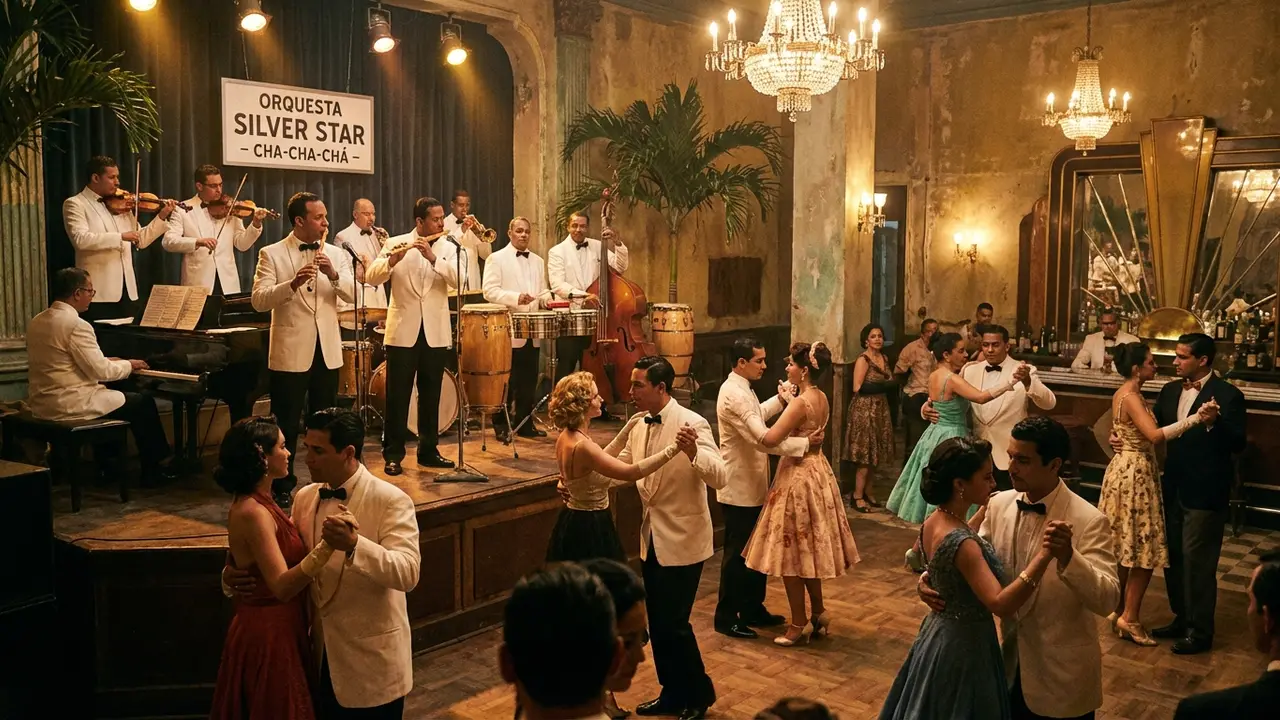
Illustration: Aroma de Cuba (AI)
A dance born from a sound
Few rhythms in music history have such a poetic origin as the cha-cha-chá. In the early 1950s, at Havana’s Silver Star Club, dancers following Enrique Jorrín’s new music produced a peculiar sound as their shoes scraped the floor in three quick beats: cha-cha-chá. And so the name was born for the rhythm that would conquer dance floors around the world.
Enrique Jorrín: the violinist who changed everything
Enrique Jorrín (1926–1987) was a violinist with the Orquesta América, a classic Cuban charanga ensemble of flute, violins, piano, bass, and percussion. Jorrín noticed something crucial: most dancers struggled with the highly syncopated rhythms of the mambo. His solution was brilliant: simplify.
He began composing danzones where musicians sang short refrains in unison. In his piece Constancia, he introduced montunos that motivated the audience to sing along. The unison singing created a powerful effect and had a practical advantage: it masked the instrumentalists’ limited vocal abilities.
In 1948, Jorrín reworked the Mexican song Nunca by Guty Cárdenas, composing a new section in montuno style. Then in 1951 came the piece that changed everything: La engañadora — considered the first true cha-cha-chá composition.
From danzón to cha-cha-chá: a natural evolution
The cha-cha-chá didn’t appear from nowhere. It was an evolution of the danzón, Cuba’s national dance. According to Cuban musicologist Olavo Alén, the cha-cha-chá maintains a structure very similar to the danzón while transforming its melodic and rhythmic elements. The flute retains its role as soloist, and its improvisational characteristics reappear virtually unchanged.
The rhythmic cell that gives the genre its name — those three quick hits — is what fundamentally distinguishes it from the danzón. Interestingly, cha-cha-chá abandons the son elements incorporated into the danzonete, returning to the pure stylistic elements of the danzón tradition.
The orchestras that made history
Orquesta América
This was the birthplace of cha-cha-chá. Jorrín premiered La engañadora with this ensemble, and its success in Havana’s dance halls was immediate.
Orquesta Aragón
Founded in 1939 in Cienfuegos by Orestes Aragón Cantero, the Orquesta Aragón is considered the group that elevated cha-cha-chá to its highest artistic level. Under the direction of Rafael Lay and with arrangements by flutist Richard Egües (composer of El bodeguero), the Aragón refined the genre into high art. Over 80 years later, they’re still performing.
Fajardo y sus Estrellas
Flutist José Fajardo and his orchestra were another driving force in the international spread of cha-cha-chá during the 1950s.
The immortal classics
The golden repertoire of cha-cha-chá includes pieces that still fill dance floors worldwide:
- La engañadora — Enrique Jorrín (1951)
- El bodeguero — Richard Egües / Orquesta Aragón
- Rico vacilón — Rosendo Ruiz Jr.
- Los marcianos — Rosendo Ruiz Jr.
- Dime Chinita — Félix Reina
- Cero codazos, cero cabezazos — Rafael Lay
Conquering the world
Two technological factors drove the cha-cha-chá’s global explosion in the 1950s: television and the LP record. For the first time, millions of people could see and hear the Cuban rhythm from their living rooms. Cha-cha-chá reached the dance halls of New York, Paris, London, and Tokyo.
In the United States, the rhythm quickly integrated into the ballroom dance circuit, where it became standardized as one of the five Latin competition dances alongside samba, rumba, paso doble, and jive. This international version, more stylized, diverged from the street-level Cuban cha-cha-chá but expanded its reach to every continent.
A living legacy
The cha-cha-chá left an indelible mark on Latin music. Its rhythmic DNA is present in salsa, Latin pop, and virtually all subsequent Caribbean dance music. It’s one of the few Cuban genres that penetrated global popular culture without losing its essential danceability.
In Cuba, cha-cha-chá remains part of the repertoire of charangas and popular orchestras. And in ballroom dance festivals worldwide, from Blackpool to Shanghai, the rhythm Enrique Jorrín created in a Havana dance hall over seven decades ago still makes people move their feet: cha-cha-chá.
Passionate about Cuban music? Read also about Cuban son, the danzón, and Benny Moré, the Barbarian of Rhythm.
Frequently asked questions
Who invented the cha-cha-chá?
Where does the name cha-cha-chá come from?
What was the first cha-cha-chá song?
What's the difference between cha-cha-chá and mambo?
How we got here
Background
The first thing we published on this topic.
Cuban Music Conquers the Latin Grammys
Cuban artists sweep the ceremony with awards in multiple tropical music categories.
Son Cubano: The Rhythm That Conquered the World
From the mountains of Oriente to Broadway stages. History, instruments, and legends of the musical genre that defines Cuba.
Related articles
Fusterlandia: The Cuban Neighborhood Turned Living Mosaic Art
Discover Fusterlandia, the Cuban village transformed into mosaic art by José Fuster. History, naïve art, and the magic of Jaimanitas.
Cecilia Valdés: Cuba's National Novel That Challenged an Era
The story of Cecilia Valdés, Cirilo Villaverde's masterpiece on race, love and colonialism in 19th century Cuba, and its legendary zarzuela adaptation.
Cuban Dominoes: Much More Than a Game, a National Tradition
Discover the history and traditions of dominoes in Cuba, the national pastime that unites generations in parks, porches, and streets across the island.
Havana Book Fair Postponed: Fuel Crisis Hits Cuban Culture
The 34th Havana International Book Fair, scheduled for Feb 12-22 at La Cabaña fortress, is postponed due to Cuba's deepening fuel crisis.
Leonardo Padura Presents Morir en la Arena at Hay Festival 2026
The master of Cuban noir fiction presents his new novel in Barranquilla, exploring 50 years of Cuba's history.
Punto Cubano: Cuba's Sung Poetry Declared UNESCO Heritage
Discover punto cubano, the improvised sung poetry of Cuban farmers declared UNESCO Intangible Cultural Heritage in 2017.