Elpidio Valdés: The Animated Hero Who Defined Cuban Childhood
Meet Elpidio Valdés, the mambí colonel created by Juan Padrón who became an icon of Cuban animation and a national symbol.
4 min read
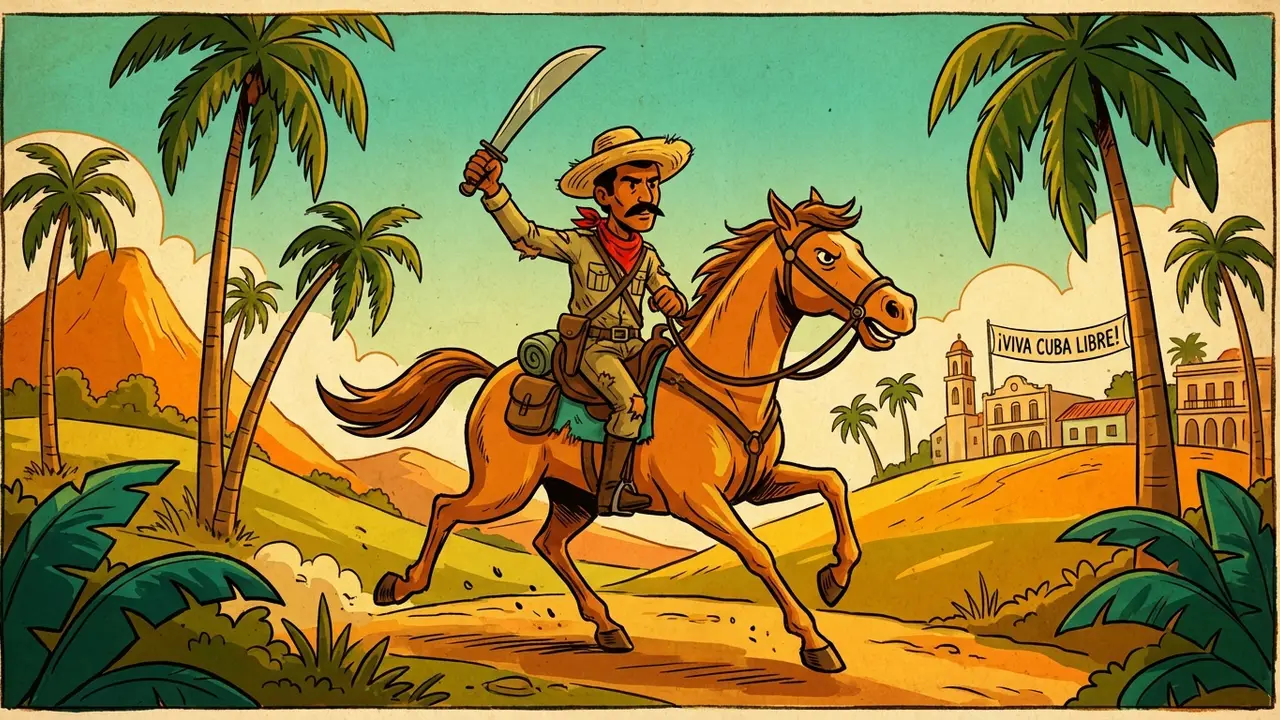
Illustration: Aroma de Cuba (AI)
In the history of Latin American animation, few characters have achieved the status of Elpidio Valdés, the mambí colonel who rode from the pages of a children’s magazine to become Cuba’s most beloved animated hero. Created by the genius of Juan Padrón, Elpidio isn’t just a cartoon — he’s a piece of the Cuban soul.
Origins: From Matanzas to Pionero Magazine
Juan Manuel Padrón Blanco was born in Matanzas on January 29, 1947. From a young age, he showed extraordinary talent for drawing, publishing cartoons in Cuban magazines and newspapers from 1963. In 1967, he joined the Cuban Institute of Cinematographic Art and Industry (ICAIC), where he would find his true calling: animation.
In 1970, Padrón brought Elpidio Valdés to life in the pages of Pionero magazine. The character was a colonel in the Liberation Army during the wars of independence against Spain — a brave, clever, and deeply Cuban mambí. His name pays homage to Cecilia Valdés, Cuba’s great 19th-century national novel.
An Unforgettable Cast of Characters
What made Elpidio Valdés special wasn’t just its protagonist, but the entire universe around him:
- María Silvia: his girlfriend and later wife, a fellow fighter
- Palmiche: his faithful horse, in shades of brown and orange
- Pepito: his assistant, who dies in combat in 1898
- Resóplez: the Spanish general, his greatest enemy
- Eutelia: María Silvia’s young assistant
- Marcial: the squadron’s inventor
Each character reflected archetypes of 19th-century Cuban society, delivered with humor, humanity, and a dose of criollo wit that made them irresistible.
The Film Trilogy
Elpidio Valdés (1979)
The first animated feature produced by ICAIC told the story of Elpidio’s birth, his father’s death in combat, and the beginnings of the War of Independence in 1895. It was a milestone for Cuban and Latin American cinema.
Elpidio Valdés contra Dólar y Cañón (1983)
The second installment followed efforts to transport a weapons shipment from the United States, set between 1896 and 1897. Here the character reached narrative maturity.
Elpidio Valdés contra el Águila y el León (1995)
The third feature addressed U.S. intervention in the war, closing the historical arc with the complexity it deserved.
Beyond these three features, Padrón produced over twenty short films expanding the mambí colonel’s adventures.
The Music: Silvio Rodríguez and the Ballad of Elpidio
One of the series’ most memorable elements is its music. The Ballad of Elpidio was composed and performed by Silvio Rodríguez, the legendary Cuban troubadour. The song, with music by Lucas de la Guardia, became a generational anthem that Cubans can hum from memory decades later.
Juan Padrón: Cuba’s Walt Disney
Beyond Elpidio Valdés, Juan Padrón left another masterpiece: Vampires in Havana (1985), an adult-oriented animated comedy that gained an international cult following. He also created the Filminutos, one-minute comedy sketches that showcased his versatility.
In 2008, he received Cuba’s National Film Award, a well-deserved recognition of a career that transformed the country’s animation landscape. Padrón passed away on March 24, 2020, in Havana, leaving behind unfinished projects including a third Vampires installment and new Elpidio adventures.
Legacy: More Than a Cartoon
Elpidio Valdés transcended the screen to become a national symbol. Generations of Cubans grew up with his adventures, learning about the wars of independence through laughter and emotion. The character taught values of bravery, solidarity, and ingenuity with humor that never talked down to its young audience.
In a context where Latin American animation struggled to exist against the dominance of Disney and Japanese studios, Padrón proved it was possible to create an authentically Cuban animated universe — with its own stories, local humor, and unmistakable aesthetic.
Today, when someone shouts “¡Al machete!” — Elpidio’s battle cry — every Cuban smiles. Because that mambí colonel with simple lines and a huge heart still rides through the collective memory of a nation.
Want to learn more about Cuban culture? Read about ICAIC cinema, the Nueva Trova movement, and the story of José Martí.
Frequently asked questions
Who created Elpidio Valdés?
How many Elpidio Valdés movies are there?
Who composed the Elpidio Valdés theme song?
Why is Elpidio Valdés important to Cuban culture?
How we got here
Background
The first thing we published on this topic.
Cuban Music Conquers the Latin Grammys
Cuban artists sweep the ceremony with awards in multiple tropical music categories.
Old Havana Restoration Reaches a New Milestone
Rehabilitation work in the historic quarter reveals colonial frescoes from the 18th century.
Related articles
Cimarrones and Palenques: Slave Resistance in Cuba
The history of Cuban maroons who escaped slavery and built free communities called palenques in the mountains, forging a legacy of resistance.

Leo Brouwer: The Cuban Master Who Reinvented Classical Guitar
Meet Leo Brouwer, the Cuban composer and guitarist who revolutionized classical guitar from Havana to Carnegie Hall.
Callejón de Hamel: Havana's Open-Air Afro-Cuban Art Gallery
Discover Callejón de Hamel, the vibrant epicenter of Afro-Cuban art in Centro Habana with murals, sculptures, and Sunday rumba.
The Cuban Bolero: The Music of Love Born in Santiago de Cuba
Discover the history of the Cuban bolero, from Pepe Sánchez to Olga Guillot. How this romantic genre conquered Latin America.
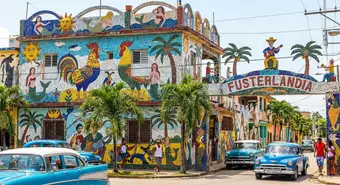
Fusterlandia: The Cuban Neighborhood Turned Living Mosaic Art
Discover Fusterlandia, the Cuban village transformed into mosaic art by José Fuster. History, naïve art, and the magic of Jaimanitas.
Leonardo Padura Presents Morir en la Arena at Hay Festival 2026
The master of Cuban noir fiction presents his new novel in Barranquilla, exploring 50 years of Cuba's history.