Art Deco Architecture in Havana: Hidden Gems from the 1930s
Discover Havana's most stunning Art Deco buildings, from the Bacardí Building to the América Theater — Cuba's overlooked architectural treasures.
5 min read
When Havana dressed itself in geometry and glamour
Some cities wear their architecture like a second skin. Havana is one of them. And beneath the layers of colonial baroque, republican neoclassicism, and Soviet brutalism lies a dazzling stratum that many visitors overlook: Havana’s Art Deco heritage from the 1930s and 1940s.
While New York was raising the Chrysler Building and Miami Beach was covering Ocean Drive in geometric pastels, Havana was building its own version of the 20th century’s most elegant style — but with Caribbean flair, local materials, and a boldness that still takes your breath away.
The context: Cuba in the Roaring Twenties
To understand why Havana filled up with Art Deco, you need to understand Cuba of that era. Between 1920 and 1940, the island enjoyed a period of relative economic prosperity. Sugar — “white gold” — generated enormous fortunes. American tourism flowed steadily, especially during Prohibition (1920-1933), when thousands of Americans crossed the Florida Straits seeking rum, music, and entertainment.
That money translated into ambitious construction. Cuban architects trained in Europe and the United States — like Esteban Rodríguez Castells, Rafael de Cárdenas, and José Menéndez — found in Art Deco the perfect language: modern, cosmopolitan, yet adaptable to the island’s tropical identity.
The Bacardí Building: Havana’s Art Deco crown jewel
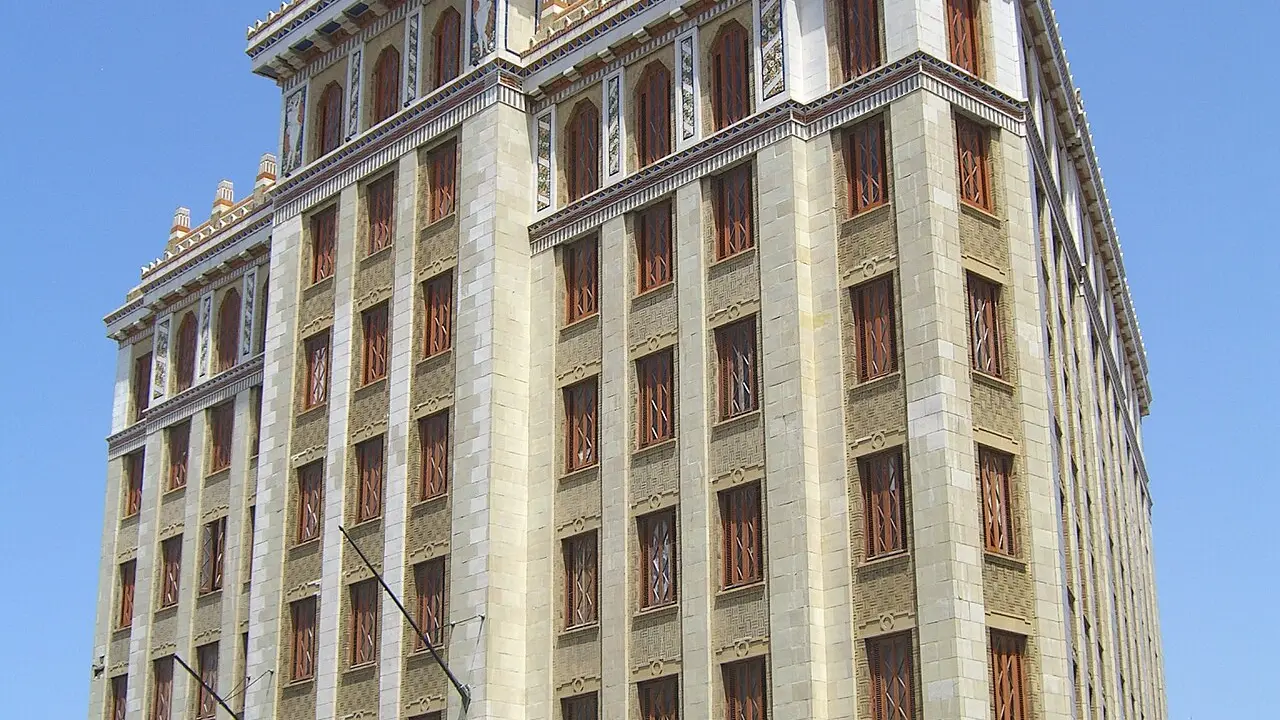
If one building embodies Havana’s Art Deco, it’s the Bacardí Building, inaugurated in December 1930 as headquarters of the legendary rum company.
Designed by architects Esteban Rodríguez Castells and Rafael Fernández Ruenes, the 12-story building combines:
- A facade of red Bavarian granite that gives it its unmistakable color
- Enameled terracotta panels with geometric motifs and nymph figures
- The famous stepped tower crowned by a bronze bat — Bacardí’s symbol
- Marble and granite interiors with lamps stamped with the bat logo
Located at Avenida de Bélgica 261, in the heart of Old Havana, the Bacardí was restored in 2001 and remains one of the finest Art Deco buildings in all of Latin America.
López Serrano: Havana’s first skyscraper
In 1932, just two years after the Bacardí, the López Serrano Building opened in the Vedado neighborhood. Designed by architects Ricardo Mira and Miguel Rosich, this 14-story building was Havana’s tallest for decades.
Its stepped silhouette inevitably recalls New York skyscrapers, but with more intimate proportions adapted to the Caribbean context. The geometric details of its doors, lobbies, and railings are a living catalog of Art Deco decorative vocabulary.
López Serrano was built as a luxury apartment building — a novelty in 1930s Cuba — and marked the beginning of Vedado’s vertical growth.
Teatro América: cinema as Art Deco temple
If the Bacardí is the commercial jewel and López Serrano the residential one, the Teatro América (1941) is the entertainment jewel.
Designed by Fernando Martínez Campos and Pascual de Rojas, this monumental movie theater on Avenida de Italia (Galiano) was built to seat 1,500 spectators. Its curved facade, luminous marquee, and streamlined interior make it one of the finest examples of Streamline Art Deco in the Caribbean.
Though it has suffered considerable deterioration, the Teatro América retains its spatial grandeur and original geometric reliefs — a reminder of Cuban cinema’s golden age.
Beyond downtown: residential Art Deco
What makes Havana’s Art Deco truly special is that it wasn’t limited to grand institutional buildings. Across Central Havana, Vedado, and Miramar, hundreds of houses and apartment buildings adopted the style between 1930 and 1950:
- Edificio Solimar (Soledad and San Lázaro): famous for its undulating facade mimicking ocean waves
- Vedado houses: portals with geometric reliefs, glass block windows, iron gates with zigzag motifs
- Neighborhood cinemas: like the Fausto, Payret, and dozens more that brought Art Deco glamour to working-class neighborhoods
This democratization of style is what sets Havana apart from other Art Deco capitals. Here, the style wasn’t just for corporations and millionaires — it reached middle-class homes.
Tropical Art Deco: Caribbean adaptation
Cuban architects didn’t blindly copy European and American models. They created what some historians call “Tropical Art Deco”, with intelligent adaptations:
- Open terraces and balconies to catch the sea breeze
- Cross-ventilation integrated into the decorative design
- Vibrant colors — pinks, turquoises, yellows — instead of the grays and blacks dominant elsewhere
- Tropical plant motifs mixed with classic Art Deco geometry
- Hydraulic mosaic floors with geometric patterns manufactured in Cuba
This fusion created buildings that feel simultaneously international and deeply Cuban.
The preservation challenge
Today, many of these treasures face a relentless enemy: deterioration. Decades of deferred maintenance, Malecón sea salt, hurricanes, and material shortages have taken their toll on Havana’s Art Deco heritage.
Organizations like the Office of the Historian of Havana and the international Art Deco Society have worked to document and, when possible, restore these buildings. But the task is monumental.
The paradox is that the same isolation that accelerated deterioration also saved the buildings from demolition. While other Latin American cities tore down their Art Deco heritage to build glass towers, Havana kept its — sometimes by accident more than intention.
An open-air museum
Walking through Havana with eyes attuned to Art Deco is discovering a city within the city. Every corner of Central Havana, every street in Vedado, can reveal a carved door, a geometric stained-glass window, an iron gate with the unmistakable zigzag of the 1930s.
It’s a heritage that doesn’t appear in conventional tourist guides, but tells a fascinating story: of a cosmopolitan, prosperous, and bold Cuba that knew how to take the best from the world and make it irrevocably its own.
Havana Art Deco isn’t just architecture. It’s memory solidified in granite, mosaic, and tropical light.
Frequently asked questions
What are the most important Art Deco buildings in Havana?
Why does Havana have so much Art Deco architecture?
Can you visit the Bacardí Building in Havana?
What makes Cuban Art Deco different from other cities?
How we got here
Background
The first thing we published on this topic.
Cuban Music Conquers the Latin Grammys
Cuban artists sweep the ceremony with awards in multiple tropical music categories.
Old Havana Restoration Reaches a New Milestone
Rehabilitation work in the historic quarter reveals colonial frescoes from the 18th century.
Related articles
Coppelia Ice Cream: Cuba's Cathedral of Ice Cream Turns 60
The history, flavors, and current state of Havana's iconic Coppelia ice cream parlor, Cuba's sweetest institution since 1966.
Benny Moré: The Wildman of Rhythm Who Defined Cuban Music
Life and legacy of Benny Moré, Cuba's greatest singer. From the sugarcane fields of Lajas to conquering Havana and Mexico with his unique voice.
Tropicana: The Paradise Under the Stars That Dazzled the World
The history of Havana's Tropicana cabaret from 1939 to today. Architecture, shows, and its enduring Cuban cultural legacy.
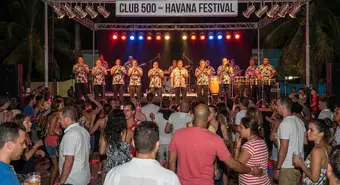
Havana's Salsa Festival Celebrates Orquesta Revé's 70th Anniversary
The 10th Festival de la Salsa honors a decade of music and 70 years of Elito Revé y su Charangón at Havana's Club 500.
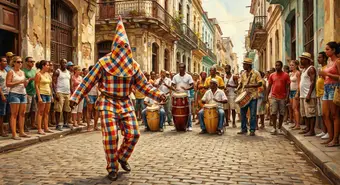
Abakuá: Cuba's Secret Afro-Cuban Society That Defied Slavery
History of the Abakuá secret society in Cuba, from the Ékpè of Calabar to the ñáñigos of Havana. Rituals, íremes, and cultural legacy.
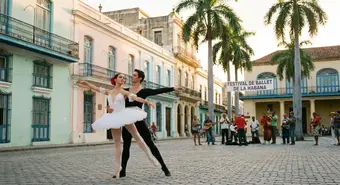
Carlos Acosta Reinvents The Nutcracker with Cuban Flavor
The legendary Cuban dancer transforms the holiday classic with Nutcracker in Havana, fusing classical ballet with Afro-Cuban rhythms.