Jazz Plaza 2026: Havana Beats to Jazz Rhythms Amid Crisis
Jazz Plaza celebrated its 40th edition in Havana (Jan 25-Feb 1) with 286 international artists, proving Cuban music endures despite blackouts.
4 min read
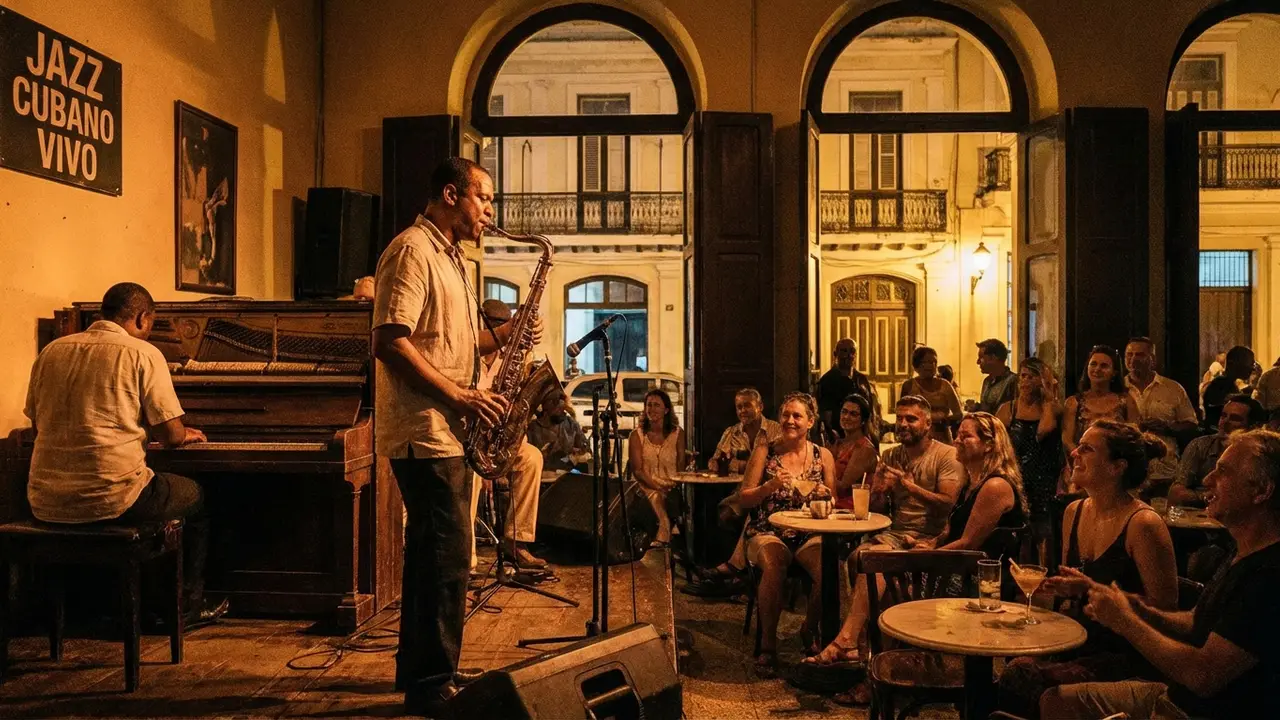
Illustration: Aroma de Cuba (AI)
In a Cuba battered by constant blackouts, economic crisis, and renewed threats from the Trump administration, a jazz festival managed to light up Havana for a week. The Jazz Plaza Festival, in its fortieth edition, demonstrated once again that Cuban music is as resilient as the people who create it.
Four Decades of Caribbean Jazz
Since its founding, Jazz Plaza has been the showcase where the best expressions of world jazz converge with Cuba’s rich musical tradition. Legends like Dizzy Gillespie, Max Roach, Roy Hargrove, and the incomparable Chucho Valdés — the master of Latin jazz who has defined the festival’s sound for generations — have graced its stages.
This year, from January 25 to February 1, the 2026 edition brought together approximately 286 international artists alongside hundreds of Cuban musicians in over 100 performances across 16 venues throughout the city: theaters, cultural centers like the Fábrica de Arte Cubano, basilicas, and private venues.
A Historic Edition Across Three Provinces
For the first time in its history, Jazz Plaza was held simultaneously in four territories: in addition to Havana, stages extended to Villa Clara, Holguín, and Santiago de Cuba. Víctor Rodríguez, president of the organizing committee, acknowledged the complexity of the moment: “Every year the festival takes place under very complex conditions, but I think they have never been as complex as they are now.”
Artists Who Defied Circumstances
Despite travel restrictions that have reduced the presence of U.S. artists, the festival featured outstanding figures including pianists Aaron Goldberg and Arturo O’Farrill, heir to a Cuban musical dynasty. Cuban musicians living abroad also shone, including Dayramir González and Harold López-Nussa, who maintain their connection to their homeland through music.
Ernán López-Nussa, an emblematic figure in Cuban jazz who has been present since the festival’s beginnings, recalled times when listening to jazz or rock was considered “enemy music” by the authorities. Today, jazz has established itself as a cultural symbol that attracts international interest and represents the best of Cuban artistic fusion.
Jazz by Generator Light
Cuba’s current reality inevitably seeped into the festival. During the week prior, Havana experienced power cuts of up to 12 hours in several neighborhoods. Sponsor Tulip Power provided generators to keep rehearsals running at Abdala Studios in Miramar, one of the best-equipped on the island.
“I haven’t been able to pump water for five days, and all I eat is spaghetti and pizza. I can’t take it anymore,” confessed a musician during rehearsal, reflecting the daily precariousness Cuban artists face. Yet when they play, all of that fades away.
Economic and Tourism Impact
For workers and entrepreneurs in the tourism sector, Jazz Plaza represents a vital economic opportunity in times of tourism decline. A tour guide who preferred anonymity commented that her agency expected to serve 80 clients but ended up with between 60 and 70 due to cancellations over the geopolitical situation.
“There’s a certain amount of paranoia among visitors. We feel compelled to provide them with daily support, sending them photos and videos so they can see that the sky in Havana isn’t falling,” she explained.
Cuba Is a Country of Music
This phrase from Ernán López-Nussa captures the essence of what Jazz Plaza means to Cuba. In the midst of the worst crisis in decades, music remains the refuge and resistance of a people who refuse to give up.
The festival proved that neither blackouts, nor political threats, nor scarcity can silence the chords of Cuban jazz. Because in Havana, when the lights go out, the people provide the music.
Sources: El País, Cuba Group Tour
Frequently asked questions
When was the Jazz Plaza 2026 Festival held?
Which artists performed at Jazz Plaza 2026?
How did the blackouts affect the festival?
What is the history of Jazz Plaza Festival?
Sources
- El País · english.elpais.com
How we got here
Background
The first thing we published on this topic.
Cuban Music Conquers the Latin Grammys
Cuban artists sweep the ceremony with awards in multiple tropical music categories.
Son Cubano: The Rhythm That Conquered the World
From the mountains of Oriente to Broadway stages. History, instruments, and legends of the musical genre that defines Cuba.
Related articles
Jazz Plaza 2026: Havana Pulses with Music Despite It All
The 41st International Jazz Plaza Festival brought together over 1,500 artists from 20 countries. A chronicle of Cuban musical resilience.
Tropicana: The Paradise Under the Stars That Dazzled the World
The history of Havana's Tropicana cabaret from 1939 to today. Architecture, shows, and its enduring Cuban cultural legacy.
Carlos Acosta Reinvents The Nutcracker with Cuban Flavor
The legendary Cuban dancer transforms the holiday classic with Nutcracker in Havana, fusing classical ballet with Afro-Cuban rhythms.
Leo Brouwer: The Cuban Master Who Reinvented Classical Guitar
Meet Leo Brouwer, the Cuban composer and guitarist who revolutionized classical guitar from Havana to Carnegie Hall.
Callejón de Hamel: Havana's Open-Air Afro-Cuban Art Gallery
Discover Callejón de Hamel, the vibrant epicenter of Afro-Cuban art in Centro Habana with murals, sculptures, and Sunday rumba.

TITOVERSE: Cuba Launches Its First Animated Superhero Series
ICAIC debuts TITOVERSE: Genesis, Cuba's first animated superhero series aiming to capture global audiences with Cuban identity.