Cuban Baseball: The History of Cuba's National Passion
Discover the history of baseball in Cuba, from 1864 to today. How pelota became a symbol of identity, freedom, and national pride.
5 min read
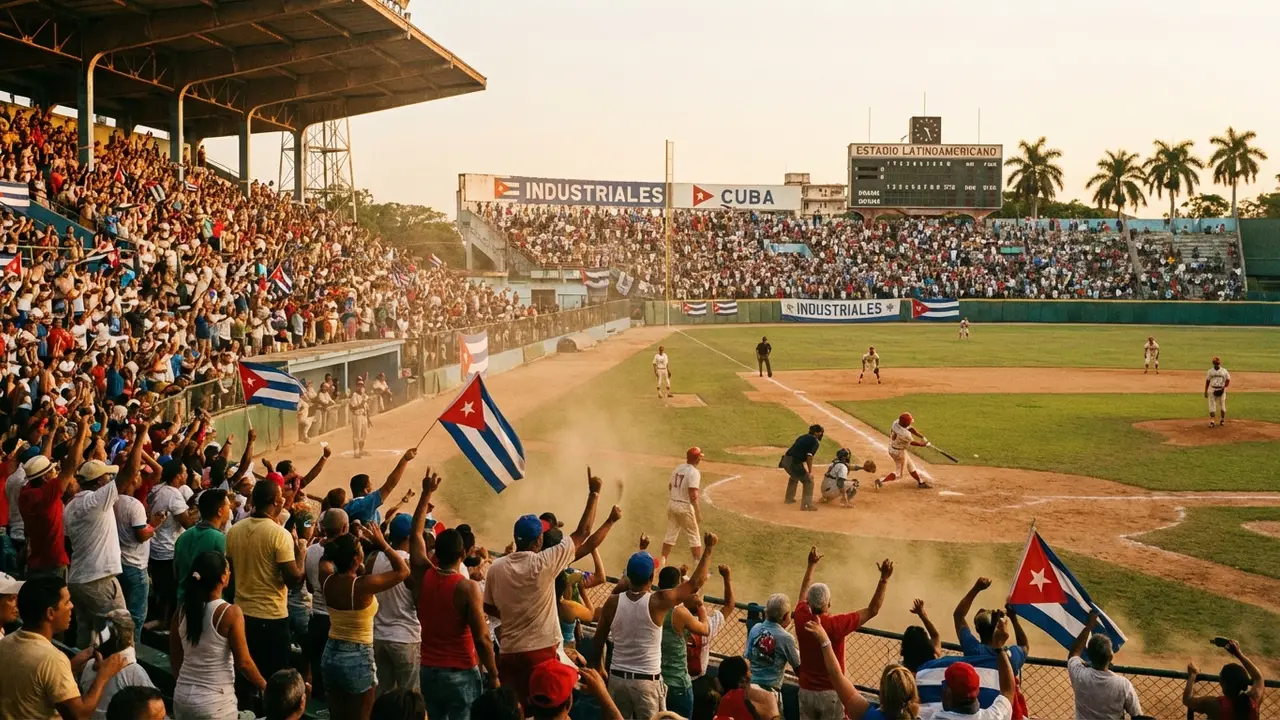
Illustration: Aroma de Cuba (AI)
In Cuba, baseball isn’t just a sport — it’s the island’s secular religion. From the neighborhoods of Havana to the sugar mill towns of Oriente, la pelota drives conversations, defines rivalries, and unites generations. It’s more Cuban than coffee, more passionate than the corner domino game.
The Origins: Rebellion with Bat and Glove (1864-1878)
The story begins in the 1860s, when young Cubans studying at American universities returned home with bats, balls, and a game that would transform the culture forever. Nemesio Guillot, a student at Spring Hill College in Alabama, founded the Habana Base Ball Club with his brother Ernesto in 1868.
The first organized match was played on December 27, 1874, at Palmar del Junco in Matanzas, where Club Habana defeated Matanzas 51 to 9 — a score that seems from another planet by today’s standards.
But baseball was far more than a game. Spanish colonial authorities, alarmed that Cubans preferred baseball to bullfighting, banned the sport in 1869. Far from killing it, the ban transformed baseball into a symbol of freedom and anti-colonial resistance.
“Baseball didn’t come to Cuba to entertain. It came to liberate.”
The Cuban League: Pioneering Integrated Baseball (1878-1961)
In 1878, the Cuban League was born — one of the first professional baseball leagues in the world. Three teams inaugurated the competition: Almendares, Habana, and Matanzas.
What made the Cuban league extraordinary was something revolutionary for its time: starting in 1900, it admitted Black players, decades before Jackie Robinson broke the color barrier in the American Major Leagues. Cuba became the place where Negro League stars like Oscar Charleston and John Henry Lloyd played every winter on integrated teams.
Legends Who Crossed Borders
- Esteban Bellán: first Latin American to play in a US major league (1871)
- José Méndez: “The Black Diamond,” inducted into the Baseball Hall of Fame in 2006
- Cristóbal Torriente: one of the greatest hitters of his era, also in the Hall of Fame
- Martín Dihigo: the only player inducted into the Hall of Fame of four countries (Cuba, USA, Mexico, Venezuela)
The rivalry between Almendares and Habana split Cuba the way Barcelona and Real Madrid divide Spain. Every Cuban was born blue (Almendares) or red (Habana).
The Revolutionary Era: The Serie Nacional (1962-Present)
After the 1959 Revolution, professional baseball was eliminated, and in 1962 the Serie Nacional de Béisbol was born — an amateur system where each province fields its own team. The sport was democratized: no longer a business, but the people’s heritage.
Teams That Write History
| Team | Province | Titles | Nickname |
|---|---|---|---|
| Industriales | Havana | 12 | ”Los Azules” |
| Santiago de Cuba | Santiago | 8 | ”Las Avispas” |
| Pinar del Río | Pinar del Río | 5 | ”Los Vegueros” |
| Villa Clara | Villa Clara | 5 | ”Los Naranjas” |
Industriales is the most popular and polarizing team. Being an Industriales fan in Cuba is like supporting Boca Juniors in Argentina — an identity carried in the blood.
Immortal Figures of the Serie Nacional
Cuba has produced extraordinary talents who shone both on and off the island:
- Omar Linares: “El Niño,” widely considered the greatest amateur third baseman in history
- Orestes Kindelán: the most feared home run hitter in Cuban baseball
- Pedro Luis Lazo: legendary Pinar del Río pitcher with over 2,500 strikeouts
The Exodus: Talent That Emigrates
Since the 1990s, a wave of Cuban ballplayers has sought the US Major Leagues, many through dangerous routes:
- José Abreu: American League MVP (2020)
- Yoenis Céspedes: New York Mets star
- Aroldis Chapman: fastest pitch ever recorded (105.8 mph)
- Yordan Álvarez: Rookie of the Year (2019) and Houston Astros star
The exodus has weakened the Serie Nacional but has also placed Cuba’s name at the pinnacle of world baseball.
Estadio Latinoamericano: The Cathedral
The Estadio Latinoamericano in Cerro, Havana, is the second-largest baseball stadium in the world by capacity (55,000 spectators). Opened in 1946, it has witnessed historic moments, including President Obama’s 2016 visit to watch a game between the Tampa Bay Rays and Industriales.
Going to “El Latino” on a Sunday is a full sensory experience: the aroma of roasted peanuts, the vendors’ calls, the roar of the crowd. It’s where Cuba feels most like Cuba.
Street Ball: Neighborhood Baseball
But Cuban baseball doesn’t live only in stadiums. It lives on every block, every corner, every empty lot where a child improvises a bat from a broomstick and a ball from rolled-up socks. “Pelota de cuatro esquinas” — the street version with adapted rules — might be Cuba’s most democratic institution.
Cuba on the World Stage: Olympic Glory
Cuba has been an amateur baseball powerhouse:
- 3 Olympic gold medals (1992 Barcelona, 1996 Atlanta, 2004 Athens)
- 25 amateur baseball world championships
- Consistent participation in the World Baseball Classic and the Caribbean Series
Recently, Cuba has returned to international competition in the 2026 Serie de las Américas, where the team has shown that Cuban talent remains alive despite tremendous challenges. Read more about Cuba’s epic comeback in the Caribbean Series.
The Future of Cuban Baseball
Cuban baseball faces unprecedented challenges: talent emigration, economic crisis, deteriorating sports infrastructure. But there are also signs of hope. Participation in international leagues and agreements with MLB are opening doors that were closed for decades.
What will never change is the passion. As long as there’s a child on a street in Camagüey or Santiago batting a rag ball, Cuban baseball will live on. Because in Cuba, you don’t play baseball — you live it.
Interested in Cuban culture? Discover the history of son cubano, Cuban rumba, and the Santiago Carnival.
Frequently asked questions
When did baseball arrive in Cuba?
Why is baseball so important in Cuba?
What is Cuba's Serie Nacional?
Which are the most successful Cuban baseball teams?
How we got here
Background
The first thing we published on this topic.
Old Havana Restoration Reaches a New Milestone
Rehabilitation work in the historic quarter reveals colonial frescoes from the 18th century.
Governments Issue Travel Warnings for Cuba Amid US Tensions
Canada, Argentina, Spain and other countries warn citizens about Cuba's crisis as Washington's oil blockade and prolonged blackouts affect the island.
Related articles
Havana's Salsa Festival Celebrates Orquesta Revé's 70th Anniversary
The 10th Festival de la Salsa honors a decade of music and 70 years of Elito Revé y su Charangón at Havana's Club 500.
Bad Bunny at Super Bowl LX: Cuba Present on the World's Biggest Stage
Bad Bunny included the Cuban flag in Super Bowl LX, moving Cubans amid crisis. Analysis of the most Latino halftime show in history.
Fernando Hechavarría Wins Cuba's National Theater Prize After 50 Years
The Holguín-born actor receives Cuba's highest theater honor for a career spanning Teatro Escambray to Teatro El Público.
Las Parrandas de Remedios: Cuba's UNESCO Heritage Festival
Discover Las Parrandas de Remedios, the Caribbean's oldest festival with 200+ years of history. UNESCO Heritage since 2018.
Ernesto Lecuona: The Cuban Gershwin Who Conquered the World
Life and legacy of Ernesto Lecuona, Cuba's most prolific composer with over 600 works that defined Latin music worldwide.
Arsenio Rodríguez: The Blind Marvel Who Revolutionized Cuban Music
Meet Arsenio Rodríguez, the blind tres genius who created the conjunto format, son montuno, and laid the foundations of modern salsa.