The Grito de Yara: When Céspedes Lit the Flame of a Free Cuba
On October 10, 1868, Carlos Manuel de Céspedes freed his slaves and launched the Ten Years' War from La Demajagua plantation.
5 min read
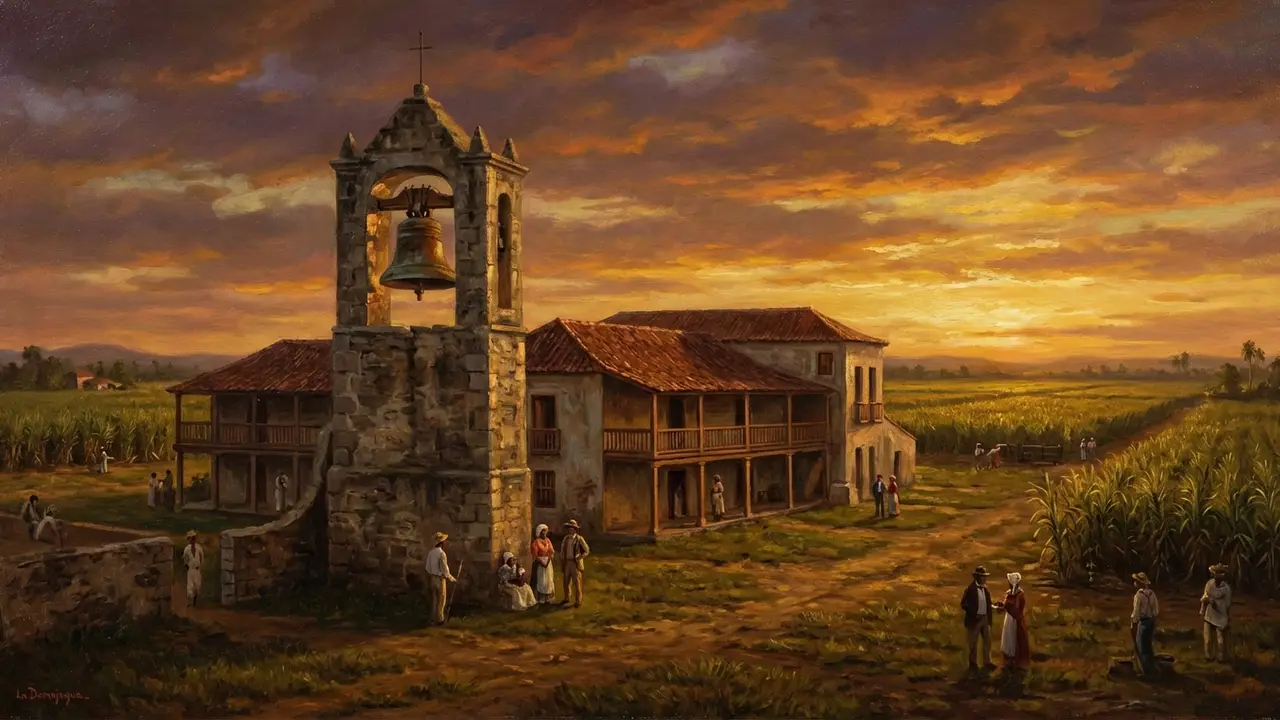
Illustration: Aroma de Cuba (AI)
The early hours of October 10, 1868 changed Cuba’s destiny forever. At La Demajagua sugar plantation, near Manzanillo, a lawyer, poet, and landowner named Carlos Manuel de Céspedes made the most transcendent decision in Cuban history: he freed his slaves, took up arms, and declared the island’s independence.
A man between two worlds
Carlos Manuel de Céspedes del Castillo was born in Bayamo on April 18, 1819, into a well-off Creole family. He studied law at the University of Havana and later earned his doctorate at the University of Barcelona. He traveled through Europe, absorbed the liberal ideas of the era, and returned to Cuba convinced that Spanish colonialism was unsustainable.
Back home, he established himself as a lawyer and landowner in eastern Cuba. He owned La Demajagua plantation, where dozens of enslaved people worked producing sugar. But Céspedes was no ordinary planter: he wrote poetry, composed music, and secretly conspired against the Spanish Crown.
The night that changed everything
By 1868, the situation had become unbearable. Spain squeezed Cuba with abusive taxes while denying political representation to Creoles. Masonic lodges and conspiratorial circles across eastern Cuba seethed with indignation. Céspedes was chosen to lead the revolutionary movement in the region.
The uprising was planned for a later date, but Spanish authorities discovered the conspiracy. There was no time to waste. On the night of October 9-10, Céspedes gathered the conspirators at La Demajagua and made a radical decision.
At dawn, he rang the plantation bell — the same bell that every day called enslaved workers to the fields — but this time the message was different. Before the assembled workers, Céspedes spoke words that would echo through centuries:
“Citizens! Until this moment you have been my slaves. From now on, you are as free as I am.”
With that act, he freed his approximately 30 enslaved people and offered them the chance to join as free men in the fight for Cuban independence. Most accepted.
The Manifesto of October 10
Céspedes was not improvising. Alongside the cry of freedom, he presented the Manifesto of the Revolutionary Junta of the Island of Cuba, a document laying out the reasons for insurrection and the movement’s principles:
- Total independence from Spain
- Gradual abolition of slavery with compensation to owners
- Universal suffrage for all free men
- Freedom of press and assembly
- Respect for property
The manifesto sought a difficult balance: attracting both reformist landowners and more radical sectors. The “gradual” abolition was a pragmatic concession that would spark debate throughout the war.
From planter to wartime president
With just 147 poorly armed men — many carrying machetes and farming tools — Céspedes marched on the town of Yara. The first engagement was a military disaster: Spanish troops scattered the rebels. Of the 147, only 12 remained.
Anyone else would have given up. When told that all was lost, Céspedes responded with a legendary phrase:
“Twelve men still remain. That is enough to achieve Cuba’s independence.”
And he was right. In the following weeks, thousands of Cubans joined the insurrection. Céspedes took Bayamo on October 20, making it the first free city in Cuba. It was there that Pedro Figueredo first sang La Bayamesa, which would become Cuba’s national anthem.
In April 1869, the Assembly of Guáimaro elected him as the first President of the Republic in Arms, Cuba’s first independent government structure.
The price of freedom
Céspedes’s story includes a devastating chapter. Spanish authorities captured his son Oscar and offered an exchange: surrender in return for his son’s life. Céspedes, torn apart, replied:
“Oscar is not my only son. I am the father of all Cubans who have died for the revolution.”
Oscar was executed. This personal sacrifice turned Céspedes into a tragic and revered figure — the Father of the Homeland.
Ironically, the very institutions he created ended up deposing him in 1873 amid internal political disputes. Céspedes retreated to the Sierra Maestra, where he lived in solitude and poverty. On February 27, 1874, Spanish troops found him at San Lorenzo. Rather than be captured, he threw himself from a cliff. He died as he lived: without surrendering.
A legacy that endures
The Grito de Yara unleashed the Ten Years’ War (1868-1878), Cuba’s first major independence conflict. Although it ended without achieving independence — with the Pact of Zanjón that Antonio Maceo rejected at Baraguá — it laid the foundation for everything that followed.
Without Céspedes there is no José Martí, who took up the torch in 1895. Without La Demajagua there is no Baire. Without the Grito de Yara there is no free Cuba.
Today, October 10 is a national holiday in Cuba. The La Demajagua bell is preserved as a sacred relic at the La Demajagua Museum in Manzanillo. And Carlos Manuel de Céspedes rests at the Santa Ifigenia Cemetery in Santiago de Cuba, alongside other heroes of the homeland.
His gesture — a wealthy man who sacrificed everything, including his own son, for the freedom of a people — remains one of the most extraordinary acts in Latin American history.
Interested in Cuban history? Read about Hatuey, Cuba’s first hero and the Protest of Baraguá.
Frequently asked questions
What was the Grito de Yara?
Why did Céspedes free his slaves?
What is the significance of the La Demajagua bell?
How long did the Ten Years' War last?
How we got here
Background
The first thing we published on this topic.
Old Havana Restoration Reaches a New Milestone
Rehabilitation work in the historic quarter reveals colonial frescoes from the 18th century.
Governments Issue Travel Warnings for Cuba Amid US Tensions
Canada, Argentina, Spain and other countries warn citizens about Cuba's crisis as Washington's oil blockade and prolonged blackouts affect the island.
Related articles
Trinidad, Cuba: The Time-Frozen City That Became a UNESCO Gem
Explore Trinidad, Cuba's best-preserved colonial city and UNESCO World Heritage Site since 1988. History, architecture, music, and the Sugar Mills Valley.
Cimarrones and Palenques: Slave Resistance in Cuba
The history of Cuban maroons who escaped slavery and built free communities called palenques in the mountains, forging a legacy of resistance.
Leo Brouwer: The Cuban Master Who Reinvented Classical Guitar
Meet Leo Brouwer, the Cuban composer and guitarist who revolutionized classical guitar from Havana to Carnegie Hall.
Elpidio Valdés: The Animated Hero Who Defined Cuban Childhood
Meet Elpidio Valdés, the mambí colonel created by Juan Padrón who became an icon of Cuban animation and a national symbol.
Cienfuegos: Complete Guide to Cuba's Pearl of the South
Discover Cienfuegos, Cuba's most French city. Guide to top sights, Palacio de Valle, Punta Gorda, and practical travel tips.
Cuban Choteo: How Humor Became Cuba's National Identity
Discover choteo, Cuba's unique form of irreverent humor that shaped national identity, from La Tremenda Corte to Álvarez Guedes.