Cuba's Transport Crisis: Fares Double as Public Transit Collapses
The US oil blockade paralyzes Cuba's public transport. Taxis run out of fuel, fares double, and electric tricycles emerge as the only alternative.
3 min read
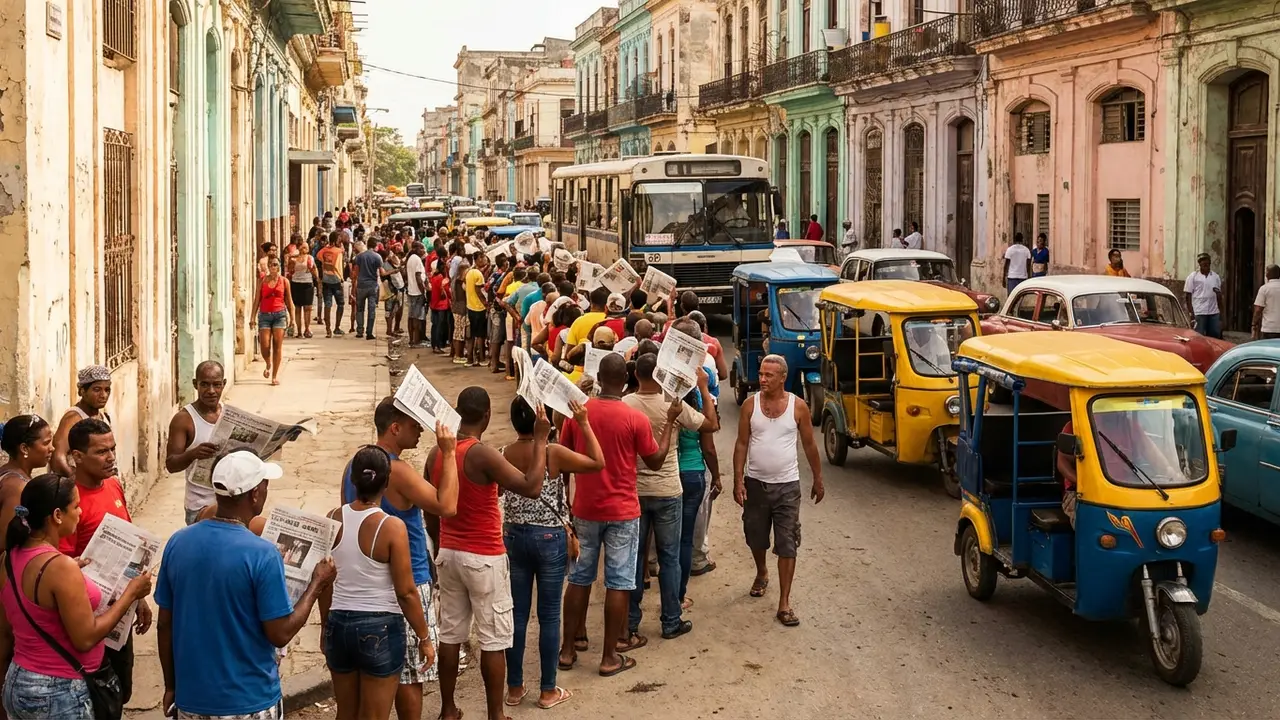
Illustration: Aroma de Cuba (AI)
The fuel crisis caused by the US oil blockade has hit Cuba’s public and private transport head-on, leaving millions without mobility options and doubling fares for the few alternatives still running.
State Transport: Virtually Shut Down
State transportation services are virtually paralyzed. Buses connecting neighborhoods and provinces have drastically reduced their frequencies, while interprovincial routes operate under severe limitations.
The situation is compounded by Cuba’s pre-existing chronic transport deficit, with an aging fleet entirely dependent on imported fossil fuels.
Private Taxis: No Fuel for Tomorrow
“The situation is very critical—we don’t have fuel to work. The CUPET station that supplies us isn’t getting any either, they won’t sell in US dollars anymore, and there are practically no cars left,” one taxi driver at the El Curita park in Centro Habana, one of the city’s busiest taxi stands, told OnCuba.
“I have enough to work today, but for tomorrow I don’t, and that’s how it is for all of us,” he added.
The piqueras—informal taxi stands where collective taxis organize routes—show a notable decrease in activity. Fares for common routes like Centro Habana to Cerro or Marianao now range between 300 and 400 pesos, double the usual rate.
Fares Double Across the Board
Interprovincial transport is also suffering. A passenger headed to Cárdenas in Matanzas province confirmed that her fare had doubled. The combination of scarcity and high demand creates perfect conditions for price inflation.
This increase compounds an already dire situation where the dollar has surpassed 500 Cuban pesos on the black market, further eroding people’s purchasing power.
Electric Tricycles: The Insufficient Alternative
Electric tricycles have emerged as one of the few viable options, but their capacity falls far short of meeting demand in a city like Havana.
A tricycle driver noted the visible decrease in cars on the road, while the number of people seeking transport remains unchanged. On the positive side, these operators are maintaining their regular prices.
“We have to be considerate, because we need to help each other—this is not the time to take advantage of the situation,” one driver said, offering concessions to vulnerable passengers.
A Domino Effect on Daily Life
Transport disruptions have a cascading effect on nearly every aspect of Cuban life. In fact, many of the emergency measures implemented by the government—including the four-day work week and university closures—are a direct response to people’s inability to get around.
Meanwhile, the island also faces record blackouts affecting 64% of the country and the suspension of international flights due to aviation fuel shortages.
People are trying to carry on with as much normalcy as possible, but remain braced for what may come in the weeks ahead if new fuel supplies don’t reach the island.
Frequently asked questions
Why is there a transport crisis in Cuba?
How much does transport cost in Cuba during the crisis?
What transport alternatives exist in Cuba now?
How long will Cuba's transport crisis last?
How we got here
Background
The first thing we published on this topic.
How Cubans Are Surviving the Fuel Rationing Crisis
Neighbors unite to cook with firewood, power cuts lasting up to 18 hours, and echoes of the Special Period. Testimonies from Havana on the energy crisis.
Cuba Postpones IT Convention 2026 Due to Energy Crisis
Cuba's main technology event, scheduled for March, is indefinitely postponed due to the 'extraordinary situation' facing the country.
Related articles

Cuba Sets Blackout Record: 64% of Country Without Power
Cuba recorded its worst blackout in history on Tuesday, with 64% of the territory without electricity during peak hours.
China Sends Rice to Cuba but Avoids Oil Commitment
Beijing announces 90,000 tons of rice and $80M in emergency aid, but won't confirm fuel shipments amid U.S. sanctions pressure.

Cuban peso hits historic low of 500 per dollar on informal market
The Cuban peso depreciated to 500 units per dollar, a new historic low amid economic pressure and US sanctions against the island.
Russia Halts Cuba Flights, Evacuates 4,000 Tourists Amid Crisis
Russian airlines Rossiya and Nordwind halt operations to Cuba due to jet fuel shortage. Russia is the island's second-largest source of tourists.
Copa Airlines Keeps Flying to Cuba by Tankering Fuel from Panama
Copa Airlines maintains flights to Havana by loading extra fuel in Panama, while Canadian, Russian, and European carriers cancel Cuba routes.

Cuba Loses 40% of Tourists as Canada Suspends All Flights
With all Canadian flights cancelled, Cuba loses 40% of its tourists amid the US oil blockade crisis.