How Cubans Are Surviving the Fuel Rationing Crisis
Neighbors unite to cook with firewood, power cuts lasting up to 18 hours, and echoes of the Special Period. Testimonies from Havana on the energy crisis.
2 min read
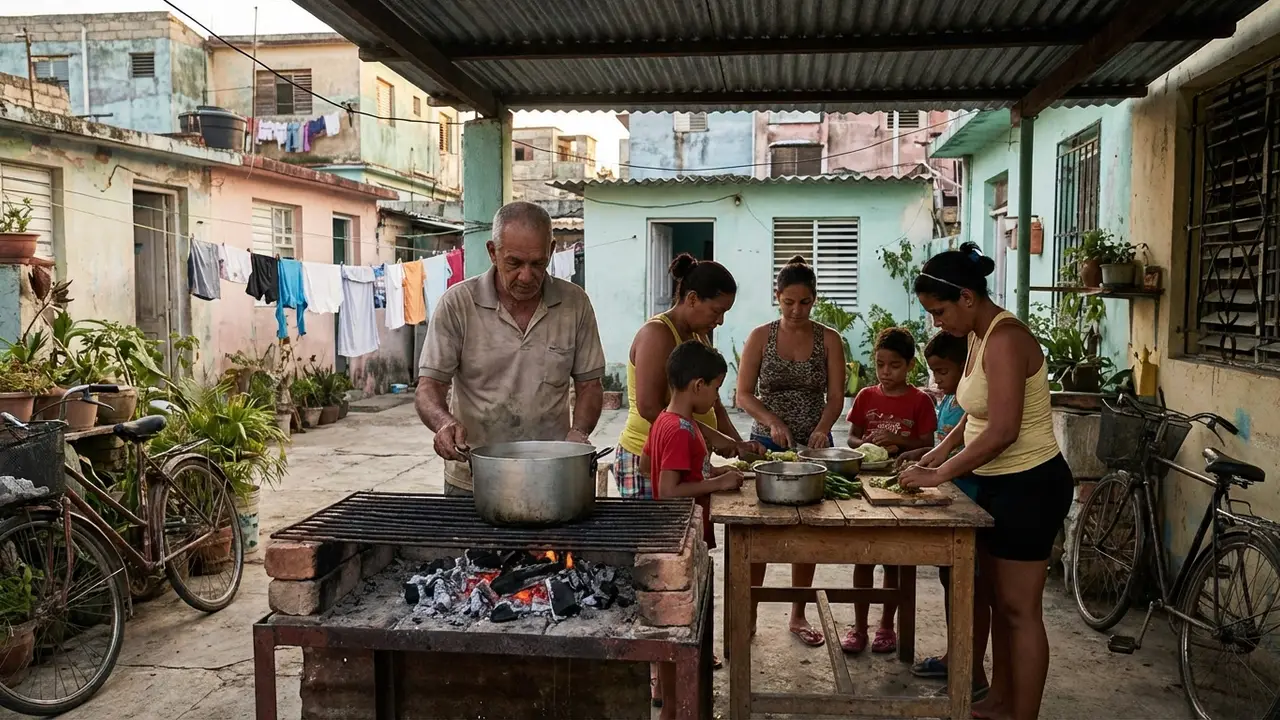
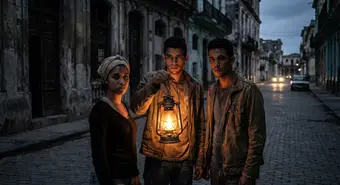
Illustration: Aroma de Cuba (AI)
In a neighborhood in southwest Havana, 68-year-old Elizabeth Contreras stirs charcoal in a makeshift kitchen built on cement blocks. On the grill is chicken that will feed three neighborhood families.
“Many people have been cooking like this for days because electric pots can barely be used without power and there’s little gas left,” she tells BBC Mundo. “We help each other as neighbors in this uncertainty.”
Echoes of the Special Period
The current situation brings back memories of the 1990s, when the collapse of the Soviet Union plunged Cuba into a crisis known as the Special Period.
Contreras, who lived through that era, says “what’s happening now seems worse to me.” In recent weeks, she has experienced power outages lasting up to 18 hours on more than one occasion.
President Díaz-Canel revived the concept of “option zero” — a survival plan proposed in the 90s for a scenario without oil.
Worse Than Before?
Michael Bustamante, a professor at the University of Miami, provides context: between 1991 and 1994, Cuba’s GDP fell by more than a third. Since the pandemic, the decline is estimated at 11%.
“The Cuban economy never fully recovered after the Special Period,” he explains. “Although the current collapse is smaller in percentage terms, it feels worse because it starts from an already delicate situation.”
The academic also points to a key difference: inequality. “After the emergence of well-stocked private stores, those with money can get things. There’s rampant inequality that has little to do with what was experienced in the 90s.”
Daily Life
Jennifer Pedraza, 34, stockpiles supplies to survive: light bulbs, rechargeable fans and lamps, portable chargers. “I also store water, which is failing.”
Her main concern is her 9-year-old son: “There’s almost never power at school. He has to do homework in the dark. He can’t watch cartoons or use his phone. It’s hard for a child to be in the dark all the time.”
The Numbers Behind the Crisis
With an average salary of 6,830 Cuban pesos (about $14 USD on the informal market):
- A bottle of cooking oil: ~$2.50 USD
- 30 eggs: ~$6 USD
More than half of monthly income goes to basics.
Those with relatives abroad sending remittances cope better. The rest make do as best they can.
Source: BBC Mundo
Frequently asked questions
How are Cubans cooking without gas?
How many hours of blackouts are there in Cuba?
What was Cuba's Special Period?
How are Cubans organizing to survive the crisis?
Sources
- BBC Mundo · bbc.com
How we got here
Background
The first thing we published on this topic.
Cuba Postpones IT Convention 2026 Due to Energy Crisis
Cuba's main technology event, scheduled for March, is indefinitely postponed due to the 'extraordinary situation' facing the country.
Cubans Erupt After Mesa Redonda: 'Everything Is a Lie'
A wave of criticism flooded social media after the government program where authorities addressed the energy crisis, banks, and international aid.
Related articles

Copa Airlines Keeps Flying to Cuba by Tankering Fuel from Panama
Copa Airlines maintains flights to Havana by loading extra fuel in Panama, while Canadian, Russian, and European carriers cancel Cuba routes.
Mexican Navy Ships Deliver 814 Tons of Humanitarian Aid to Cuba
Two Mexican Navy vessels docked in Havana carrying food and powdered milk as humanitarian aid amid Cuba's deepening energy crisis.
Fire at Havana's Ñico López Refinery Deepens Cuba's Energy Crisis
A fire at Cuba's largest refinery was quickly controlled. The blaze hit a warehouse, not processing areas, but heightens fears amid severe fuel shortages.
Electric Vehicles Replace Classic Cars on Cuba's Streets
The fuel crisis accelerates Cuba's shift to electric tricycles and buses on the streets of Havana.

Havana Drowning in Garbage: Only 44 of 106 Trash Trucks Operating
Cuba's fuel crisis paralyzes waste collection in Havana, creating a public health emergency with rising risks of dengue and leptospirosis.
Surviving Dark Cuba: A Generation on the Brink of Collapse
Cuban youth face an unprecedented energy crisis. Testimonies reveal the daily survival struggle on an island nearing total collapse.