Cuba Goes Dark: Satellite Images Show 50% Drop in Nighttime Light
Bloomberg analysis using NASA data reveals Cuban cities have lost up to half their nighttime illumination amid the deepening energy crisis.
2 min read
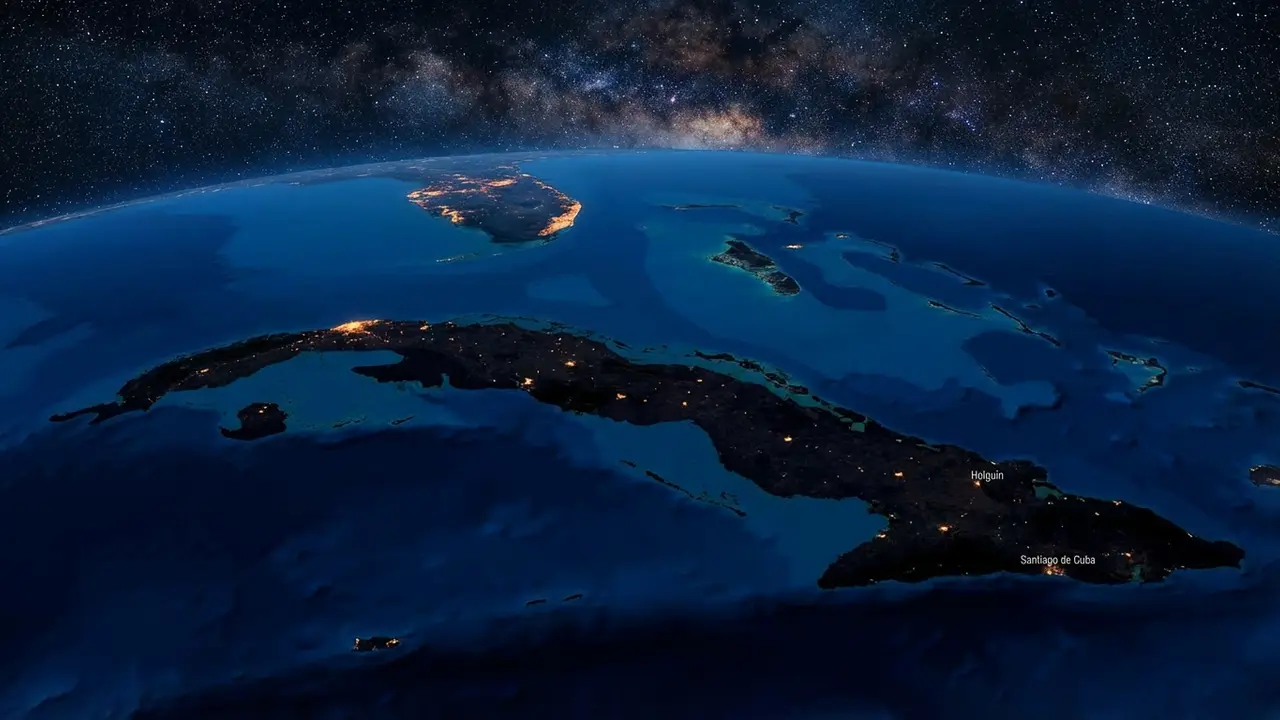
Illustration: Aroma de Cuba (AI)
Cuba from space: an island going dark
A striking analysis published by Bloomberg reveals what millions of Cubans experience every night: the island is literally going dark. Satellite images based on NASA data show that nighttime light intensity in several Cuban cities has dropped by up to 50% compared to historical levels.
The visual evidence is overwhelming. Eastern cities like Santiago de Cuba and Holguín appear considerably dimmer or completely dark in nighttime captures. The contrast with images from previous months is dramatic.
Havana: the relative exception
While eastern Cuba plunges into darkness, central Havana remains mostly illuminated. According to experts cited by Bloomberg, this is explained by both the political priority given to the seat of government and a greater capacity to adopt alternative solutions such as solar panels and battery systems.
However, even the capital is deteriorating. Eastern Havana neighborhoods like Alamar and Cojímar already show lower light intensity. President Díaz-Canel himself acknowledged increased blackouts in Havana due to the decision to prioritize electricity for the economy.
The perfect energy storm
Cuba’s electrical system was already struggling with vulnerabilities when a serious breakdown in December disrupted the connection between Havana and key thermoelectric plants in Matanzas. Then the situation collapsed:
- January 3: The capture of Nicolás Maduro cut Venezuelan oil supply
- January 9: Mexico made its last significant crude delivery
- February: Washington’s warning about tariffs on countries supplying fuel to Cuba closed the last routes
The Trump administration blocked shipments that accounted for nearly 60% of the approximately 100,000 daily barrels Cuba needs to sustain electricity generation. Since then, the island has not received significant oil deliveries.
Emergency measures
Facing collapse, the government has implemented drastic measures:
- Reduced public transportation routes
- Four-day state work week
- Closure of tourist facilities
- Gasoline sales restrictions
- 72-hour power cuts for businesses violating energy savings rules
Analysts estimate that available reserves could cover fewer than 20 days of consumption, though no official figures exist.
Worse than the Special Period
Specialists warn that, unlike the 1990s crisis following the collapse of the Soviet Union, today’s electrical system is significantly more deteriorated. Aging thermoelectric plants and the complete lack of new infrastructure investment make recovery more difficult even if fuel supplies were restored.
The satellite images don’t lie: Cuba is going dark, and every night without power deepens a crisis affecting millions of people in their daily lives.
Frequently asked questions
How much has nighttime light decreased in Cuba?
Which Cuban cities are most affected by blackouts?
Why is Cuba facing such a severe energy crisis in 2026?
How much oil reserves does Cuba have left?
How we got here
Background
The first thing we published on this topic.
How Cubans Are Surviving the Fuel Rationing Crisis
Neighbors unite to cook with firewood, power cuts lasting up to 18 hours, and echoes of the Special Period. Testimonies from Havana on the energy crisis.
Cuba Postpones IT Convention 2026 Due to Energy Crisis
Cuba's main technology event, scheduled for March, is indefinitely postponed due to the 'extraordinary situation' facing the country.
Related articles
Cuban peso hits historic low of 500 per dollar on informal market
The Cuban peso depreciated to 500 units per dollar, a new historic low amid economic pressure and US sanctions against the island.
Cuban Bishops Cancel Vatican Visit Due to Fuel Crisis
The ad limina visit of Cuban bishops to Pope Leo XIV, scheduled for February, was canceled due to lack of aviation fuel on the island.
Dollar Breaks 500 Cuban Peso Barrier in Black Market
The US dollar hit a historic high of 500 Cuban pesos, just two months after the government implemented a floating exchange rate to control the informal market.
US Bans the Use of Cuban Banks for Fuel Imports for Private Sector
The US Department of Commerce suspends the use of state-owned Cuban banks for fuel transactions intended for the island's emerging private sector.

Cuba vs Puerto Rico: High-Stakes Duel in World Baseball Classic 2026
Cuba and Puerto Rico face off today in a key WBC 2026 match. Find out game details, timing, and what's on the line for the Cuban national team.
Economy in Cuba: EIU Projects 7.2% Contraction in 2026
The Economist Intelligence Unit warns that the Cuban economy will suffer a dramatic 7.2% drop this year, accumulating a 23% collapse since 2019.