Cuba Accepts Criminal Deportees from US for First Time in Decades
Cuban regime received 170 deportees in February, including convicted criminals for first time in decades, marking historic shift in migration policy.
4 min read
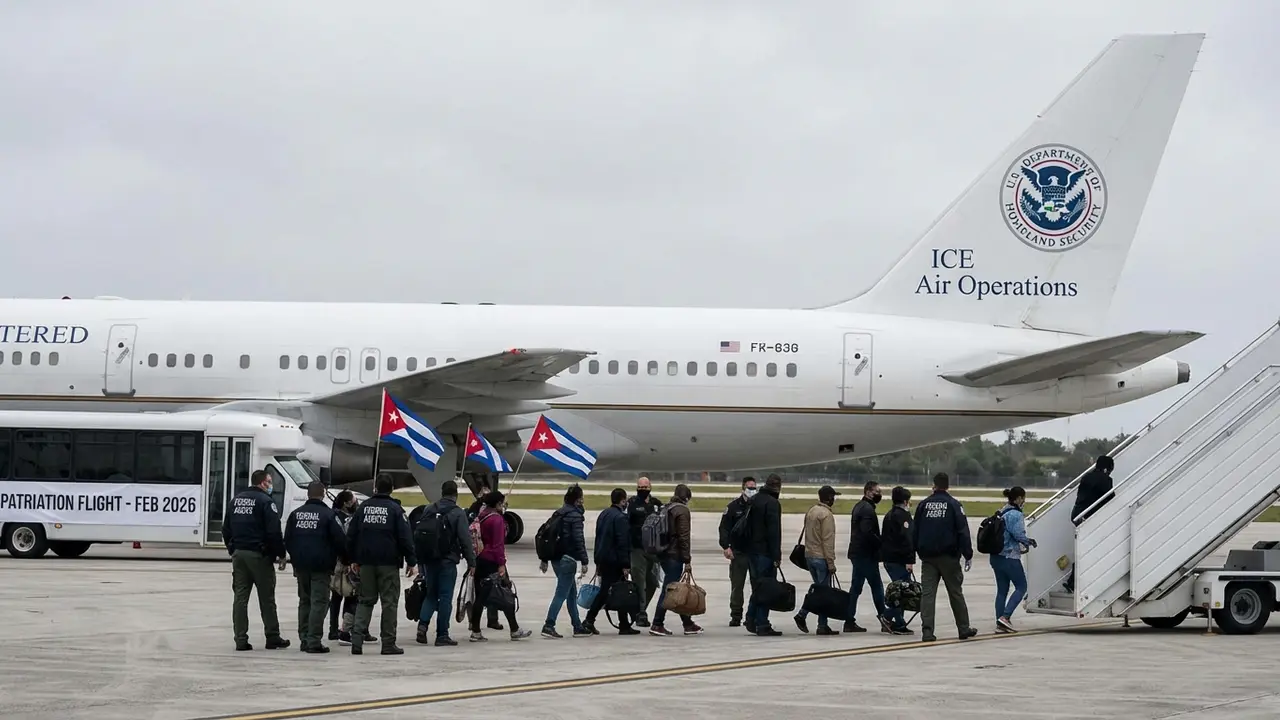
Illustration: Aroma de Cuba (AI)
February 9, 2026, marked a historic milestone in US-Cuba migration relations: for the first time in decades, the Cuban regime accepted deportees with serious criminal records from US territory.
The flight that changed history
The year’s first ICE Air deportation flight transported 170 Cuban nationals back to the island, including individuals convicted of crimes such as murder, kidnapping, rape, and drug trafficking. This decision by the Cuban government represents a radical shift in their traditional migration policy.
“Cuba accepts criminal deportees for the first time,” confirmed US immigration sources, describing the event as “an unprecedented policy change.”
Why is this so significant?
For decades, Cuba had systematically refused to accept back deportees with criminal records, creating a legal limbo for thousands of Cubans detained in the United States. This situation had greatly complicated Washington’s deportation efforts.
The numbers that matter
- 170 deportees on the first flight of 2026
- First criminals accepted by Cuba in decades
- Thousands of cases previously blocked by Cuban refusal
- New cooperation between both governments
Trump administration pressure
The change coincides with the intensification of migration policies under the Trump administration. Marco Rubio and other officials have exerted diplomatic pressure on the Cuban regime to accept deportees, especially those with criminal backgrounds.
Sources suggest Cuba yielded under “increased economic and diplomatic pressure” from Washington, though specific negotiation details remain classified.
Impact on the Cuban community
This development has profound implications for the 300,000 Cubans currently with deportation orders in the United States:
Immediate changes
- Higher probability of effective deportation
- End of the “protective shield” of Cuban refusal
- Acceleration of ICE processes
Affected cases
- I-220A holders with backgrounds
- Asylum seekers with minor crimes
- Previous temporary protection beneficiaries
Miami reactions
The Cuban-American community in Florida shows divided reactions to this news. While some support the deportation of criminals, others express concern about the precedent this establishes.
José Martínez, an immigration attorney in Miami, comments: “This changes the entire legal landscape for our clients. Cuba can no longer be the shield it once was.”
International context
This migration cooperation emerges at a time of complex diplomatic tensions between Washington and Havana. Despite sanctions and maximum pressure policies, both governments have found common ground on specific migration issues.
Key factors
- US economic pressure on Cuba
- Migration crisis in the Caribbean
- Diplomatic needs on both sides
What comes next?
Experts predict this first flight is only the beginning of a new era in Cuba-US deportations. The established precedent suggests that:
- More deportation flights will follow
- Cuba will continue accepting criminals
- ICE will accelerate pending cases
- Migration policies will tighten
FAQ: Frequently asked questions
Why did Cuba change its policy now?
Economic and diplomatic pressure from the Trump administration, combined with the regional migration crisis, forced the Cuban regime to cooperate on deportation issues for the first time in decades.
What types of criminals were deported?
According to ICE, the flight included people convicted of murder, kidnapping, rape, drug trafficking, and other serious crimes that previously could not be deported to Cuba.
Does this affect Cubans with I-220A?
Potentially yes. The policy change eliminates a de facto protection that many Cubans had, even those with supervision documents like I-220A.
Will there be more deportation flights?
Signs point to yes. This first flight establishes a precedent that will likely continue under current Trump administration policies.
This article is constantly updated with new information on deportations and migration policies. For specific legal consultations, contact a certified immigration attorney.
Related links:
How we got here
Background
The first thing we published on this topic.
Cuba Records Second Magnitude 5 Earthquake in Three Days Near Santiago
A 5.0 magnitude tremor shook eastern Cuba, two days after a 5.6 quake in Guantánamo that damaged homes
45,000 Cubans Face Deportation Orders in the US
Some 550,000 Cubans vulnerable under Trump's immigration policies. Separated families and a community under pressure.
Related articles
FBI Mission Arrives in Cuba to Investigate Florida Speedboat Shooting
An FBI team arrived in Havana to investigate a February incident involving a Florida-based boat that left five dead.

Cuban Rafter Detained in Tennessee Despite Adjustment Act Process
Ilaris Torres Reyes remains detained since February during permanent residency process under Cuban Adjustment Act.
DHS Restricts Asylum in 2026: Cubans Without Work for 'Many Years'
New DHS proposal could leave Cuban asylum seekers without work authorization for 'many years', exacerbating poverty and economic hardship.
US Court Rules on I-220A: Orders New Review in Key Cases
Historic decision by 11th Circuit Court of Appeals vacates BIA orders and mandates reconsideration of I-220A cases, offering hope to 300,000+ Cubans.

Cuba Defends Shootdown of Florida Speedboat: 'We Are Not Aggressive'
Díaz-Canel justifies the action taken by Cuban coast guards following an incident that left four dead. Cuba maintains it acted in defense of its sovereignty.
Cuban with I-220A: 'I Thought They Would Detain Me' at Court
Exclusive testimony from a young Cuban after his hearing at Orlando Immigration Court: calm process but date pushed back to late 2026