Cuba Denies Sale of Mexico's Food Donations in Hard Currency Stores
The Ministry of Domestic Trade (MINCIN) clarifies that products donated by Mexico are distributed free of charge and not sold in hard currency stores.
2 min read
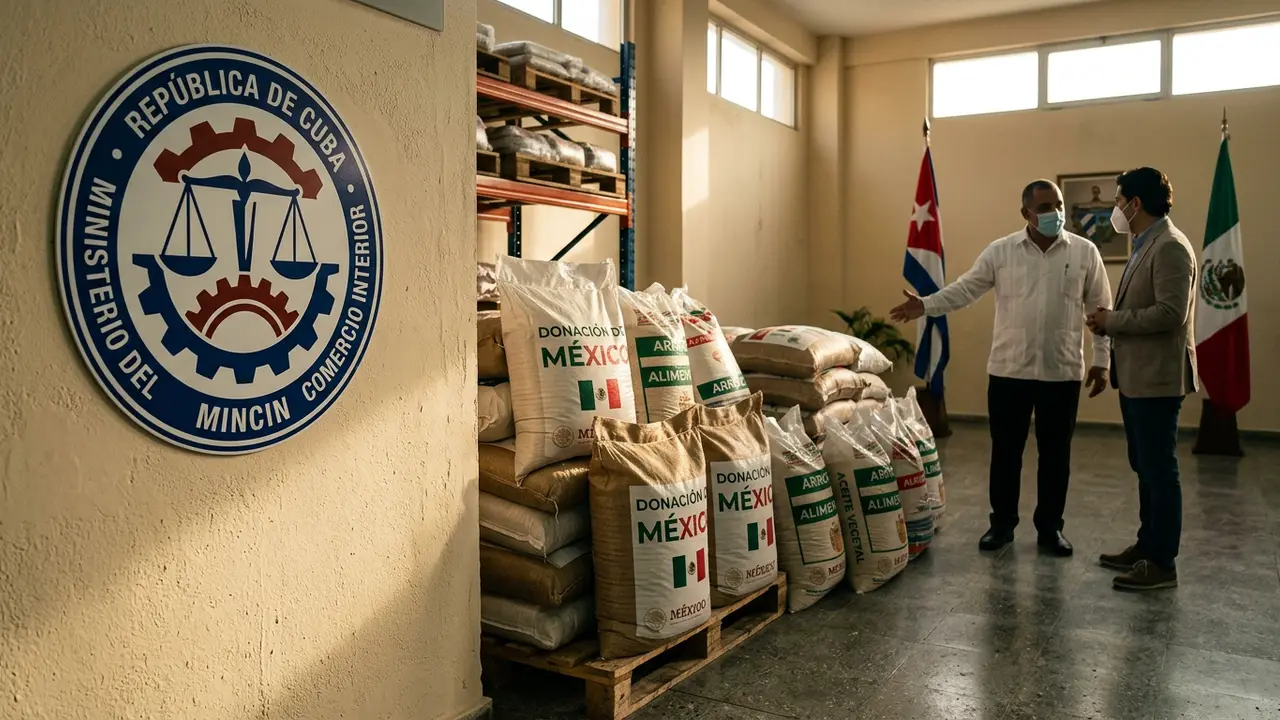
Illustration: Aroma de Cuba (AI)
Cuba’s Ministry of Domestic Trade (MINCIN) has issued an official statement to deny rumors circulating on social media regarding the alleged sale of products donated by Mexico in the island’s hard currency stores (MLC). The clarification aims to halt misinformation during a period of high economic sensitivity across the island.
Free Distribution Guaranteed by MINCIN
According to the official notice released through institutional channels, the Cuban government ensures that all resources sent from Mexico as humanitarian aid are being distributed to the population free of charge. This process is carried out via local neighborhood corner stores (bodegas) under the national rationing system.
Authorities emphasized that these false reports are intended to spark unrest and distrust in the management of international aid. The distribution of the 1,200 tons of food that recently arrived continues according to the scheduled timeline for each province.
Mexico’s Role in the Current Crisis
Mexico has established itself as one of Cuba’s primary allies during the ongoing energy and supply crisis. The constant shipment of fuel and food has been instrumental in alleviating the critical deficit faced by the Caribbean nation.
Frequently Asked Questions (FAQ)
1. Where are the Mexican donations being delivered? They are being distributed through the MINCIN bodega network nationwide.
2. Are there any costs for these products to Cubans? No, the delivery is entirely free for the beneficiaries.
3. What products are included in recent donations? Mainly rice, beans, cooking oil, and other basic necessities.
4. Why do rumors about sales in MLC stores arise? These usually stem from social media misinformation or confusion with similar products imported commercially.
Related Posts
- Mexico’s Aid Arrives in Cuba: Ships with 1,200 Tons of Food Reach Havana
- Russian Tanker Sea Horse Arrives in Cuba with Critical Fuel Amid Blackouts
- Cuba in the Dark: Failure at the Antonio Guiteras Power Plant Causes Massive Blackout
- Zunzún: Cuba President Urges Economic Overhaul Amid Crisis
- Washington’s Ultimatum to Cuba: Trump Demands Changes by Late 2026
External Sources
How we got here
Background
The first thing we published on this topic.
How Cubans Are Surviving the Fuel Rationing Crisis
Neighbors unite to cook with firewood, power cuts lasting up to 18 hours, and echoes of the Special Period. Testimonies from Havana on the energy crisis.
Cuba's Economy Contracted 5% in 2025: Study Reveals Crisis
Study confirms Cuba GDP decline, 1.5 million emigration, rising infant mortality. Critical juncture.
Related articles

Mexico's Aid Arrives in Cuba: 1,200 Tons of Food Reach Havana
Two Mexican Navy vessels, Huasteco and Papaloapan, have docked in Havana with critical humanitarian aid amid the worst energy and economic crisis in years.

Cuba's Blackouts: Generation Deficit Surpasses 2,000 MW
Cuba faces a critical energy crisis with a deficit of over 2,000 MW, leaving much of the island in the dark this Friday, March 6th.

Cuban Crisis 2026: Trump Oil Blockade Triggers Mass Blackouts
The US oil blockade of Cuba causes the worst energy crisis in decades. Mass blackouts, regime pressure, and expectations of increased migration exodus.

Massive Blackout in Cuba: Antonio Guiteras Plant Failure
The Antonio Guiteras power plant suffers critical failure, leaving two-thirds of Cuba without electricity and intensifying the severe energy crisis.

Russian Tanker Sea Horse Arrives in Cuba with Fuel Amid Blackouts
The arrival of the Russian tanker Sea Horse on March 5, 2026, promises relief from the 2000 MW deficit and blackouts affecting 64% of the country.

Cuba in the Dark: Failure at the Guiteras Plant
Two-thirds of Cuba lose electricity after a breakdown at the Antonio Guiteras power plant. Havana and central provinces suffer critical blackouts.