Deadly Cuban Boat Incident Escalates Crisis: 4 Dead
Cuban forces kill 4 people in US-registered boat while Trump intensifies oil blockade. Escalating crisis threatens new migration wave.
5 min read
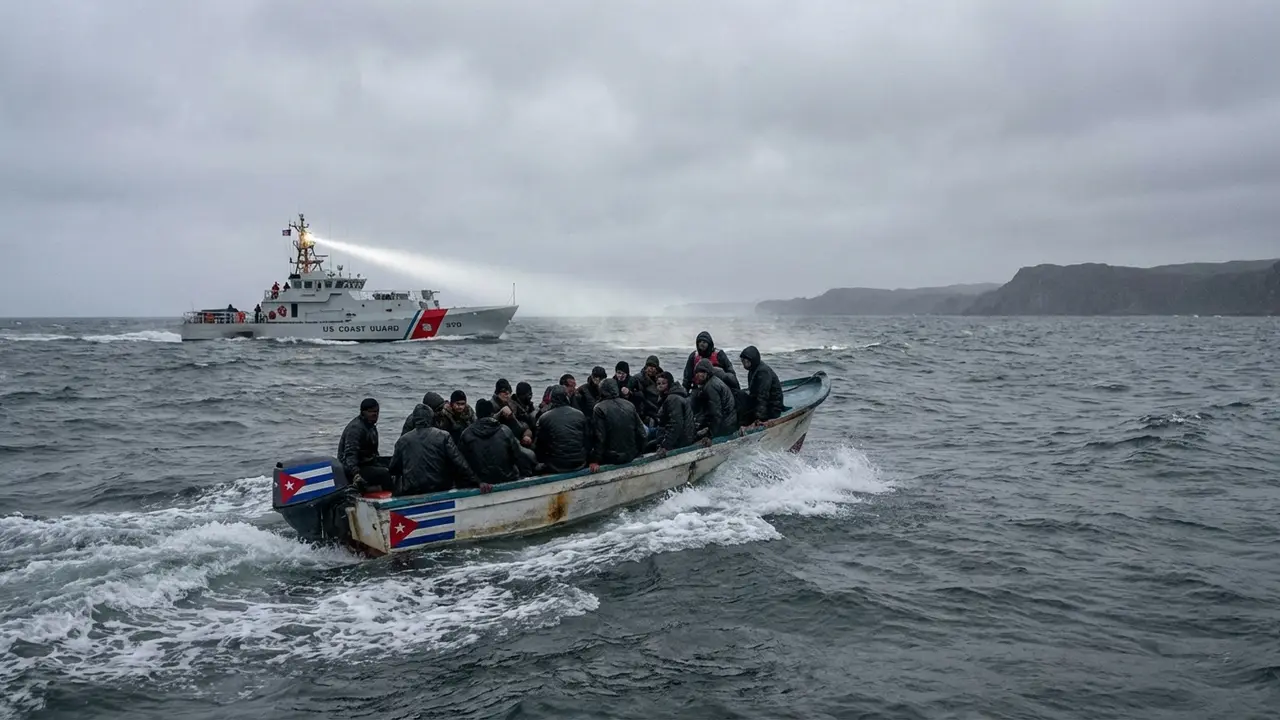
Illustration: Aroma de Cuba (AI)
A deadly incident in Cuban waters where regime forces killed four people aboard a US-registered speedboat has dramatically escalated the 2026 migration crisis, while Trump’s oil blockade plunges Cuba into massive blackouts and fuels a new wave of migration desperation.
The Incident That Changed Everything
On February 25, a speedboat with US registration was intercepted by Cuban forces near the island’s coast. According to multiple sources, four people died in what Cuba describes as an operation against “infiltrators,” while the United States characterizes the incident as “unjustified aggression” against civilians.
“This incident marks a turning point in Cuba-US relations,” declared Congressman Carlos Giménez, who along with Rick Scott has requested a thorough federal investigation.
Cuba’s official version claims the vessel was transporting elements engaged in “infiltration,” while Russia has characterized the episode as an “aggressive provocation by the United States” designed to escalate tensions.
Oil Blockade: Trump’s New Weapon
Simultaneously, the Trump administration has implemented what The New York Times describes as “the first effective blockade of Cuba since the Missile Crisis.” This strategy includes:
Blockade Strategy
- Intercepting oil tankers bound for Cuba
- Tariff threats against countries like Mexico
- Extraterritorial sanctions on Pemex and other companies
- National emergency declaration (January 29, 2026)
The effects are devastating: Cuba suffers blackouts lasting up to 16 hours daily and the health system is on the verge of collapse. Both Mexico and Canada have announced emergency humanitarian aid, with Canada committing $8 million.
Immediate Migration Impact
This dual crisis is generating unprecedented migration consequences:
New Migration Pressures
- 340% increase in maritime crossing attempts
- 300,000 Cubans in legal limbo in the United States under deportation threat
- Land routes closed by Nicaragua since February
- Families separated between energy crisis and deportations
María González, a Miami activist, describes the situation: “Families are trapped. If they return to Cuba they face endless blackouts and crisis. If they stay here, ICE deports them.”
International Escalation
Global Positions
- Russia: Condemns “US provocation”
- China: Strategic silence
- Canada: $8M in humanitarian aid
- UN: Demands information about incident survivors
The Nuestra América Flotilla, announced by activists in February, plans to attempt breaking the US blockade to bring humanitarian aid to Cuba, potentially generating new incidents.
Legal Implications for Migrants
The incident has further complicated the legal situation for Cubans in the United States:
New Challenges
- Accelerated deportations: Justified by “national security threat”
- I-220A at risk: Supervision orders under review
- Restricted asylum: Only 3% approval rate in January 2026
- Parole revoked: Supreme Court authorizes elimination of protections
“This incident gives Trump the perfect justification to accelerate mass deportations,” explains Lindsay Toczylowski of Immigrant Defenders Law Center.
Humanitarian Consequences
Dual Crisis for Cuban Families
- In Cuba: Blackouts, medicine shortages, economic collapse
- In USA: Mass deportations, legal limbo, family separation
Julia Benítez, 79, a Miami resident, fears for her grandson in Havana: “There’s no electricity, no food, no hope. But if he comes here, Trump deports him. Where is my grandson safe?”
Escalating Tensions
International Ramifications
The incident has prompted calls for UN investigation and raised concerns about potential military escalation. Russia’s Foreign Ministry spokeswoman has warned that the situation appears to be escalating toward conflict.
Meanwhile, Florida congressmen from both parties are demanding answers about the survivors of the boat incident, with the UN Committee on Enforced Disappearances setting a March 19 deadline for Cuba to provide information about those detained.
Strategic Implications
Analysts view the boat incident as part of Trump’s broader “maximum pressure” campaign designed to force regime change in Cuba by 2026. The combination of oil blockade, migration crackdown, and now this deadly incident creates a perfect storm of pressure on both the Cuban government and Cuban migrants.
Economic and Social Impact
Crisis Multipliers
The convergence of multiple crises is creating devastating effects:
- Energy collapse: 16-hour daily blackouts across Cuba
- Healthcare crisis: Hospitals operating without electricity
- Migration surge: 340% increase in dangerous sea crossings
- Family trauma: Mass separations between US and Cuba
Frequently Asked Questions
What do we actually know about the boat incident? Four people died when Cuban forces intercepted a vessel with US registration. Cuba alleges they were “infiltrators,” while the US disputes this version. The UN has demanded information about possible survivors.
How does the oil blockade affect migrations? The blockade is causing a humanitarian crisis in Cuba with 16-hour daily blackouts, potentially driving a massive new migration wave toward the United States, further complicating the deportation situation.
Are the incident and blockade connected? Yes. Both are part of Trump’s “maximum pressure” strategy to force regime change in Cuba. The incident provides additional justification for hardening migration policies.
What options do Cubans in the United States have? Options have dramatically reduced: humanitarian parole revoked, I-220A under threat, asylum with 3% approval rate, and accelerated deportations. Only Congress could offer legislative relief.
The boat incident marks a before and after in the 2026 Cuban migration crisis. As international tensions escalate and Cuba suffers an unprecedented humanitarian crisis, hundreds of thousands of Cubans in the United States face an increasingly uncertain future.
Sources consulted: The New York Times, CNBC, CiberCuba, Wikipedia, The Guardian
How we got here
Background
The first thing we published on this topic.
Fernández de Cossío: Cuba Open to US Dialogue, No Talks Yet
The Cuban Vice Minister of Foreign Affairs clarifies Havana's position amid Trump's claims about alleged bilateral negotiations.
Washington Demands Havana Stop Repudiation Acts Against Mike Hammer
The State Department demands Cuba cease 'repressive acts' against the American diplomat and calls the Cuban government an 'illegitimate regime.'
Related articles
Trump in Miami: The Cuban Regime is in its Final Moments
Donald Trump launches the 'Shield of the Americas' summit in Miami, asserting that the regime in Cuba is nearing its end and seeking government change.
Cuba's Oil Crisis: Moscow's Ultimatum Amid Trump's Sanctions
Russia warns about oil supplies to Cuba as Trump's sanctions pressure the island's economy. Discover the impact on the energy crisis.

Cuba on Edge: Will the Island Be Trump's Next Target After Iran?
Following Trump's military strikes on Iran and Venezuela, fears and expectations grow in Cuba about possible U.S. intervention.
Trump Deports to Venezuela, Iran Amid War: 650,000 Lose TPS
Deportations to conflict zones reveal Trump's migration brutality: 15,000 Venezuelans and 120 Iranians sent to war-torn countries
Cuba invites exiles to return: Historic opening under Trump
Cuban government offers exiles the chance to openly own businesses for first time while Trump promises 'incredible people will return to Cuba'.

Cuban Regime Responds to Warnings from Trump and Marco Rubio
Havana reacts with confrontational discourse following recent statements by Donald Trump and Secretary of State Marco Rubio.