Federal lawsuit post-deadline: 100,000+ Cubans seek to expedite cases
After Friday the 13th deadline expired, federal lawsuit against USCIS over Cuban residencies paralyzed under Trump continues its legal course.
3 min read

Photo: CBS News
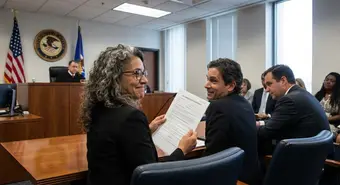
The deadline expired on Friday, March 13th, but the legal battle continues. The federal lawsuit against USCIS over the 100,000+ Cuban residency applications paralyzed under Trump’s policies moves forward, marking a decisive moment for Cubans trapped in migration limbo.
The Deadline That Changed Everything
Attorneys Claudia Cañizares and Mark Prada had established Friday, March 13th as the cutoff date for affected Cubans to join the class action lawsuit. According to the litigants’ figures, more than 100,000 cases could be affected by the suspension or delays in processing permanent residence applications.
During the waiting period, many applicants have seen not only their applications stalled but also work permit denials and the paralysis of family reunification processes that had been underway for years.
Legal Strategy Continues
The lawsuit directly targets the December 2025 USCIS memorandum that temporarily suspended processing of various immigration benefits for citizens from 19 countries deemed high-risk, including Cuba and Venezuela.
This suspension was implemented as part of the controversial “travel ban” from June 2025, which attorneys argue violates both the Cuban Adjustment Act and fundamental due process principles.
The Human Cost of Limbo
While legal proceedings develop, Cuban families face costs ranging between $4,000 and $8,000 per stalled case. María González, a Miami resident with an application paralyzed since October 2024, describes the situation as “a vicious circle where you can’t work legally, but you can’t leave either.”
“My son has an appointment for military service, but he can’t enlist without a green card,” González explains. “Years pass and we remain in the same place.”
National Precedent
This lawsuit occurs at a critical moment when Cuban deportations have reached record numbers under Trump, with 5,169 Cubans deported —the highest figure in U.S. history.
Simultaneously, the Supreme Court has restricted asylum appeals, further complicating legal options available to Cuban migrants.
Legal Expectations
Attorneys estimate that a settlement could be reached in 1-3 months if USCIS agrees to establish clear timelines for processing accumulated cases. However, the Trump administration has shown little flexibility on Cuba-related immigration matters.
The lawsuit also seeks for USCIS to process work permit applications for those who entered legally under programs like humanitarian parole, CBP One, and family reunification before they were suspended.
FAQ: Cuban Residency Federal Lawsuit
Who can benefit from this lawsuit?
Only migrants who entered legally under designated programs: Cuban humanitarian parole, CBP One process, or family reunification initiatives. Does not apply to people with I-220A or deportation orders.
What happens if I didn’t join before the deadline?
Although the formal adhesion period ended March 13th, the lawsuit’s results could benefit all Cubans with similar cases if a favorable precedent is established.
How long does it normally take to process a Cuban residency?
Before Trump’s restrictions, the Cuban Adjustment Act allowed processing in 6-12 months. Currently, some cases have been paralyzed for over 18 months.
Can I work while awaiting resolution?
Work permits are also suspended under the new policy. The lawsuit specifically seeks to restore these permits for eligible applicants.
Related Links
- Trump reaches record high: 5,169 Cubans deported
- Supreme Court restricts asylum: new blow to Cubans
- ICE arrests 77 migrants daily in Florida
- Arizona judge breaks precedent with I-220A ruling
- Humanitarian crisis: Cubans between deportations and blackouts
Legal contact: Affected Cubans can call 305-680-0036 for information about the lawsuit and their legal options.
The battle for Cuban residencies continues in the courts, while thousands of families remain in a limbo that seems to extend indefinitely under the “maximum pressure” policies of the second Trump administration.
How we got here
Background
The first thing we published on this topic.
Nicaragua Closes the Door: Ends Visa-Free Entry for Cubans
Nicaragua ends visa-free entry for Cuban citizens, closing one of the main migration routes to the United States.
Cuba Records Second Magnitude 5 Earthquake in Three Days Near Santiago
A 5.0 magnitude tremor shook eastern Cuba, two days after a 5.6 quake in Guantánamo that damaged homes
Related articles
Atlanta Court Overturns BIA: New Hope for Cuban Women with I-220A
Federal court reverses BIA decisions for two Cuban women with I-220A forms, setting crucial legal precedent amid migration crisis.
Direct Cuban Deportations to Tapachula: New Route That Bypasses Havana
US sends 2-3 weekly flights with deported Cubans directly to Tapachula, Mexico, avoiding Cuba in an unprecedented Trump administration tactic.

US Deports 117 Cubans to Havana: 2026 Total Reaches 427
A deportation flight returned 117 Cuban migrants to Havana on March 19th, bringing the 2026 total to 427 people across nine operations.

34 years in US lost over driving without license: Cuban tragedy
Cuban loses residency after 34 years in US due to traffic violations. Devastating impact of current Trump immigration policies.

Uruguay hosts record 22,000 Cubans: third-largest destination
Uruguay received a record 26,626 Cuban asylum applications in 2025, becoming the third-largest destination after Brazil and Mexico.

US returns 117 Cuban migrants amidst an unstoppable exodus
A new repatriation flight landed in Havana with 117 Cubans, increasing the number of returnees in 2026 as thousands continue to flee the island.