Havana's Chinatown: 179 Years of Cultural Legacy in Cuba
The world's second-largest Chinatown outside Asia was born in Cuba in 1847. Discover its remarkable history.
5 min read
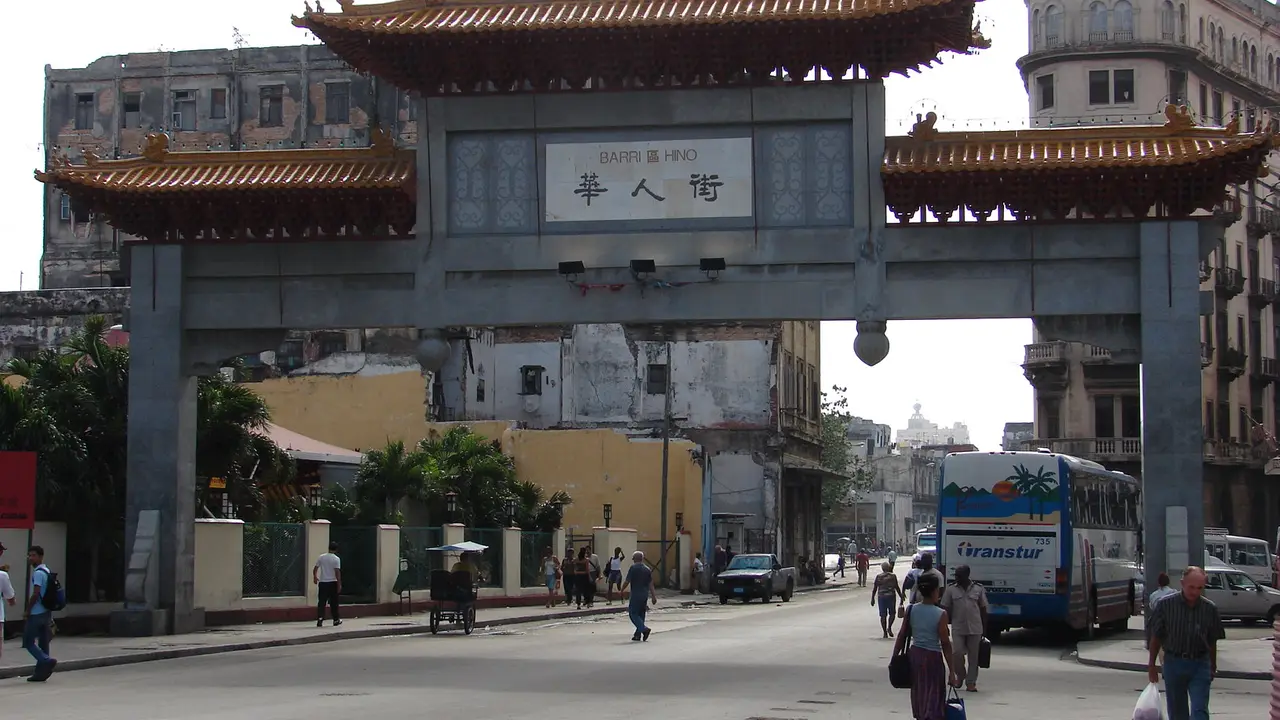
In 1847, a ship docked at Havana’s port carrying a group of men who would forever change Cuba’s cultural landscape. They were Chinese coolies, contract workers brought to labor on sugar plantations, and they couldn’t have imagined they were writing the first chapter of one of Latin America’s most vibrant Asian communities.
Today, as Cuba celebrates the Year of the Fire Horse with exhibitions and cultural events, it’s time to remember the extraordinary history of Havana’s Chinatown — a neighborhood that became the world’s second-largest Chinatown, surpassed only by San Francisco’s.
From Coolies to Merchants: The Origins
The first Chinese immigrants arrived in conditions close to slavery. They signed eight-year contracts to work on sugar mills, subjected to exhausting days under the Caribbean sun. But Chinese tenacity soon found its way.
By 1858, just eleven years after the first arrival, Chinese-owned businesses already existed in Havana. Former coolies who had completed their contracts began opening restaurants, laundries, and grocery stores. The money they accumulated during their working years became the seed capital for the future neighborhood.
By the late 19th century, according to sources from that era, more than 150,000 Chinese populated the Cuban archipelago. The community consolidated around Zanja Street and Dragones Street, creating a unique commercial and cultural ecosystem.
The Neighborhood’s Golden Era
In the early 20th century, Havana’s Chinatown experienced its heyday. Approximately 10,000 Chinese resided in just ten blocks, transforming those streets into a piece of Canton transplanted to the Caribbean.
The neighborhood had everything:
- Restaurants serving authentic Cantonese cuisine
- Theaters staging Chinese operas
- Pharmacies with traditional medicine
- Silk shops importing fabrics from Asia
- A chamber of commerce that functioned as a stock exchange
The Casino Chung Wah, founded in 1893, became the community’s heart. It served as an immigrant assistance center, consular headquarters, and gathering place. By mid-20th century, some 60 Chinese associations existed throughout Cuba.
A Printed Legacy: Kwong Wah Po
A fascinating detail: Havana’s Chinatown has its own Chinese-language newspaper. Kwong Wah Po (光华报, “Brilliant China”) has been published since March 20, 1928, using a linotype machine from 1900.
With a monthly circulation of 600 copies, this four-page tabloid — three in Chinese and one in Spanish — continues informing the Chinese-Cuban community about national and international news. It’s a living treasure of cultural heritage.
Decline and Resistance
After the Revolution’s triumph in 1959, the landscape changed dramatically. Nationalizations and confiscations led to a massive exodus of Chinese-Cubans to the United States. An estimated 250,000 Chinese and their descendants who lived in the neighborhood gradually left.
Chinatown entered a period of decline. Restaurants closed, businesses disappeared, and streets that once bustled with activity fell silent.
The 1990s Renaissance
The 1990s brought renewal. The Chinatown Promotion Group was created to revive the neighborhood’s roots and history. Commercial spaces began to be restored, and Chinese New Year celebrations resumed.
In 1993, the School of Chinese Language and Arts opened. The House of Chinese Arts and Traditions (中华传统艺术馆) was also established, hosting seminars, exhibitions, martial arts classes, dance, and cooking today.
The Friendship Arch
The most visible symbol of the renaissance is the Friendship Arch, inaugurated in 1999. This monumental concrete structure, funded by the People’s Republic of China with materials brought from that country, marks the neighborhood’s entrance on Dragones Street.
At 16 meters wide and 12 meters high, covered with golden enameled ceramic tiles, it’s Latin America’s largest Chinese gate and one of the largest outside China.
The Fire Horse Gallops Through Cuba
This February 2026, Cuba celebrates the Year of the Fire Horse with a cultural program demonstrating the vitality of Chinese-Cuban ties. At the National Theater, the exhibition Al Galope: Visions of the Fire Horse was inaugurated, featuring works by Cuban artists.
The Cuban National Choir, led by maestro Digna Guerra, participated in the opening ceremony, alongside students from the Confucius Institute and the Cuban Wushu School. Chinese Ambassador Hua Xin recalled 65 years of bilateral relations and expressed solidarity with Cuba amid international pressures.
“2026 corresponds to the Year of the Horse, which symbolizes courage, strength, and the spirit of resistance,” the ambassador declared — values that could well describe the history of the Chinese community in Cuba.
A Unique Heritage
Havana’s Chinatown is unique in the world. It’s the only Chinatown with its own cemetery (the Chinese General Cemetery, in Nuevo Vedado). It’s one of the few with an active Chinese-language newspaper published for nearly a century.
Though today only a small fraction of its residents are Chinese-Cuban, the neighborhood remains a living testament to how two such different cultures can merge to create something extraordinary. Restaurants serve Cuban-Chinese fried rice, societies keep traditions alive, and every Lunar New Year the streets awaken again with dragons and drums.
It’s the story of 179 years of resistance, adaptation, and cultural fusion — written on the streets of Centro Habana.
Havana’s Chinatown is located in Centro Habana, accessible from Dragones Street near the Capitol. The Friendship Arch marks the main entrance.
Frequently asked questions
When did the first Chinese arrive in Cuba?
Where is Havana's Chinatown located?
Is Chinese New Year celebrated in Cuba?
Is there a Chinese newspaper in Cuba?
How we got here
Background
The first thing we published on this topic.
Old Havana Restoration Reaches a New Milestone
Rehabilitation work in the historic quarter reveals colonial frescoes from the 18th century.
Governments Issue Travel Warnings for Cuba Amid US Tensions
Canada, Argentina, Spain and other countries warn citizens about Cuba's crisis as Washington's oil blockade and prolonged blackouts affect the island.
Related articles

Willy Chirino: 50 Years of the Miami Sound Creator
Celebrating half a century of Cuban-American singer Willy Chirino, father of the Miami Sound and voice of the Cuban diaspora.

Chucho Valdés and His Royal Quartet: 60 Years of Afro-Cuban Jazz
Cuban maestro Chucho Valdés, NEA Jazz Master 2025, tours the U.S. with his Royal Quartet celebrating six decades of musical alchemy.
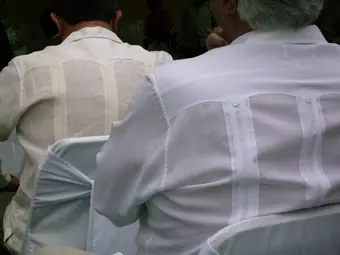
The Cuban Guayabera: History of the Shirt That Defines Cuba
From the Yayabo River to presidential summits: the guayabera was born peasant and became a symbol of Cuban elegance. Discover its history.
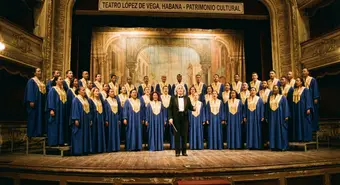
Digna Guerra and the Cuban National Choir: 50 Years of Excellence
Maestra Digna Guerra has led Cuba's National Choir for 50 years. Founded by Che and Camilo, discover its revolutionary origins and legacy.

Direlia Lazo: The Cuban Running Latin America's Biggest Art Fair
Meet Direlia Lazo, the Havana-born curator and artistic director of Zona Maco 2026, which just welcomed 82,000 visitors to Mexico City.
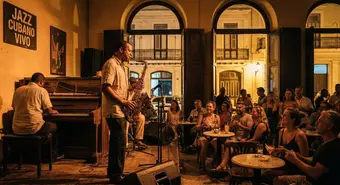
Jazz Plaza 2026: Havana Beats to Jazz Rhythms Amid Crisis
Jazz Plaza celebrated its 40th edition in Havana (Jan 25-Feb 1) with 286 international artists, proving Cuban music endures despite blackouts.