Federal Judges Block Trump Deportations
Massachusetts and Minnesota courts rule third-country deportations unconstitutional as ICE violates 210 court orders in two months.
4 min read
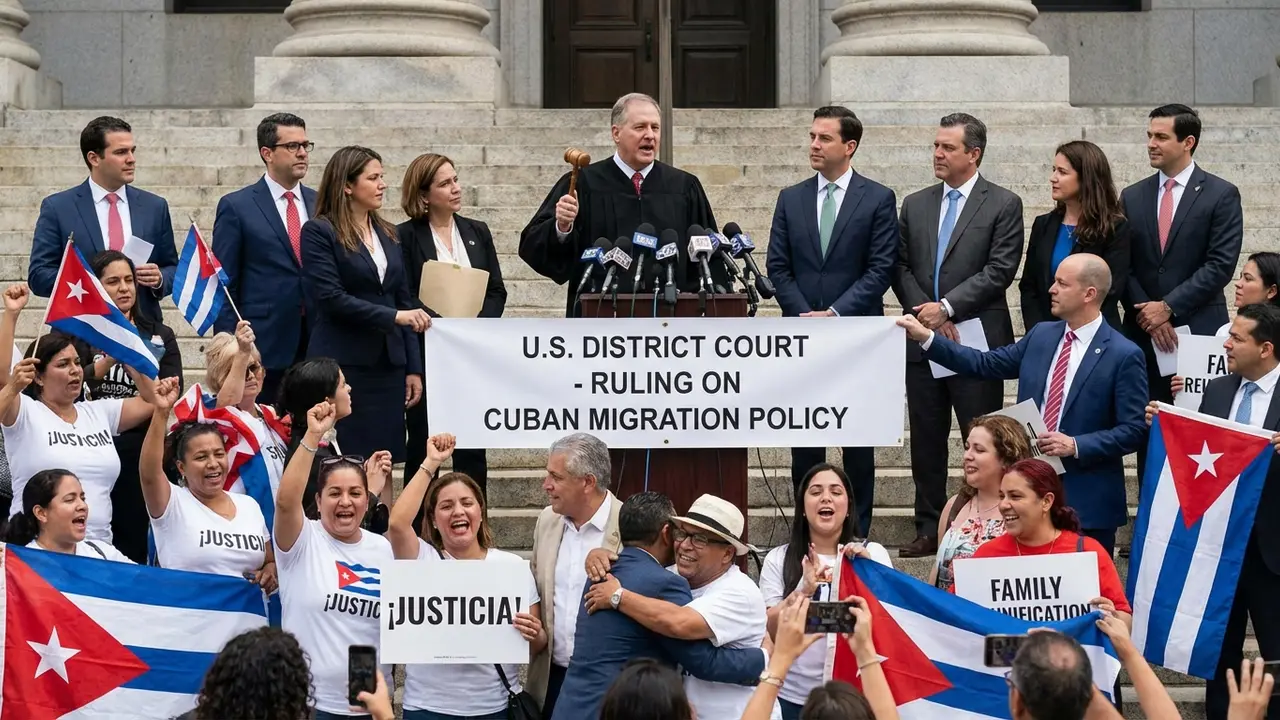
Illustration: Aroma de Cuba (AI)
Federal Justice Against Mass Deportations
In a pivotal week for Cuban migration, two federal judges have declared Trump’s mass deportation policies unconstitutional, while explosive judicial revelations expose systematic violations of court orders by ICE.
Massachusetts Ruling: “Third-Country Deportations Are Illegal”
Judge Brian Murphy of Massachusetts ruled on February 26 that deporting migrants to countries with which they have no connection violates constitutional due process. The decision emerged after cases of Cubans sent to nations like South Sudan and Djibouti.
“This policy is not supported by federal statute and constitutes a dystopian nightmare for refugees,” the magistrate wrote.
The court emphasized that these deportations are not only illegal but inhumane, especially for asylum seekers fleeing repressive regimes like Cuba’s.
Minnesota Expands Protection
Judge Patrick J. Schiltz of Minnesota extended on Friday February 28 an order protecting lawfully admitted refugees from arrests and deportations. His ruling includes explosive documentation: ICE violated 210 court orders in just two months.
The list includes:
- 96 violations in 74 cases identified in January
- 113 additional violations in 77 cases since then
- Deportations after judicial injunctions
- Late releases from custody
- Unauthorized transfers
Impact on the Cuban Community
For the 300,000 Cubans with I-220A, these rulings represent crucial legal relief. Daniel Alejandro Escobar Rodríguez, released after 80 days in ICE detention, symbolizes the hope of thousands facing deportation.
Ismael Labrador, expert in Cuban immigration law, explains: “These rulings demonstrate that even under Trump, the judicial system can halt unconstitutional excesses. Cubans have rights that must be respected.”
ICE Under Judicial Pressure
Judge Schiltz’s revelations expose a legal compliance crisis at ICE. The agency has:
- Deported people with pending cases
- Ignored release orders
- Transferred detainees without judicial authorization
- Produced incomplete evidence required by courts
Federal prosecutor Daniel Rosen attempted to discredit the judge’s list, who responded by confirming even more violations than initially documented.
What Does This Mean for Cubans?
Third-Country Deportations
The Massachusetts ruling could protect Cubans from being sent to nations where they have no connections, a practice Trump had expanded to pressure Cuba.
I-220A and Due Process
The violations documented in Minnesota strengthen legal arguments for Cubans with supervision orders facing irregular deportation.
Judicial Resistance
Both rulings demonstrate that federal courts maintain independence against extreme immigration policies, offering legal avenues to resist arbitrary deportations.
FAQ: Judicial Protections for Cubans
Do these rulings directly protect me from deportation?
The rulings create important precedents but their application depends on specific circumstances. If you face deportation to a third country or ICE violated court orders in your case, these rulings may be relevant to your legal defense.
What to do if ICE violates a court order in my case?
Document immediately any violation and contact an immigration attorney. The Minnesota rulings show that courts are taking these violations seriously and may order releases or halt deportations.
Do these rulings affect I-220A cases?
Indirectly yes. The documented due process violations strengthen legal arguments for Cubans with I-220A, especially if ICE attempted to deport them while violating established judicial procedures.
Can other states adopt similar protections?
It’s likely. The Massachusetts and Minnesota precedents may influence other federal circuits, especially in states with large Cuban populations like Florida, where courts could adopt similar protections.
Conclusion: Legal Resistance Works
These rulings demonstrate that organized legal resistance can halt immigration excesses. For the Cuban community, they represent valuable tools to defend against arbitrary deportations and due process violations.
However, the legal battle continues. With ICE systematically violating court orders and Trump promising mass deportations, vigilance and active legal defense remain essential to protect fundamental rights.
Federal justice has spoken: even in times of extreme immigration policy, due process and constitutional rights must be respected.
Are you affected by these legal developments? Stay informed about judicial protections and your immigration rights. Timely information and legal defense can be decisive.
How we got here
Background
The first thing we published on this topic.
Cuba Records Second Magnitude 5 Earthquake in Three Days Near Santiago
A 5.0 magnitude tremor shook eastern Cuba, two days after a 5.6 quake in Guantánamo that damaged homes
45,000 Cubans Face Deportation Orders in the US
Some 550,000 Cubans vulnerable under Trump's immigration policies. Separated families and a community under pressure.
Related articles

DHS Technical Glitch Exposes Cuban Detainee Data
Technical failure reveals information about Cubans in ICE detention centers in Florida, Texas, and Minnesota, raising privacy concerns.
Atlanta Court Reopens Hope: New I-220A Ruling for Cubans
11th Circuit Court vacates BIA decisions and orders review, reopening legal pathways for hundreds of thousands of Cubans.
Guantanamo Deportations: Immigration Limbo Separating Families
54 Cubans deported to Guantanamo Naval Base live in limbo while their families struggle to understand Trump's new migration strategy.
Trump Ends CHNV Program: Half Million Cubans Lose Legal Protection
Trump administration revoked the CHNV humanitarian program that protected over 500,000 Cubans, Haitians, Nicaraguans and Venezuelans in the United States.
US Court Rules on I-220A: Orders New Review in Key Cases
Historic decision by 11th Circuit Court of Appeals vacates BIA orders and mandates reconsideration of I-220A cases, offering hope to 300,000+ Cubans.
DHS Restricts Asylum in 2026: Cubans Without Work for 'Many Years'
New DHS proposal could leave Cuban asylum seekers without work authorization for 'many years', exacerbating poverty and economic hardship.