Guantanamo Deportations: Immigration Limbo Separating Families
54 Cubans deported to Guantanamo Naval Base live in limbo while their families struggle to understand Trump's new migration strategy.
4 min read
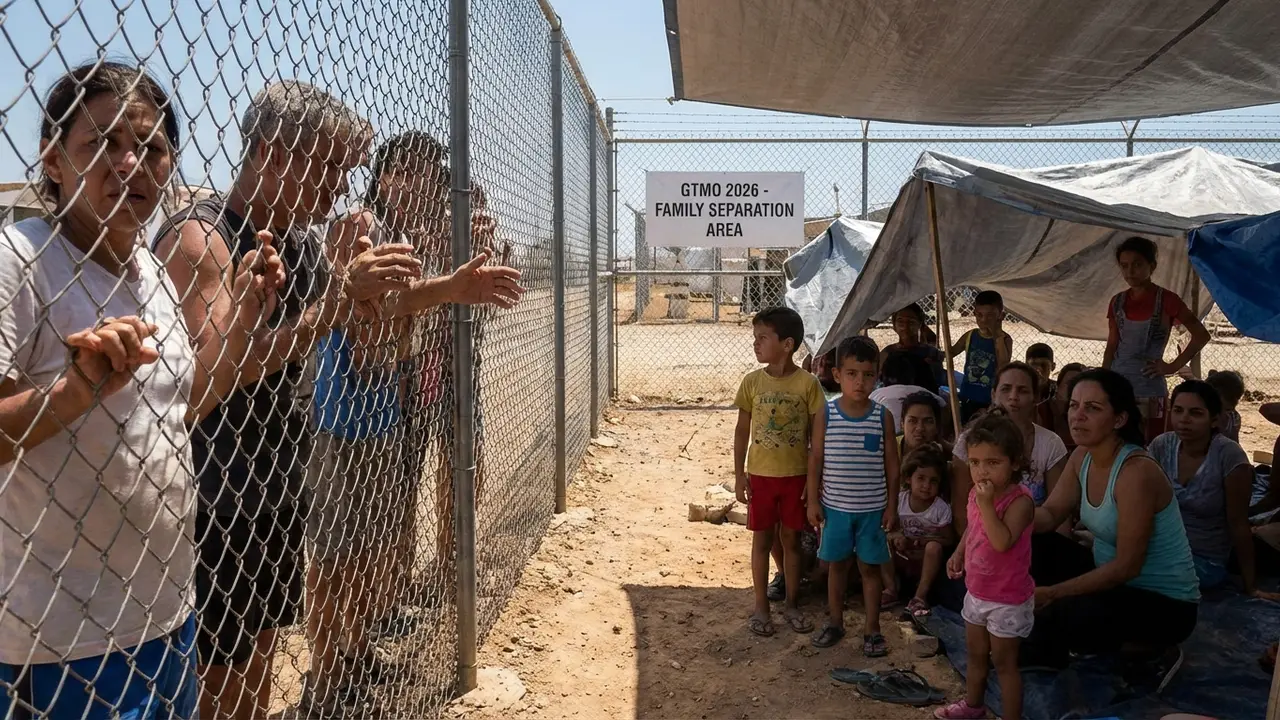
Illustration: Aroma de Cuba (AI)
While Cuban families in the United States await news of their loved ones, 54 Cuban citizens remain detained at Guantanamo Naval Base after being designated for deportation from U.S. territory. This unprecedented migration strategy is raising questions about human rights and the future of immigration policies toward Cuba.
The Route to Guantanamo: A New Migration Reality
According to ICE flight records monitored by human rights organizations, the Trump administration has sent three deportation flights to the Guantanamo base:
- December 19, 2025: First flight
- January 9, 2026: Second flight
- February 9, 2026: Third flight with deportees finally transferred to Cuba
In total, 54 Cuban citizens have gone through this intermediate detention process at Guantanamo, a situation their families describe as “limbo within limbo.”
Families in Uncertainty
María González, whose husband was detained on the first flight, recounts the anguish of not understanding why Cubans weren’t sent directly to Havana like in previous deportations:
“We wonder why our sons, husbands, and nephews weren’t sent to Cuba, where 1,498 Cuban citizens were deported last year on monthly flights, or to a third country like Mexico, where 4,883 were sent in 2025.”
This quote reflects the widespread confusion about the criteria determining these migration decisions.
Why Guantanamo? Strategy Analysis
Immigration experts point to several possible reasons for this new practice:
1. Diplomatic Pressure
Using Guantanamo could be a tactic to pressure the Cuban government into accepting more direct deportees.
2. Selection Criteria
Deportees to Guantanamo might meet specific criteria requiring additional processing before final transfer.
3. Processing Capacity
The naval base offers detention facilities that allow for more detailed evaluations before final deportation.
The Context of Mass Deportations
This strategy fits within the Trump administration’s broader deportation program, which has shown a hardened approach toward Cuban migrants:
- 170 Cubans deported in February 2026, including people with criminal backgrounds
- Elimination of the CHNV program that protected half a million migrants
- Work permit restrictions for asylum seekers
Legal and Humanitarian Impact
Rights in Question
Immigration attorneys are challenging the legality of using Guantanamo as a migration processing center:
- Due process: Do they have adequate access to legal representation?
- Detention conditions: Do they meet standards for civilians?
- Indeterminate duration: How long can they remain detained?
Historical Precedent
This isn’t the first time Guantanamo has housed Cuban migrants. During the 1990s migration crisis, 33,000 Cubans were detained at the base before being repatriated or resettled.
Frequently Asked Questions
Who is being sent to Guantanamo?
Specific criteria haven’t been publicly revealed, but it appears to include people with complex cases or those requiring additional evaluation before final deportation.
How long do they remain at Guantanamo?
Detention times vary. Some have been there for months, while others were transferred to Cuba on the February flight.
Can families communicate with them?
Communication is limited and controlled by the base’s military authorities.
Is this practice legal?
Human rights advocates are challenging the legality of using military facilities for civilian immigration detention.
The Uncertain Future
While families wait, the Trump administration continues implementing increasingly restrictive immigration policies. The case of the 54 Cubans at Guantanamo could establish a precedent for future deportees from the island and other countries.
The situation highlights the need for comprehensive immigration reform that respects both national security and fundamental human rights.
Related Articles:
- Trump Ends CHNV Program: Half Million Cubans Lose Legal Protection
- Federal Judges Block Trump Deportations: Legal Victory for Cuban Migrants
- Cuba Accepts Criminal Deportees from US for First Time in Decades
- ICE Eliminates Historic Protections for Cubans: New Era of Mass Deportations
- Cuban Adjustment Act 2026: Who Still Qualifies and Who Lost Protection
How we got here
Background
The first thing we published on this topic.
Cuba Records Second Magnitude 5 Earthquake in Three Days Near Santiago
A 5.0 magnitude tremor shook eastern Cuba, two days after a 5.6 quake in Guantánamo that damaged homes
45,000 Cubans Face Deportation Orders in the US
Some 550,000 Cubans vulnerable under Trump's immigration policies. Separated families and a community under pressure.
Related articles

Trump Deports More Cubans Than Any President: Record Numbers
Analysis of Trump's migration policies impact: 5,053 Cubans deported and the controversy over 'voluntary return' to a crisis-stricken Cuba.
ICE Intensifies Operations: New Cuban Arrests Revealed
US immigration authorities arrested two more Cubans with criminal records as deportation pressure mounts under Trump's hardline approach.

Deportations 2026: Trump's New 'Choice' for Cubans in the US
Analysis of Trump's shifting migration policy: record deportation flights and the pressure of 'optional' return versus indefinite detention.
Forced Return? Trump Weighs the Future of Cubans in the US
Analysis of Trump's 2026 migration plan: record deportation flights and the controversial 'choice' for Cubans to return home instead of detention.
Double Migration Blow: Nicaragua and Trump Close Routes to Cubans
Nicaragua cancels visa-free entry while Trump suspends visa processing for 75 countries, leaving Cubans without legal options
Crisis: Cuban migrants trapped between deportations and blackouts
The double crisis facing Cubans in 2026: Trump's mass deportations and Cuba's energy collapse create unprecedented humanitarian emergency.