ICE Intensifies Operations: New Cuban Arrests Revealed
US immigration authorities arrested two more Cubans with criminal records as deportation pressure mounts under Trump's hardline approach.
4 min read
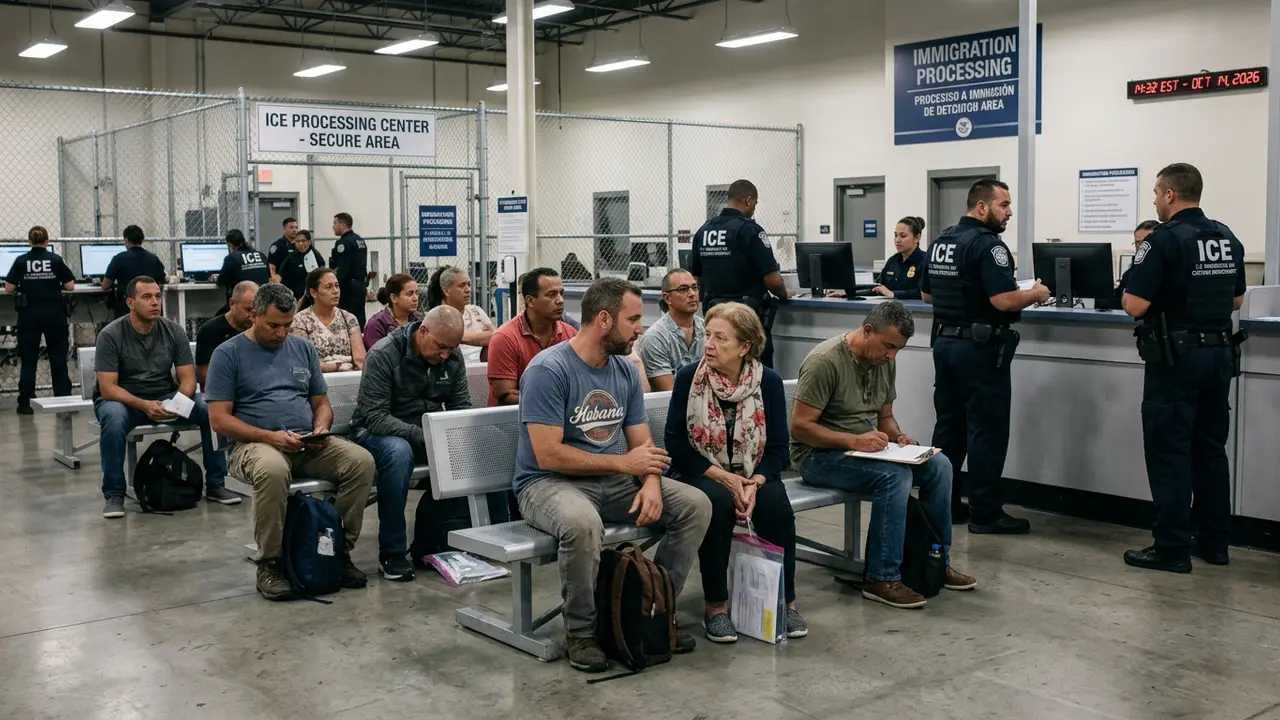
Illustration: Aroma de Cuba (AI)
US immigration authorities continue intensifying operations against the Cuban community, with the arrest of two more undocumented immigrants with violent criminal histories. This escalation is part of the most aggressive deportation strategy in decades that has characterized Donald Trump’s second term.
New Detentions Reveal Systematic Pattern
U.S. Immigration and Customs Enforcement (ICE) confirmed this Sunday the detention of two undocumented Cuban nationals with multiple criminal records for violent offenses committed on US soil, who now await deportation.
Among those detained is Aliosky Rosales Michelena, whose parents became legal residents, but who “opted for a life of crime in Florida” and received a final removal order in 2010. ICE Detroit arrested him and ensured he will be deported.
The second arrestee is Rafael Cortina Pantoja, with convictions for domestic assault and aggravated assault. His case exemplifies how the Trump administration is prioritizing individuals with violent criminal histories.
Maximum Pressure Strategy
These detentions come just weeks after the historic February 9 flight that deported 170 Cubans with criminal records to the island, marking the first time in decades that Cuba agreed to accept deportees with serious criminal backgrounds.
“The strategy is clear: maximum pressure for Cuba to cooperate by accepting more deportees,” explains immigration expert Ismael Labrador. “Each arrest sends a message both to the Cuban community and the Havana government.”
Recent cases include:
- Juan Estrada Almager (San Diego): Detained with drug possession convictions
- Jesús Morales-Bonet (Miami/Chicago): Convicted of murder, drug trafficking, and escape
- Dairon González (Tampa): Sentenced for theft, celebrated by DHS
Who Is at Risk?
The escalation of arrests has generated panic in the Cuban community, particularly among those with:
- Criminal records, even minor past offenses
- Previous deportation orders not executed
- Precarious immigration status such as I-220A or parole
- Pending asylum cases with backlogged hearings
“Any contact with the criminal justice system, no matter how minor, can now result in deportation,” warns immigration attorney Carmen Pérez.
Impact on Cuban Families
Operations have separated families and created a climate of terror in communities like Miami, Tampa, and New York. Maria Rodriguez, a Hialeah resident, describes the situation: “My neighbors are afraid to leave home. Some have sent their children to relatives out of state.”
The Department of Homeland Security publicly celebrated these arrests as part of their campaign against “threats to public safety,” but critics argue that many cases involve minor crimes committed years ago.
Cuban Government Response
So far, Cuba has cooperated limitedly by accepting deportees with serious criminal backgrounds, a dramatic shift from previous policies. However, diplomatic sources suggest Havana might harden its stance if operations expand to Cubans without criminal records.
FAQ: Frequently Asked Questions
Who can currently be arrested by ICE?
Any undocumented Cuban, especially those with criminal records, deportation orders, or unstable immigration status like I-220A.
Are Cubans with permanent residence safe?
Permanent residents can lose their status for certain serious crimes, but they have more legal protections than undocumented individuals.
What to do if ICE arrests a family member?
Immediately contact a specialized immigration attorney, do not sign documents without legal advice, and exercise the right to remain silent.
Can they deport Cubans to third countries?
A federal judge declared third-country deportations unconstitutional in February, but the administration appealed the decision.
Resources and Next Steps
For the Cuban community facing this crisis:
- Immediately consult with specialized immigration attorneys
- Document all criminal records and case resolutions
- Keep immigration documents current
- Avoid contact with authorities without legal representation
- Know constitutional rights during detentions
The escalation of ICE operations against Cubans marks a turning point in US immigration policy toward the island. With more than 300,000 Cubans in immigration limbo, the community faces its greatest legal challenge since the end of the “wet foot, dry foot” policy.
For updates on this development and legal resources, visit our migration and news sections.
Sources:
- U.S. Immigration and Customs Enforcement (ICE)
- El País International
- CiberCuba
- Periódico Cubano
- Department of Homeland Security (DHS)
Related Links:
- Historic Deportation: 170 Cubans Returned to Cuba in Precedent-Setting Flight
- ICE Arrests Two Cubans with Criminal Records as Deportation Pressure Mounts
- Record Deportations: Trump Deports More Cubans Than Any President in History
- Federal Court Gives Hope to Cubans with I-220A: New Ruling Orders Review
- Nicaragua Blocks Last Route: Cubans Trapped Without Migration Alternatives
How we got here
Background
The first thing we published on this topic.
Cuba Records Second Magnitude 5 Earthquake in Three Days Near Santiago
A 5.0 magnitude tremor shook eastern Cuba, two days after a 5.6 quake in Guantánamo that damaged homes
45,000 Cubans Face Deportation Orders in the US
Some 550,000 Cubans vulnerable under Trump's immigration policies. Separated families and a community under pressure.
Related articles
Trump Deports More Cubans Than Any President: Record Numbers
Analysis of Trump's migration policies impact: 5,053 Cubans deported and the controversy over 'voluntary return' to a crisis-stricken Cuba.
Guantanamo Deportations: Immigration Limbo Separating Families
54 Cubans deported to Guantanamo Naval Base live in limbo while their families struggle to understand Trump's new migration strategy.
Double Migration Blow: Nicaragua and Trump Close Routes to Cubans
Nicaragua cancels visa-free entry while Trump suspends visa processing for 75 countries, leaving Cubans without legal options
Crisis: Cuban migrants trapped between deportations and blackouts
The double crisis facing Cubans in 2026: Trump's mass deportations and Cuba's energy collapse create unprecedented humanitarian emergency.
Deportations 2026: Trump's New 'Choice' for Cubans in the US
Analysis of Trump's shifting migration policy: record deportation flights and the pressure of 'optional' return versus indefinite detention.
Forced Return? Trump Weighs the Future of Cubans in the US
Analysis of Trump's 2026 migration plan: record deportation flights and the controversial 'choice' for Cubans to return home instead of detention.