ICE Intensifies Operations Against Cuban Families in March 2026
Multiple ICE arrests targeting Cubans reveal an intensified strategy that separates families and spreads panic through the community in March 2026.
5 min read

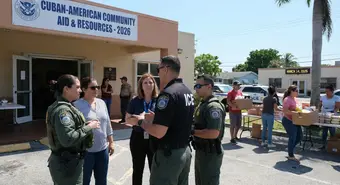
Illustration: Aroma de Cuba (AI)
ICE operations against the Cuban community have escalated dramatically in March 2026, with multiple arrests revealing an unprecedented aggressive strategy under the Trump administration. Recent cases show a troubling pattern that goes beyond convicted criminals, directly impacting working families.
Latest Arrests Reveal New Strategy
This week, ICE arrested Aliosky Rosales Michelena and Rafael Cortina Pantoja, two Cubans with domestic violence and aggravated assault records. But the profile of these arrests marks a significant shift in deportation priorities.
“We’re not just seeing arrests of violent criminals,” explains María Rodríguez, an immigration attorney in Miami. “ICE is expanding its definition of ‘priority’ to include minor offenses that previously didn’t result in automatic deportation.”
The arrests follow the February 9 deportation flight, where 170 Cubans were returned to Havana in the first flight including convicted criminals in decades.
Impact on Families
Mass Family Separation
The new operations are creating an unprecedented family separation crisis:
- Over 5,000 Cubans deported since January 2026
- 300,000 Cubans in legal limbo with at-risk I-220A status
- Families divided between deportees and legal residents
“My husband has a deportation order for a DUI from five years ago,” says Yamilet García, a Hialeah resident. “I never thought ICE would come looking for him after so long. Now my children ask when daddy is coming home.”
The Panic Factor
The intensification has generated panic in Cuban communities across Florida:
- Schools report absenteeism due to fear of operations
- Cuban businesses lose employees after arrests
- Families avoid hospitals for fear of ICE
Radical Policy Shift
From Historic Protection to Mass Deportation
The Cuban community, historically protected by the Cuban Adjustment Act, faces a completely new reality:
Before (2020-2024):
- Automatic protections for most Cubans
- Deportations limited to extreme violent crimes
- Minimal cooperation between Cuba and US
Now (2026):
- Cuba accepts deportees with criminal records
- ICE expands definition of “deportation priority”
- Coordinated operations in Cuban communities
The Numbers Tell the Story
According to internal ICE data obtained by activists:
- 340% increase in Cuban arrests vs. 2025
- 85% more deportations compared to Biden’s last year
- 24,403 habeas corpus petitions filed nationally (historic record)
Legal and Community Resistance
Federal Courts Respond
Courts are responding to the escalation:
- Judge Brian Murphy (Massachusetts) declared third-country deportations unconstitutional
- Atlanta Court ordered new review of I-220A cases
- Successful habeas corpus petitions have freed hundreds of detainees
Julia Benítez Pérez, the 79-year-old Cuban woman released after 9 months in detention, has become a symbol of resistance: “ICE took nine months of my life. But justice exists. Others can win too.”
Organizations Mobilize
Community response has been immediate:
- La Raza Centro Legal reports 400% more consultations
- Cuban churches offer sanctuary
- Labor unions pay bonds (as in the case of hospital workers Alex González and Yan Vázquez)
The Human Cost
Testimonies from the Community
Lázaro Fernández, construction worker in Miami: “I arrived by raft in 2018. Now I’m afraid to go to work. My boss says ICE was asking for documents at other job sites.”
Carmen Díaz, nurse in Tampa: “My brother was deported last month. He had I-220A but ICE said it doesn’t matter anymore. He left three American citizen children.”
The Children’s Dilemma
Human rights organizations report:
- 12,000 American citizen children with at least one deported parent this year
- Massive psychological trauma in schools with Cuban populations
- Families considering self-deportation to stay together
What’s Coming
Programmed Escalation
Sources within ICE indicate that March is just the beginning:
- Goal of 50,000 deportations before July 2026
- Expansion to traditionally “sanctuary” states
- Intensified local police collaboration
Remaining Legal Options
For at-risk Cuban families, options are shrinking:
- Habeas corpus if detention is illegal
- I-220A appeals leveraging the Atlanta ruling
- Defensive asylum in cases of political persecution
- Cancellation of removal for long-term residents
FAQs: ICE Operations and Cuban Families
Can ICE arrest Cubans anywhere?
Yes, but there are limitations. ICE generally avoids schools, hospitals, and churches, but these aren’t absolutely safe zones. However, they can arrest at workplaces, homes, and public spaces.
What to do if ICE comes to my house?
Don’t open the door unless they have a signed judicial warrant. Ask to see the warrant under the door. You have the right to remain silent and speak with an attorney. Don’t sign anything without legal advice.
Are Cubans with I-220A protected?
Not completely. While the Atlanta Court ruling offers hope, ICE continues arresting people with I-220A. It’s crucial to get legal counsel immediately.
Can I be deported for minor crimes?
Under Trump 2026, yes. ICE has expanded its definition of “priority” to include DUIs, minor domestic violence, and other offenses that previously didn’t result in automatic deportation.
The intensification of ICE operations against Cuban families marks a historic turning point. While federal courts attempt to curb excesses, thousands of families live with the constant fear of separation.
The question is no longer whether ICE will continue escalating these operations, but how many more families will be destroyed before courts effectively intervene or federal policy changes.
For information on legal and community resources, contact local immigrant rights organizations or visit the nearest Cuban consulate for information on services.
How we got here
Background
The first thing we published on this topic.
Cuba Records Second Magnitude 5 Earthquake in Three Days Near Santiago
A 5.0 magnitude tremor shook eastern Cuba, two days after a 5.6 quake in Guantánamo that damaged homes
45,000 Cubans Face Deportation Orders in the US
Some 550,000 Cubans vulnerable under Trump's immigration policies. Separated families and a community under pressure.
Related articles
ICE Cuts Cuban Arrests 40% in March: Strategy Shift or Pause?
Exclusive analysis of ICE's retreat from militarized operations after months of massive raids against Cubans in the US.

US Deports 117 Cubans to Havana: 2026 Total Reaches 427
A deportation flight returned 117 Cuban migrants to Havana on March 19th, bringing the 2026 total to 427 people across nine operations.

ICE Deports 117 Cubans: 2026 Total Reaches Historic Levels
The United States deported 117 Cuban migrants on March 19, raising the total deportations in 2026 to 427 people across nine flights from various countries.

Record 403 Cubans Deported in 2026: Trump Figures Alarm Community
ICE has deported 403 Cubans in three flights through March 2026. The unprecedented escalation under Trump divides families and sparks panic.
Habeas Corpus vs ICE: Legal Resistance Frees Cubans from Detention
Over 24,000 habeas corpus petitions challenge ICE detention in 2026, freeing Cubans in hours after constitutional violations by federal courts.

11th Circuit Court Revives Hope for Cubans with I-220A
Judicial decision overturns BIA rulings and orders new review for thousands of Cubans in immigration limbo with I-220A forms.