Supreme Court Limits Federal Courts: Legal Blow to I-220A Cubans
Unanimous Supreme Court decision restricts legal remedies available to thousands of Cubans with I-220A who sought to reinterpret their immigration status
5 min read
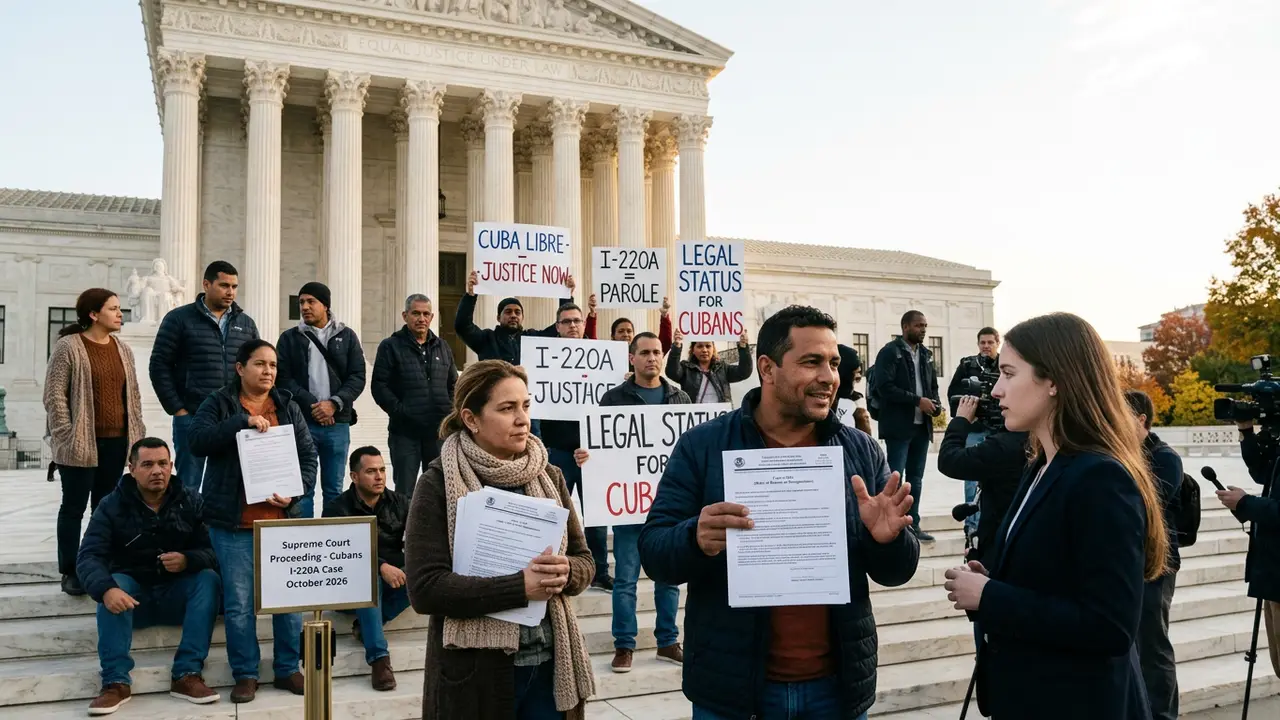
Illustration: Aroma de Cuba (AI)
A unanimous Supreme Court decision has significantly limited federal courts’ ability to review immigration-related decisions, a ruling that could affect thousands of Cubans living under I-220A forms who had pinned their hopes on federal litigation to change their immigration status.
The judicial precedent restricts federal courts’ scope to intervene in immigration system decisions, reinforcing the principle that certain administrative determinations should remain within immigration authorities’ purview and away from federal judicial oversight.
A ruling that changes the legal landscape
The decision establishes stricter limits on when federal courts can review resolutions made by immigration judges or the Board of Immigration Appeals (BIA). For Cubans with I-220A, this means some legal strategies used to reinterpret their status as valid for the Cuban Adjustment Act become considerably more difficult.
According to legal experts, the ruling will require federal courts to evaluate BIA decisions under the “substantial evidence” standard, a more demanding criterion that makes it harder to overturn unfavorable administrative determinations.
“Going to federal court will be uphill, very difficult, because the review standard will be so high that there will practically be no opportunity to overturn an immigration court ruling,” explained attorney Alejandro Vázquez Sánchez to Martí Noticias.
The I-220A legal limbo deepens
Form I-220A, known as an order of supervision, allows people detained after entering the United States to be released while continuing their immigration proceedings. However, it does not equal immigration “parole”, a legal difference that has prevented thousands of Cubans from accessing Cuban Adjustment Act benefits.
For years, attorneys and advocacy organizations have filed federal lawsuits seeking recognition of I-220A as a valid form of admission or equivalent to parole. These legal strategies now face considerably greater obstacles due to the new precedent.
The controversy affects hundreds of thousands of Cuban citizens who entered in recent years through the southern border and were subsequently released under supervision via I-220A, living in an immigration gray zone without a clear path to permanent residence.
Immediate impact on pending cases
For Cubans currently with cases in federal courts, the ruling introduces an additional element of uncertainty. Many had hoped federal litigation could open the door to reinterpretations of the I-220A form that would allow them to access adjustment of status.
“Almost all Cubans who are in court now and whose only viable remedy so far has been political asylum” are left with more limited options, according to Vázquez Sánchez, who warned about additional difficulties appeals will face.
The attorney noted that once an asylum request is denied, Cuban immigrants will only have the possibility of appealing to the BIA, and that going to federal court will only be possible in very limited or exceptional circumstances.
A worsening legal crisis
The Supreme Court decision adds to a broader immigration crisis affecting the Cuban community. Recent rulings have eliminated humanitarian parole protections for hundreds of thousands of migrants, while deportations have reached record levels under the Trump administration.
Simultaneously, countries like Nicaragua have closed traditional migration routes, leaving many Cubans without legal alternatives to reach the United States and forcing them to resort to increasingly dangerous maritime crossings.
For those living under I-220A, daily life unfolds between court hearings, administrative processes, and constant expectation that a legal, judicial, or political change might finally offer a path to immigration stability.
What comes next?
Given the lack of a definitive judicial solution, some analysts believe the only clear exit could come from the U.S. Congress. Legislators have the capacity to modify immigration legislation or create specific mechanisms to resolve the situation of migrants with I-220A.
However, in Washington’s current political climate, any immigration reform faces an uncertain landscape, especially regarding sensitive issues related to the border and the immigration system.
The Supreme Court ruling thus adds a new chapter to a legal controversy that continues to affect thousands of Cuban families’ futures in the United States, deepening an immigration limbo that extends without a clear resolution in sight.
Do you need legal help with your I-220A case?
If you have an I-220A and your case is affected by these changes, it’s crucial to seek specialized legal advice. Consult with experienced immigration attorneys who can evaluate your specific options under the new legal framework.
Frequently Asked Questions:
What exactly is form I-220A? It’s an order of supervision that allows people detained by immigration to be released while continuing their immigration proceedings, but it doesn’t constitute legal admission or parole.
How does this ruling affect Cubans with I-220A? It makes it much harder to appeal to federal courts to reinterpret I-220A status, limiting legal options available to access the Cuban Adjustment Act.
What legal options remain available? Primarily political asylum and appeals to the BIA, though with stricter review standards for any subsequent federal appeals.
Can Congress resolve this situation? Yes, Congress has the capacity to modify immigration laws, but any reform faces a complex political landscape in Washington’s current climate.
How we got here
Background
The first thing we published on this topic.
Nicaragua Closes the Door: Ends Visa-Free Entry for Cubans
Nicaragua ends visa-free entry for Cuban citizens, closing one of the main migration routes to the United States.
Cuba Records Second Magnitude 5 Earthquake in Three Days Near Santiago
A 5.0 magnitude tremor shook eastern Cuba, two days after a 5.6 quake in Guantánamo that damaged homes
Related articles
Crisis: Cuban migrants trapped between deportations and blackouts
The double crisis facing Cubans in 2026: Trump's mass deportations and Cuba's energy collapse create unprecedented humanitarian emergency.
Nicaragua Closes 'Volcano Route': 200,000 Cubans Left Stranded
End of visa-free transit through Nicaragua since Feb 8 forces Cubans to seek more dangerous routes to US, increasing maritime crossings by 340%
Double Migration Blow: Nicaragua and Trump Close Routes to Cubans
Nicaragua cancels visa-free entry while Trump suspends visa processing for 75 countries, leaving Cubans without legal options
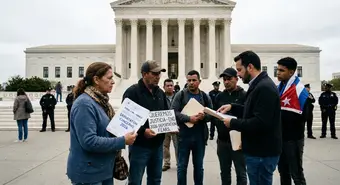
Supreme Court Allows Trump to Revoke Parole for 500,000 Cuban Migrants
High Court authorizes elimination of temporary legal status for hundreds of thousands of Venezuelans, Cubans, Haitians, and Nicaraguans in the US
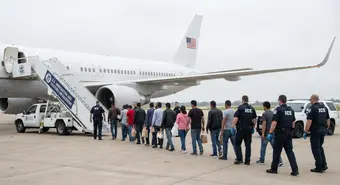
ICE Deports 170 Cubans on First 2026 Flight: 50 Criminals Included
The first ICE deportation flight to Cuba in 2026 transported 170 Cuban nationals, including 50 convicts of serious crimes like murder and rape.

11th Circuit Court Revives Hope for Cubans with I-220A
Judicial decision overturns BIA rulings and orders new review for thousands of Cubans in immigration limbo with I-220A forms.