Cuba's Exchange Rate Gap: The Dollar Soars in the Informal Market
The difference between the official rate and the black market for foreign currency in Cuba reaches critical levels this March 2026, impacting basic prices.
3 min read
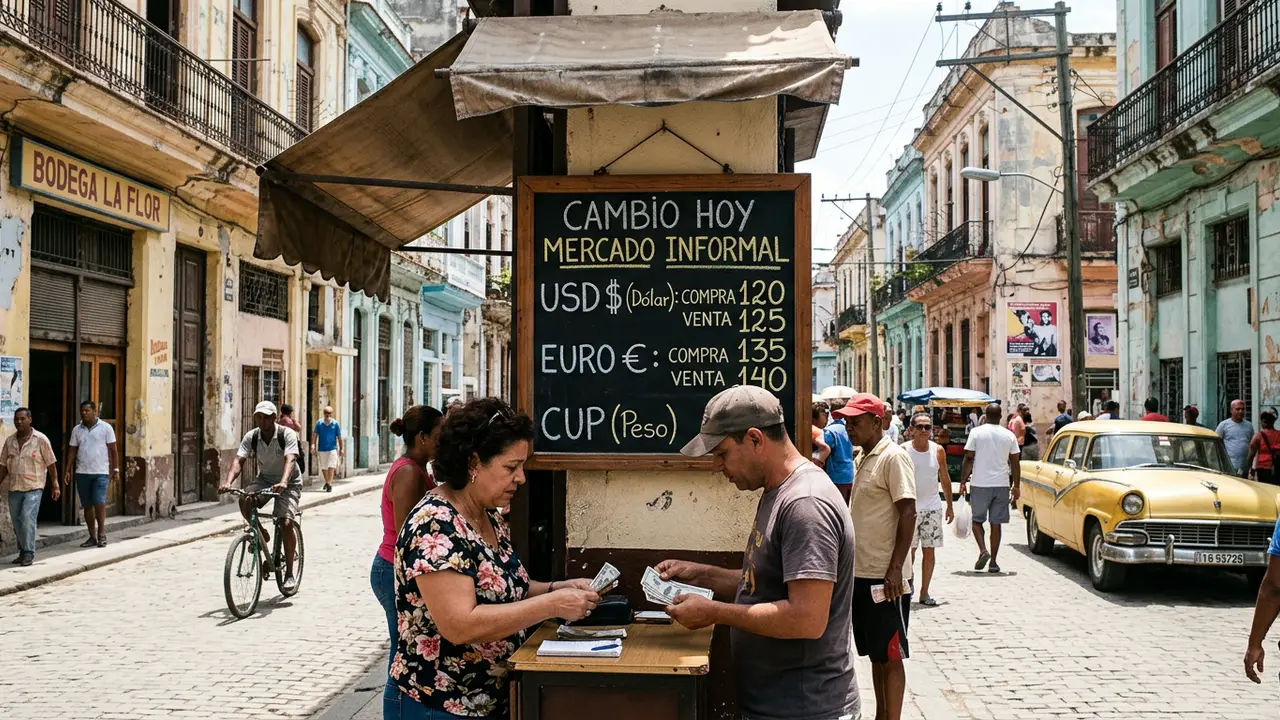
Illustration: Aroma de Cuba (AI)
The Cuban economy faces a new peak of instability this weekend in March 2026. The informal currency exchange market has shown significant acceleration, distancing itself drastically from the official rates established by the Central Bank of Cuba. This exchange rate gap is driving rampant inflation that directly hits the purchasing power of families on the island.
Current Situation of the Informal Market
According to reports gathered on Saturday, March 7 and Sunday, March 8, the value of the American dollar (USD) and the euro (EUR) in the black market continues its unstoppable ascent. While the State maintains a fixed rate for certain sectors, ordinary citizens depend on this parallel market to access basic products in Freely Convertible Currency (MLC) stores or to import supplies through SMEs.
This disconnection between economic reality and official monetary policy has created an environment of uncertainty for entrepreneurs and consumers alike. The prices of food and basic services are adjusted almost daily following the informal quotation, causing wages in Cuban pesos (CUP) to lose value by the hour.
Impact on the Population and SMEs
The boom of small and medium-sized enterprises (SMEs) in Cuba has increased the demand for foreign currency, as these entities need to import most of their supplies. Since there is no fluid official market for the purchase of foreign currency, companies are forced to turn to the informal market, passing that final cost on to the consumer.
On the other hand, families who do not receive remittances from abroad find themselves in a situation of extreme vulnerability, trapped in a local currency that buys less and less.
Frequently Asked Questions about Change in Cuba
1. Why does such a large gap exist between the official and informal rates? The lack of foreign currency in the national banking system prevents the State from satisfying the demand from the population and businesses, forcing economic actors to seek foreign currency on the street.
2. How does this affect the price of food? Most of the food sold outside the ration book is imported or depends on imported inputs, the costs of which are directly linked to the value of the dollar in the informal market.
3. Which currency is stronger today in Cuba, the dollar or the euro? Both currencies maintain an upward trend, but the euro usually trades slightly above the dollar, reflecting its value in the international market and its utility for travelers.
4. Are there any signs that the Cuban government will intervene in the informal market? Historically, the government has attempted control operations, but without a real injection of foreign currency into the economy, the forces of the informal market usually prevail over administrative measures.
Related Links
- Cuba’s Fuel Crisis: The ‘Effective Blockade’ of 2026
- Cuba Denies Sale of Mexico’s Food Donations in Hard Currency Stores
- Cuba’s Blackouts: Generation Deficit Surpasses 2,000 MW Record
- Washington’s Ultimatum to Cuba: Trump Demands Changes by Late 2026
- Mexico’s Aid Arrives in Cuba: Ships with 1,200 Tons of Food
Sources: CubitaNOW News, CiberCuba
Sources
- CubitaNOW News · noticias.cubitanow.com
- CiberCuba · en.cibercuba.com
How we got here
Background
The first thing we published on this topic.
How Cubans Are Surviving the Fuel Rationing Crisis
Neighbors unite to cook with firewood, power cuts lasting up to 18 hours, and echoes of the Special Period. Testimonies from Havana on the energy crisis.
Cuba's Economy Contracted 5% in 2025: Study Reveals Crisis
Study confirms Cuba GDP decline, 1.5 million emigration, rising infant mortality. Critical juncture.
Related articles
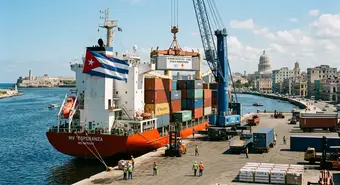
Cuba's Fuel Crisis: The 'Effective Blockade' of 2026
Cuba faces an unprecedented energy paralysis following oil supply blockades, affecting basic services and tourism in March 2026.
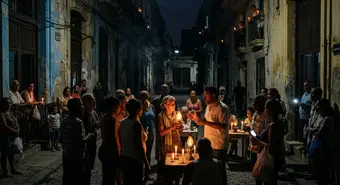
Cuba Energy Crisis: 63% of the Island Without Power This Saturday
Cuba's national electrical union reports a critical generation deficit leaving over half of the country in darkness today, March 7, 2026.

Cuba's Blackouts: Generation Deficit Surpasses 2,000 MW
Cuba faces a critical energy crisis with a deficit of over 2,000 MW, leaving much of the island in the dark this Friday, March 6th.

Cuba in Chaos: 2000 MW Blackouts Leave the Island in Darkness
Cuba's energy crisis worsens this March 2026 with a record 2000 MW deficit. Two-thirds of the country suffer simultaneous power cuts.

Russian Tanker Sea Horse Arrives in Cuba with Fuel Amid Blackouts
The arrival of the Russian tanker Sea Horse on March 5, 2026, promises relief from the 2000 MW deficit and blackouts affecting 64% of the country.
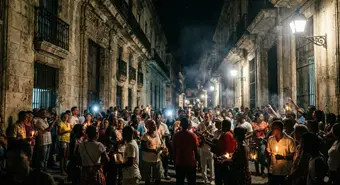
National Blackout in Cuba: 20-Hour Power Cuts and 2,300 MW Deficit
The energy crisis in Cuba worsens this March 11 with blackouts exceeding 20 hours daily. The failure of the Guiteras power plant keeps two-thirds of the...