Cuba to End Property Confiscation for Emigrants Under New Housing Law
Draft Housing Law would allow Cuban emigrants to keep their properties and introduces mortgage financing for the first time in decades.
3 min read
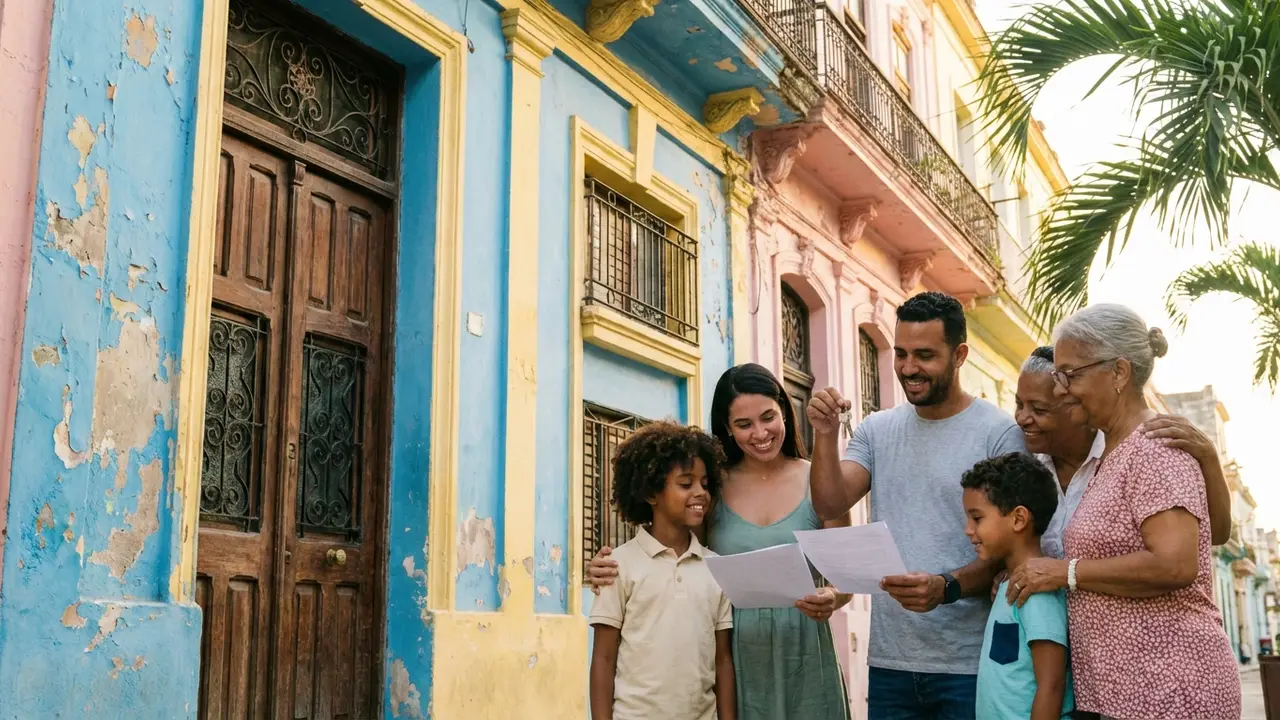
Illustration: Aroma de Cuba (AI)
Cuba is about to make a historic shift in its housing policy. The draft Housing Law, currently under public consultation, would eliminate one of the most painful regulations for the Cuban diaspora: the confiscation of homes from those who emigrate permanently.
For decades, Cubans who left the island faced automatic loss of their properties. This reality has marked entire generations and created legal uncertainty for millions of families divided between Cuba and abroad.
What Changes with the New Law?
The draft, which would repeal the 1988 General Housing Law, introduces fundamental changes:
For Emigrants
- End of confiscation: Cubans who leave permanently will no longer lose their homes
- Right to inherit: Emigrants will be able to inherit and keep properties in Cuba
- Transfer of rights: Sale, donation, exchange, and inheritance of properties clarified
For All Cubans
- Up to two homes: Ownership of up to two residential properties will be allowed, plus one vacation home
- Vacation homes: Beach, mountain, or countryside houses will have the same transfer rights
- Less bureaucracy: Administrative discretion in procedures reduced
Mortgage Financing: A Quiet Revolution
For the first time in decades, Cuba will introduce mortgage financing. This means families will be able to:
- Access long-term loans
- Use their home as collateral
- Build or buy without relying solely on savings or remittances
Until now, most Cubans had to save for years, receive remittances from abroad, or build in stages based on available resources. The new scheme is complemented by traditional bank loans and subsidies for vulnerable families.
The Context: A Deep Housing Crisis
The consultation comes at a critical time. Cuba faces:
- Deficit of over 900,000 homes
- Only 2,728 homes built in the first half of 2025 (0.1% growth)
- 35% of housing stock in fair or poor condition (1.4 million homes)
- Regulatory fragmentation with 9 decree-laws and 127 applicable regulations
The government acknowledges that this fragmentation has led to lack of control and effective implementation.
Other Important Changes
Expanded Rental Market
- Higher proportion of rental housing
- Subleasing will be permitted
- Market flexibility to expand supply
Prioritized Groups
The law establishes subsidies and preferential mechanisms for:
- Workers in key areas without resources
- People in overcrowded housing
- Young people of working age
- Large families
- Elderly and disabled persons
- Victims of domestic violence
Multi-family Buildings
Homeowner associations will have greater autonomy to:
- Set fees and approve expenses
- Contract services
- Rent common spaces
- Access bank loans for maintenance
How to Participate in the Consultation
All Cubans can submit opinions until February 28, 2026 to the email consultaleyvivienda@oc.micons.gob.cu.
After the consultation, the draft may be modified before being presented to the National Assembly for approval, which according to the legislative calendar should happen this year.
For the Cuban diaspora, this change represents the end of an era marked by the forced loss of family heritage. Although still a draft, its approval would mean a long-awaited recognition of the property rights of millions of Cubans abroad.
Source: OnCuba News
Frequently asked questions
Will Cuban emigrants be able to keep their homes under the new law?
What is the mortgage financing introduced by the new law?
How many properties can a person own in Cuba?
When does the public consultation period end?
Sources
- OnCuba News · oncubanews.com
How we got here
Background
The first thing we published on this topic.
Nicaragua Closes the Door: Ends Visa-Free Entry for Cubans
Nicaragua ends visa-free entry for Cuban citizens, closing one of the main migration routes to the United States.
45,000 Cubans Face Deportation Orders in the US
Some 550,000 Cubans vulnerable under Trump's immigration policies. Separated families and a community under pressure.
Related articles
Nicaragua Closes the Door: Ends Visa-Free Entry for Cubans
Nicaragua ends visa-free entry for Cuban citizens, closing one of the main migration routes to the United States.

Cubana de Aviación Slashes Madrid Route to Just One Weekly Flight
Cuba's national airline drastically cuts European service as NOTAM confirms no jet fuel at Cuban airports until March 2026.

Cuban with I-220A Released After ICE Detention: Hope and Uncertainties
The release of a young Cuban after 80 days of detention revives the debate on the I-220A status and the future of thousands under ICE custody.
Cuban with I-220A: 'I Thought They Would Detain Me' at Court
Exclusive testimony from a young Cuban after his hearing at Orlando Immigration Court: calm process but date pushed back to late 2026
DHS Restricts Asylum in 2026: Cubans Without Work for 'Many Years'
New DHS proposal could leave Cuban asylum seekers without work authorization for 'many years', exacerbating poverty and economic hardship.
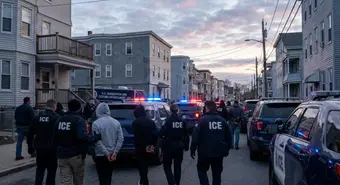
ICE Arrests Two Cubans with Violent Criminal Records
Aliosky Rosales Michelena and Rafael Cortina Pantoja detained by ICE after violent crime charges, adding to record Cuban deportations.