I-220A and I-220B Forms: Complete Guide for Cubans
Everything you need to know about I-220A and I-220B forms, their differences, risks, and legal options for Cubans in the US.
4 min read

Illustration: Aroma de Cuba (AI)
Thousands of Cubans in the United States live in uncertainty due to I-220A and I-220B forms. This guide explains what these documents mean, the differences between them, current risks, and available legal options.
What is Form I-220A?
The I-220A or “Order of Release on Recognizance” is a document that Immigration and Customs Enforcement (ICE) gives to some people who were detained and then released.
What it DOES mean:
- You were released from ICE custody
- You must comply with certain conditions (attend hearings, report)
- You have a pending case in immigration court
- You have an “A-Number” to track your case
What it does NOT mean:
- It does not grant you legal immigration status
- It is not considered “parole” by the federal government
- It does not automatically allow you to apply for the Cuban Adjustment Act
- It does not protect you from deportation
What is Form I-220B?
The I-220B or “Order of Supervision” is given to people who:
- Already had a process in immigration court
- Lost their case and have a final deportation order
- Were released under supervision while deportation is executed
⚠️ Important: If you have an I-220B, you technically already have a deportation order. You’re on “conditional release” until it’s executed.
Key differences between I-220A and I-220B
| Feature | I-220A | I-220B |
|---|---|---|
| Deportation order | No (generally) | Yes |
| Court process | Pending | Already finished (lost) |
| Immediate risk | Lower | Higher |
| ICE supervision | Variable | Mandatory |
| Possibility of adjustment | Under legal dispute | Very difficult |
The Problem with the Cuban Adjustment Act
The Cuban Adjustment Act allows Cubans who arrive in the US to apply for permanent residence after one year and one day. But there’s a crucial requirement: you must have been “admitted or paroled.”
The federal government does not recognize the I-220A as parole, which means:
- Thousands of Cubans cannot apply for the Adjustment Act
- They remain in “immigration limbo”
- There’s no clear path to residence
The legal case that could change everything
In December 2025, the 11th Circuit Court of Appeals in Atlanta heard arguments about whether the I-220A should be recognized as a legal entry for purposes of the Cuban Adjustment Act.
Attorney Mark Prada argued that the releases were improperly processed and should have been recorded as parole.
A favorable ruling could:
- Allow more than 400,000 Cubans to apply for residence
- Establish a national legal precedent
- Change the interpretation of the I-220A
However, the decision could take months and potentially reach the Supreme Court.
A Case of Hope: Dayan Hernández-Medina
In February 2026, an immigration judge in Arizona approved the adjustment of status for Dayan Hernández-Medina, a Cuban with I-220A who faced deportation.
Key points:
- The Department of Homeland Security (DHS) initiated deportation proceedings
- The judge granted Adjustment of Status under INA § 245(a)
- DHS had 30 days to appeal but did not
- Hernández is the first Cuban to obtain residence while detained by ICE with an I-220A
This case establishes an important precedent for other Cubans in similar situations.
What to do if you have an I-220A
1. Consult with an immigration attorney
Don’t make decisions without legal advice. Find an attorney experienced in Cuban cases and the Adjustment Act.
Free resources:
- Asylum Seeker Advocacy Project (ASAP)
- Catholic Charities Legal Services
- Americans for Immigrant Justice
2. Keep all your documents
- Keep copies of your I-220A
- Preserve evidence of your entry into the country
- Document any communication with ICE
3. Comply with your obligations
- Attend all ICE appointments
- Submit all required documents
- Notify address changes
4. Consider your options before ICE check-ins
Some Cubans have been detained during routine appointments. An attorney can:
- Evaluate if it’s safe to attend
- Accompany you to the appointment
- Prepare legal arguments if there are problems
5. Follow the legal cases
Cases in the 11th Circuit and 2nd Circuit could change your situation. Stay informed.
What to do if you have an I-220B
Your situation is more urgent because you already have a deportation order. You should:
- Seek an attorney immediately - Evaluate options like case reopening, habeas corpus, or appeals
- Don’t miss ICE appointments - Could result in detention
- Explore humanitarian relief - Asylum, CAT (Convention Against Torture), or cancellation of removal
Additional resources
- Check your case status: EOIR Portal
- Change address with immigration: Form AR-11
- ASAP helpline: Information about I-220 forms
This information is for guidance only and does not constitute legal advice. Every case is different. Consult with a qualified immigration attorney to evaluate your specific situation.
Related:
- 45,000 Cubans Face Deportation Orders in the US
- 170 Cubans deported on first flight of 2026
- Nicaragua closes migration route for Cubans
Frequently asked questions
What is Form I-220A?
What's the difference between I-220A and I-220B?
Can I apply for the Cuban Adjustment Act with an I-220A?
What should I do if I have an ICE check-in and have an I-220A?
How we got here
Background
The first thing we published on this topic.
Cuba Records Second Magnitude 5 Earthquake in Three Days Near Santiago
A 5.0 magnitude tremor shook eastern Cuba, two days after a 5.6 quake in Guantánamo that damaged homes
45,000 Cubans Face Deportation Orders in the US
Some 550,000 Cubans vulnerable under Trump's immigration policies. Separated families and a community under pressure.
Related articles
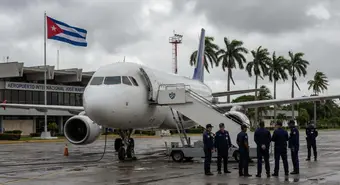
170 Cubans deported in first repatriation flight of 2026
The United States resumes deportation flights to Cuba with 170 migrants repatriated to José Martí airport.

45,000 Cubans Face Deportation Orders in the US
Some 550,000 Cubans vulnerable under Trump's immigration policies. Separated families and a community under pressure.

28% of ICE Detainees Choose Self-Deportation in Record 2025 Wave
Voluntary departures from ICE custody hit historic highs in 2025, with thousands of Cubans opting to self-deport amid harsher policies.

The Ordeal of Cubans Deported to Guantánamo: Testimonies
Over 50 Cubans were sent to the Guantánamo naval base believing they were going to Havana. Their testimonies reveal blindfolds, deception, and isolation.

Florida Pays $1.7 Million to Police for ICE Collaboration
Volusia and Flagler counties receive state funds for immigration operations. Cases involving Cubans highlighted at official press conference.

I-220A: The Lawsuit That Could Decide 500,000 Cubans' Future
Lawyers seek class-action status to have the I-220A recognized as parole, potentially allowing half a million Cubans to adjust status.