28% of ICE Detainees Choose Self-Deportation in Record 2025 Wave
Voluntary departures from ICE custody hit historic highs in 2025, with thousands of Cubans opting to self-deport amid harsher policies.
3 min read

Illustration: Aroma de Cuba (AI)
A CBS News analysis based on decades of court records reveals a disturbing trend: 28% of migrants detained by ICE in 2025 chose to self-deport, a historic record that directly affects thousands of Cubans in federal custody.
Unprecedented Numbers
The rate of voluntary departures rose steadily throughout 2025, reaching 38% in December — nearly double the previous record of 21% set in 2018. More than a quarter of detained foreign nationals gave up their cases before a judge and chose to leave the United States without continuing their legal fight.
The increase coincides with the intensification of the Trump administration’s immigration policies and the exponential growth of the detention population. By mid-January 2026, 73,000 people remained in ICE custody, including thousands of Cubans.
Why Cubans Are Choosing to Leave
For many Cuban migrants, the decision to self-deport reflects a painful but pragmatic calculation:
- Bonds increasingly denied: Only 30% of bond decisions were favorable in 2025, down from 59% in 2024
- Few legal options: After the cancellation of the CHNV program and asylum policy tightening, legal pathways have shrunk dramatically
- Detention conditions: Reports of human rights violations in ICE facilities have multiplied, including a Cuban detainee’s death ruled a homicide
- Avoiding harsher penalties: Voluntary departure doesn’t carry the same immigration penalties as a formal deportation order
The Incentive Program
The U.S. government has implemented a program offering up to $3,000 and a free flight to undocumented migrants who agree to self-deport. The measure aims to reduce the operational costs of forced deportations, which by official estimates cost significantly more per person.
An Increasingly Hostile Context
The wave of self-deportations comes at a critical moment for Cuban migration. In recent weeks, the U.S. has deported 170 Cubans on the first flight of 2026, Nicaragua has shut down its migration route eliminating a key corridor, and Cuba’s economic crisis continues to deepen.
Human rights organizations have sharply criticized these policies, arguing that many departures stem from fear and desperation rather than truly voluntary decisions. Activists are demanding investigations into immigration authority practices and guarantees of dignified treatment for immigrants in federal custody.
What Lies Ahead
With migration routes closing, detention policies hardening, and the oil blockade worsening the crisis on the island, the dilemma for thousands of detained Cubans intensifies: remain in an increasingly hostile legal limbo or return to a country mired in its worst crisis in decades.
Sources: CBS News/EFE, CiberCuba
Frequently asked questions
What does self-deportation from ICE custody mean?
How many Cubans are currently detained by ICE?
What incentives does the U.S. government offer for voluntary departure?
Why did self-deportations increase so dramatically in 2025?
Sources
- CBS News/EFE · efe.com
- CiberCuba · cibercuba.com
How we got here
Background
The first thing we published on this topic.
Cuba Records Second Magnitude 5 Earthquake in Three Days Near Santiago
A 5.0 magnitude tremor shook eastern Cuba, two days after a 5.6 quake in Guantánamo that damaged homes
45,000 Cubans Face Deportation Orders in the US
Some 550,000 Cubans vulnerable under Trump's immigration policies. Separated families and a community under pressure.
Related articles

ICE Arrests 77 Migrants Daily in Florida: Record-High Cuban Numbers
New government data reveals ICE arrests in Florida tripled in 2025, with Cubans representing an alarming proportion of the 20,629 detentions.

The Ordeal of Cubans Deported to Guantánamo: Testimonies
Over 50 Cubans were sent to the Guantánamo naval base believing they were going to Havana. Their testimonies reveal blindfolds, deception, and isolation.
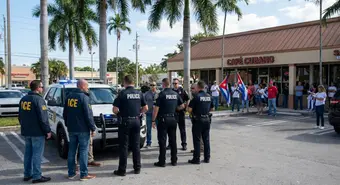
Florida Pays $1.7 Million to Police for ICE Collaboration
Volusia and Flagler counties receive state funds for immigration operations. Cases involving Cubans highlighted at official press conference.

I-220A and I-220B Forms: Complete Guide for Cubans
Everything you need to know about I-220A and I-220B forms, their differences, risks, and legal options for Cubans in the US.
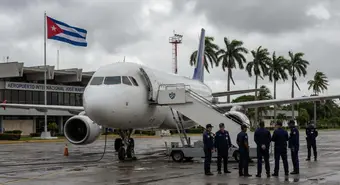
170 Cubans deported in first repatriation flight of 2026
The United States resumes deportation flights to Cuba with 170 migrants repatriated to José Martí airport.

45,000 Cubans Face Deportation Orders in the US
Some 550,000 Cubans vulnerable under Trump's immigration policies. Separated families and a community under pressure.