ICE Arrests 77 Migrants Daily in Florida: Record-High Cuban Numbers
New government data reveals ICE arrests in Florida tripled in 2025, with Cubans representing an alarming proportion of the 20,629 detentions.
5 min read
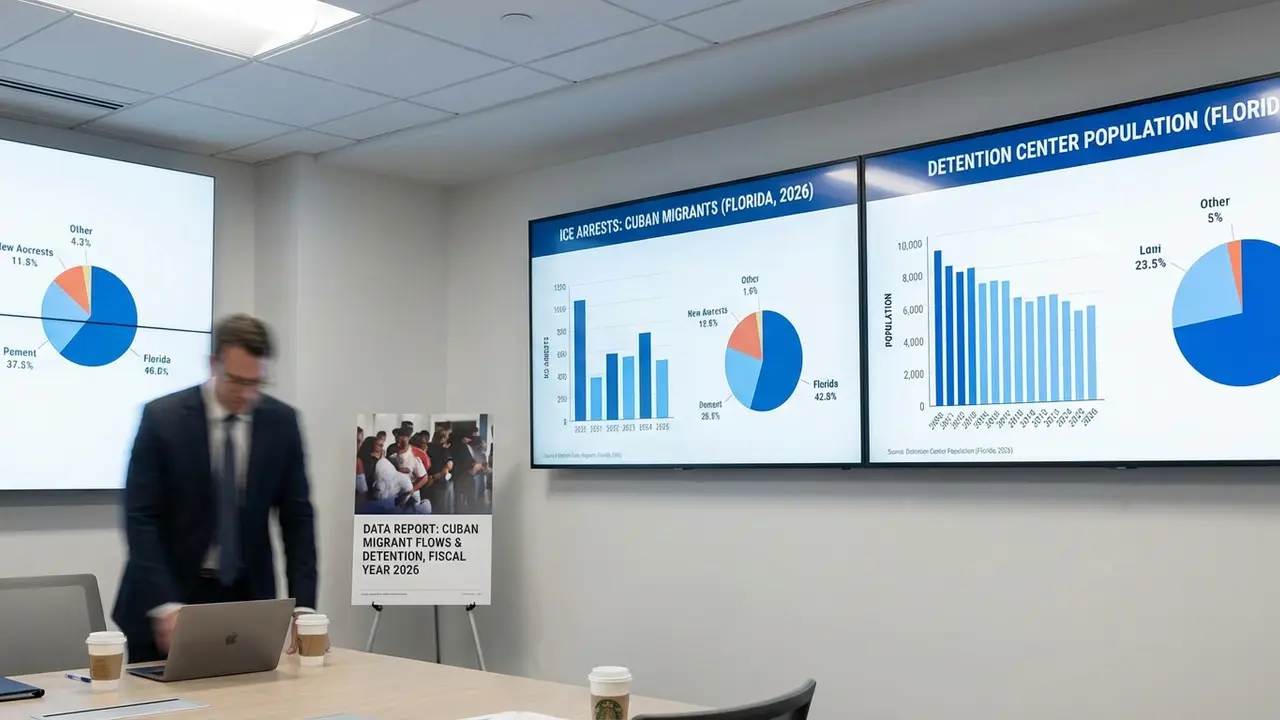
Illustration: Aroma de Cuba (AI)
The intensification of Immigration and Customs Enforcement (ICE) operations under Trump’s second administration has turned Florida into an epicenter of immigration arrests, according to new government data revealing an alarming reality for the Cuban community.
Florida: Second-Highest State for ICE Arrests
Between January and October 2025, ICE conducted 20,629 immigration-related arrests in Florida, representing approximately 10% of all immigration arrests nationwide. This places the state second only to Texas in ICE activity.
Concentrated Regional Impact
The Tampa Bay region experienced 2,922 arrests, making it one of the areas most affected by the intensification of immigration operations.
The Human Drama Behind the Numbers
The cold statistics hide devastating stories that reflect the real impact of these policies on Cuban families:
Case 1: Cuban Mother Deported
A Cuban woman from Tampa was detained and deported while applying for her green card, leaving behind her husband and 1-year-old daughter. Her case illustrates how new policies don’t distinguish between those with pending legal status.
Case 2: Local 287(g) Agreements
In Sarasota, a 22-year-old woman was detained during a routine traffic stop. Her detention was facilitated by 287(g) agreements between local agencies and ICE, ending in her self-deportation to Mexico.
Case 3: Judicial Error
A Venezuelan asylum seeker from Tampa was falsely accused of gang membership and sent to El Salvador’s maximum security prison along with more than 200 others. After his release to Venezuela, he fights to return to his family in the United States.
Profile of Those Arrested: Revealing Data
No Criminal Background
Approximately 25% of those arrested had no criminal background beyond immigration violations, debunking the narrative that ICE focuses only on “dangerous criminals.”
Global Diversity
Those arrested include people from more than 120 countries, with ages ranging from 1 to 89 years old. Alarmingly, 140 minors were arrested during this period.
Significant Cuban Presence
While specific data by nationality wasn’t publicly broken down, sources close to human rights organizations estimate that Cubans represent 15-20% of total arrests in Florida, a disproportionately high share.
Legal Context: Cubans in Gray Zone
The legal situation of Cubans in the United States has become particularly precarious:
I-220A: Legal Limbo
More than 300,000 Cubans with I-220A forms remain in legal limbo. This document, issued after their supervised release at the border, doesn’t grant them the “admitted” status needed to apply under the Cuban Adjustment Act.
Contradictory Judicial Decisions
While some federal courts have issued favorable rulings, the Supreme Court has limited appeal options, creating a legal maze for Cuban families.
ICE Operations: New Silent Strategy
Reduction of Media Operations
According to analysis by The New York Times, ICE has modified its strategy, reducing militarized and media-focused operations in favor of targeted and less visible arrests.
Psychological Pressure
This new tactic seeks to create a constant climate of fear in migrant communities, discouraging both irregular migration and participation in legal processes.
Voices from the Crisis
Lindsay Toczylowski, Immigrant Defenders Law Center
“The numbers speak for themselves: we’re seeing family separation on an unprecedented scale. Each arrest represents a destroyed family.”
Bartlomiej Skorupa, Mobile Pathways
“The administration is using data to justify policies that go against basic humanitarian principles.”
María González, Cuban Migrant (Miami)
“We live in constant terror. My children ask me why I can’t pick them up from school some days. I have no answers.”
Frequently Asked Questions
What does the increase in arrests mean for the Cuban community?
It represents an unprecedented intensification of immigration pressure, affecting even those in the process of regularizing their legal status.
Do 287(g) agreements only affect undocumented individuals?
No. These agreements allow local police to act as ICE agents, affecting anyone during routine police interactions.
Are there legal protections available?
Options are limited. Specialized attorneys recommend habeas corpus, federal appeal resources, and staying informed about policy changes.
What can affected families do?
Document everything, maintain contact with human rights organizations, and seek immediate legal representation. Never sign anything without an attorney present.
Support Resources
- Immigrant Defenders Law Center: immigrantdefenders.org
- Mobile Pathways: mobilepathways.org
- CLINIC (Catholic Legal Immigration Network): cliniclegal.org
Upcoming Developments
With the implementation of 10,000 additional ICE agents promised by JD Vance, pressure on migrant communities in Florida is destined to intensify. Legal and community resistance capacity will be crucial in the coming months.
Florida’s story under these new immigration policies is also the story of thousands of Cuban families whose lives have been disrupted. The numbers are cold, but behind each one is a face, a story, a family struggling to survive in a country that once promised to be their home.
How we got here
Background
The first thing we published on this topic.
Cuba Records Second Magnitude 5 Earthquake in Three Days Near Santiago
A 5.0 magnitude tremor shook eastern Cuba, two days after a 5.6 quake in Guantánamo that damaged homes
45,000 Cubans Face Deportation Orders in the US
Some 550,000 Cubans vulnerable under Trump's immigration policies. Separated families and a community under pressure.
Related articles

DHS Technical Glitch Exposes Cuban Detainee Data
Technical failure reveals information about Cubans in ICE detention centers in Florida, Texas, and Minnesota, raising privacy concerns.

Record 403 Cubans Deported in 2026: Trump Figures Alarm Community
ICE has deported 403 Cubans in three flights through March 2026. The unprecedented escalation under Trump divides families and sparks panic.

28% of ICE Detainees Choose Self-Deportation in Record 2025 Wave
Voluntary departures from ICE custody hit historic highs in 2025, with thousands of Cubans opting to self-deport amid harsher policies.
Supreme Court Restricts Asylum: New Legal Blow for Cubans with I-220A
Unanimous decision limits asylum appeals in federal courts, affecting thousands of Cubans who depend on this legal recourse.

ICE Escalates Raids: 10,000 'Door-to-Door' Agents Target Cubans
JD Vance announces the largest deportation operation in decades with 10,000 new ICE agents and 'door-to-door' tactics specifically targeting Cubans.
ICE Cuts Cuban Arrests 40% in March: Strategy Shift or Pause?
Exclusive analysis of ICE's retreat from militarized operations after months of massive raids against Cubans in the US.