ICE Escalates Raids: 10,000 'Door-to-Door' Agents Target Cubans
JD Vance announces the largest deportation operation in decades with 10,000 new ICE agents and 'door-to-door' tactics specifically targeting Cubans.
5 min read
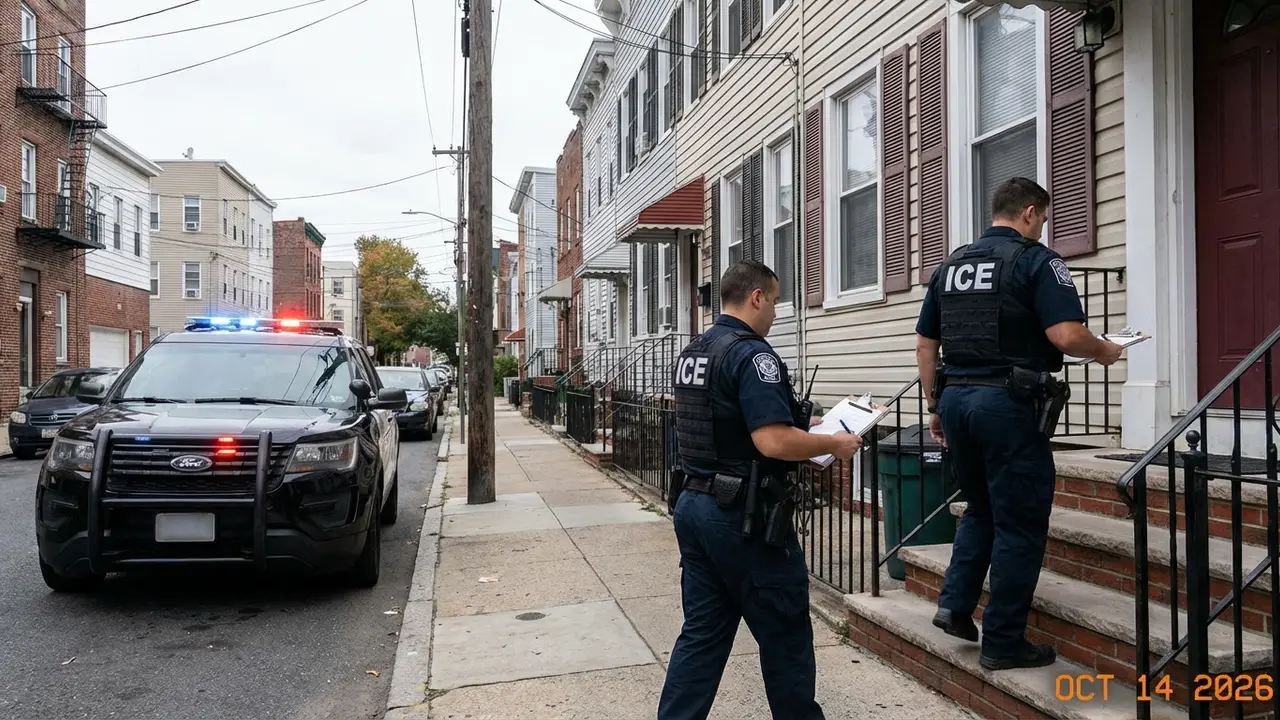
Illustration: Aroma de Cuba (AI)
Vice President JD Vance announced on January 7th an unprecedented escalation in immigration operations that will primarily target the 300,000 Cubans in immigration limbo. The Trump administration will deploy over 10,000 additional ICE agents with “door-to-door” tactics designed to locate and arrest Cuban migrants across the country.
Vance’s Promise: “We’ll Go Door to Door”
In a press conference following the January 7th incident that resulted in Renée Good’s death, Vance promised an “escalation in immigration enforcement actions and policies.” His statements were specific and forceful:
“Over 10,000 additional ICE agents will be deployed in the United States, using personal data harvested by private contractors to identify targets for arrest. Agents will go ‘door to door’ in the coming months to carry out Trump’s mass deportation agenda.”
This strategy marks a turning point toward more aggressive and personalized operations, moving away from the mass raids of February and March toward targeted operations based on private intelligence.
The Paradoxical February: Fewer Arrests, More Pressure
According to internal government data reviewed by The New York Times, ICE arrested approximately 11% fewer people per day in February compared to January, despite the announced reinforcements. This apparent reduction reflects a tactical recalibration rather than a relaxation of pressure.
Lindsay Toczylowski, executive director of Immigrant Defenders Law Center, explains: “The reduction in arrests doesn’t mean less pressure. They’re shifting toward more strategic and less visible operations that may be more effective in the long run.”
The Numbers That Count
- 10,000+ new agents in deployment process
- 5,169 Cubans deported through February (historic record)
- 300,000 Cubans in vulnerable legal limbo status
- 11% reduction in daily arrests during February
Surveillance Technology: The “Skip Tracers”
One of the most concerning innovations is the use of “skip tracers” - private contractors specialized in locating individuals using commercial databases and social media.
Bartlomiej Skorupa of Mobile Pathways Coalition warns: “They’re using data collected by private companies to create detailed profiles of where migrants live, work, and move. It’s a level of surveillance we’ve never seen before.”
These contractors have access to:
- Social media data and mobile app information
- Financial records and credit history
- Employer databases and public service records
- Vehicle information and property records
María’s Testimony: “We Live in Hiding”
María González, a Cuban from Miami with I-220A since 2023, describes the new reality: “It’s no longer just fear of raids. Now we know they can show up anytime at your house, at your work, at your children’s school. We live like we’re criminals.”
Her testimony reflects the psychological state of thousands of Cuban families facing the prospect of operations specifically targeting their homes.
”Door-to-Door” Operations: What Does It Mean?
The operations announced by Vance represent a fundamental shift in ICE strategy:
Previous Tactics (February-March 2026)
- Mass workplace raids
- Visible operations of “shock and awe” type
- Indiscriminate arrests with high media visibility
New Tactics (March onward)
- Targeted operations at specific residences
- Use of private intelligence to locate targets
- Discrete arrests with less media coverage
- Greater effectiveness per person arrested
The Human Cost of Escalation
Dr. Karen Musalo, immigration law expert, analyzes: “This escalation isn’t just about numbers. It’s a psychological strategy designed to make migrants self-report or leave the country voluntarily.”
Impact on Cuban Families
- Family separation due to targeted arrests
- Citizen children left with fragmented families
- Local economies affected by climate of terror
- Health services avoided due to fear of arrests
The Political Message Paradox
The timing of Vance’s announcement coincides with Trump’s statements about the imminent “fall” of the Cuban regime. This narrative creates a paradox:
- If Cuba is about to “fall,” why the urgency to deport?
- If the regime will change, wouldn’t this justify asylum claims?
- Is this escalation preparation for mass deportations post-”regime change”?
Legal Resistance: Lawyers Organize
The legal response is being coordinated through multiple fronts:
CLINIC (Catholic Legal Immigration Network) has filed federal lawsuits challenging the use of private data without judicial orders.
Immigrant Defenders Law Center is documenting cases of targeted arrests to establish patterns of ethnic discrimination.
Mobile Pathways Coalition assists families in preparing family emergency plans.
Community Preparation: What to Do?
Urgent Legal Recommendations
- Document all important papers in multiple copies
- Prepare a family emergency plan
- Know your rights during an ICE visit
- Maintain contact with immigration attorneys
- Avoid sharing location information on social media
Emergency Resources
- CLINIC hotline: 1-800-XXX-XXXX
- Immigrant Defenders: Free legal consultation
- Mobile Pathways: Family emergency planning
FAQ: We Answer Your Questions
Can ICE enter my home without a warrant?
No. ICE needs a warrant signed by a federal judge to enter your home without permission. However, they can arrest you if you leave or if someone invites them in.
Can social media data be used against me?
Yes. All public information on Facebook, Instagram, TikTok, etc., can be used by “skip tracers” to locate you.
What happens if I have I-220A and get arrested?
You have the right to request habeas corpus and legal representation. Don’t sign anything without consulting an attorney.
Should I voluntarily report as Trump suggests?
Definitely not without first consulting with an immigration attorney. Each case is unique and requires professional legal evaluation.
Related Links
- Supreme Court Lifts Talwani Protection: 532,000 Cuban Migrants Left Defenseless
- ICE Reduces Cuban Arrests 40% in March: Strategy Shift or Tactical Pause?
- Trump Reaches Record High: 5,169 Cubans Deported, Highest in US History
- Death in ICE Custody: 55-Year-Old Cuban Dies by Asphyxia, Medical Examiner Rules Homicide
- Historic Ruling: 11th Circuit Federal Court Revives Hope for Cubans with I-220A
The Cuban community faces its greatest migration challenge in decades. Information and legal preparation are our best defenses.
How we got here
Background
The first thing we published on this topic.
Cuba Records Second Magnitude 5 Earthquake in Three Days Near Santiago
A 5.0 magnitude tremor shook eastern Cuba, two days after a 5.6 quake in Guantánamo that damaged homes
45,000 Cubans Face Deportation Orders in the US
Some 550,000 Cubans vulnerable under Trump's immigration policies. Separated families and a community under pressure.
Related articles
ICE Cuts Cuban Arrests 40% in March: Strategy Shift or Pause?
Exclusive analysis of ICE's retreat from militarized operations after months of massive raids against Cubans in the US.
Supreme Court Restricts Asylum: New Legal Blow for Cubans with I-220A
Unanimous decision limits asylum appeals in federal courts, affecting thousands of Cubans who depend on this legal recourse.
Supreme Court Lifts Protection: 532,000 Cubans Defenseless
Supreme Court stays federal judge's order that blocked humanitarian parole revocation, exposing thousands of Cubans to immediate deportation risk

ICE Arrests 77 Migrants Daily in Florida: Record-High Cuban Numbers
New government data reveals ICE arrests in Florida tripled in 2025, with Cubans representing an alarming proportion of the 20,629 detentions.
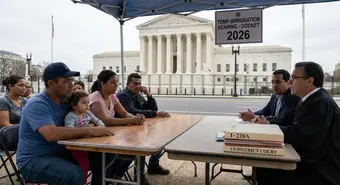
Supreme Court restricts asylum: blow to Cubans with I-220A
Unanimous March 7 decision limits federal court reviews of asylum cases, affecting thousands of Cubans with I-220A in appeals.
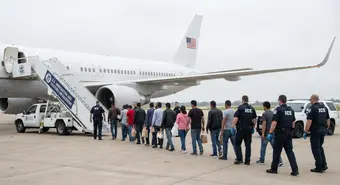
ICE Deports 170 Cubans on First 2026 Flight: 50 Criminals Included
The first ICE deportation flight to Cuba in 2026 transported 170 Cuban nationals, including 50 convicts of serious crimes like murder and rape.