ICE Reduces Cuban Arrests 11% Under Legal and Political Pressure
Immigration agency significantly reduces arrests while judicial battle over humanitarian parole intensifies pressure on Trump's migration policy.
4 min read
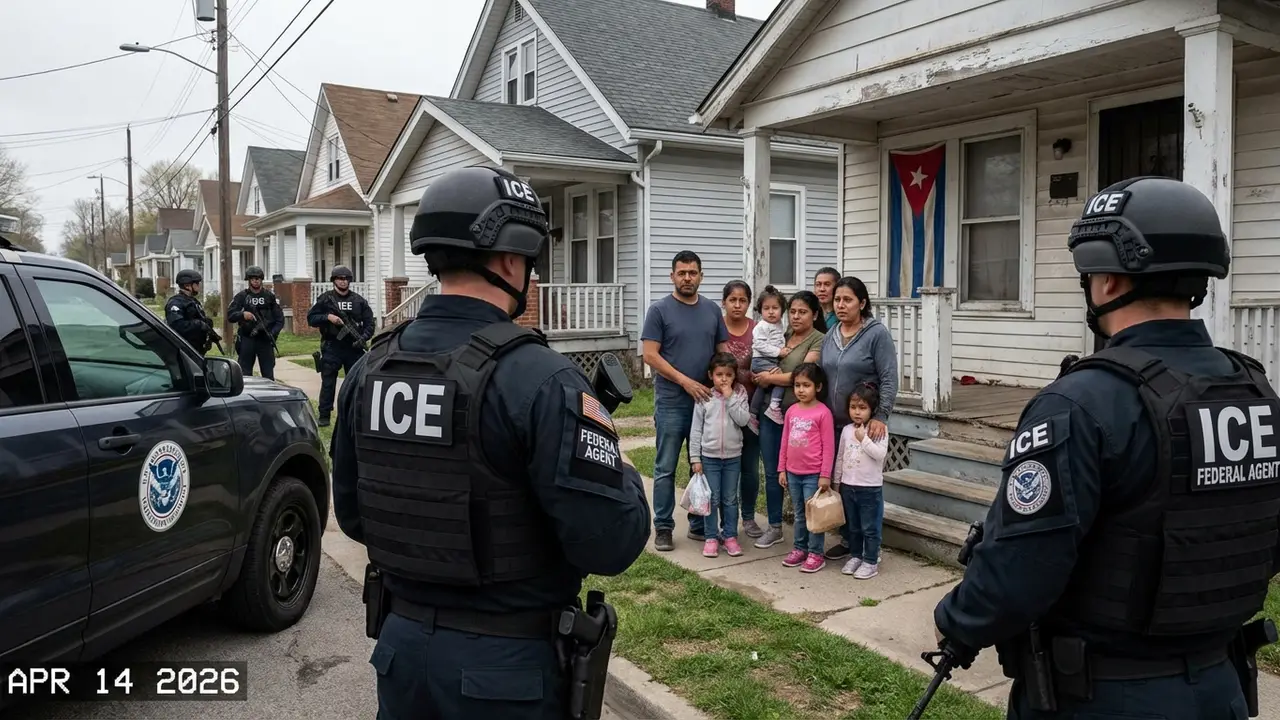
Illustration: Aroma de Cuba (AI)
In an unexpected turn revealing cracks in Trump’s migration strategy, ICE reduced daily arrests by 11% during February 2026, according to internal government figures reviewed by The New York Times. This decrease coincides with an unprecedented intensification of legal battles over humanitarian parole protecting more than 500,000 migrants, including hundreds of thousands of Cubans.
Pressure Takes Effect: ICE Changes Tactics
The revealed data shows that ICE arrested approximately 11% fewer people per day in February compared to January, after militarized operations in Minneapolis generated massive political and legal resistance. This reduction contrasts dramatically with Vice President JD Vance’s announcements to deploy “10,000 additional agents for door-to-door operations.”
María González, a Miami activist whose husband was deported in February, observes this change with caution: “The numbers may be going down, but the terror continues. Every day we expect ICE to knock on the door.”
Attorney Lindsay Toczylowski from Immigrant Defenders Law Center explains: “This reduction is no coincidence. Judicial, political, and social pressure is forcing a tactical recalibration. But make no mistake: the maximum pressure strategy continues through other means.”
Judicial Battle for 500,000 Migrants Reaches Critical Point
While ICE reduces arrest volume, the Trump administration intensifies the dismantling of humanitarian parole through the courts. The Supreme Court recently lifted Judge Indira Talwani’s restraining order, which temporarily protected 532,000 migrants from Cuba, Haiti, Venezuela, and Nicaragua.
Bartlomiej Skorupa from Mobile Pathways warns: “This is not a retreat, it’s a strategic reorganization. Trump is shifting from spectacular operations to administrative measures that can deport more people with less resistance.”
The figures are devastating: only 3% of Cuban asylum seekers won their cases in January 2026, while 56% of migrants didn’t even show up to their hearings for fear of being arrested at courthouses.
The Numbers Behind the Retreat
ICE internal data reveals a complex picture:
- 11% reduction in daily arrests February vs January
- 300,000 Cubans remain in legal limbo with I-220A status
- 5,169 Cubans deported so far this year - a record figure
- 24,000 habeas corpus petitions filed by separated families
Karen Musalo, immigration law expert, analyzes: “This temporary reduction in arrests doesn’t mean a change of heart. It’s a tactical response to legal and political resistance that’s complicating their operations.”
Recalibration or Strategic Pause?
The contrast is notable: while ICE reduces visible operations, the Trump administration accelerates other fronts:
- Massive revocation of humanitarian parole through DHS
- Suspension of immigrant visas for 75 countries
- Closure of CBP One program and CHNV
- Pressure on third countries like Ecuador to accept Cuban deportees
Julia Benítez Pérez, 79, grandmother of a Cuban migrant with revoked parole, shares her anguish: “We thought he was safe. Now we live in constant fear. This reduction in arrests doesn’t comfort us when we know they can arrive at any moment.”
The Political Factor Behind the Numbers
The reduction in ICE arrests is not accidental. Internal sources point to several factors:
Internal DHS resistance: Career officials express concerns about the legality and effectiveness of militarized operations.
Federal judicial pressure: Multiple courts have issued temporary restraining orders complicating mass operations.
Political cost: Images of family separations and operations in schools and hospitals generated bipartisan resistance.
The Legal Limbo Trap
While ICE reduces arrests, hundreds of thousands of Cubans remain trapped in a legal limbo that has become more dangerous:
- Work permits threatened by new DHS regulations
- Parole renewals suspended indefinitely
- Asylum hearings scheduled with years of delay
- Family reunification paralyzed by visa suspensions
Daniel Alejandro Escobar, recently released from ICE detention after a successful habeas corpus, describes the reality: “Arrests may be going down, but fear isn’t. We know this could be temporary. The psychological pressure is constant.”
Frequently Asked Questions
Why did ICE reduce arrests in February?
The 11% reduction responds to multiple factors: legal resistance, political pressure after controversial Minneapolis operations, and operational difficulties from multiple federal lawsuits.
Does this mean deportations will stop?
No. The Trump administration is changing tactics, prioritizing administrative measures like parole revocation and visa suspension over visible mass operations.
What happens to the 300,000 Cubans with I-220A?
They remain in extreme legal limbo. While ICE temporarily reduces arrests, their cases remain priority for deportation under the new administrative strategy.
Is this a victory for migrants?
Experts warn it’s not. It’s a tactical recalibration that may be more effective long-term, combining less spectacle with greater administrative efficiency in deportations.
The battle for the fate of hundreds of thousands of Cuban migrants continues unfolding in federal courts as ICE adapts its tactics. The temporary reduction in arrests doesn’t change the Trump administration’s fundamental “maximum pressure” strategy.
How we got here
Background
The first thing we published on this topic.
Cuba Records Second Magnitude 5 Earthquake in Three Days Near Santiago
A 5.0 magnitude tremor shook eastern Cuba, two days after a 5.6 quake in Guantánamo that damaged homes
45,000 Cubans Face Deportation Orders in the US
Some 550,000 Cubans vulnerable under Trump's immigration policies. Separated families and a community under pressure.
Related articles

ICE Detains Cuban with Criminal Record in Boston: Final Order
José Adalberto Miranda Espino was detained by ICE in Boston with final deportation order, escalating migration pressure under Trump.
Court Orders Humanitarian Parole Processing: Hope for Cubans
Federal court contradicts Trump policy and forces US to process parole applications, work permits, and asylum cases for Cuban migrants.
Trump: 5,169 Cubans Deported, Historic US Record
With 10,000 new ICE agents deployed, Trump sets historic record for Cuban deportations while modifying strategy after mounting controversy.
Crisis: Cuban migrants trapped between deportations and blackouts
The double crisis facing Cubans in 2026: Trump's mass deportations and Cuba's energy collapse create unprecedented humanitarian emergency.

Federal lawsuit post-deadline: 100,000+ Cubans seek to expedite cases
After Friday the 13th deadline expired, federal lawsuit against USCIS over Cuban residencies paralyzed under Trump continues its legal course.

Cuban Deported to Africa Lives in 'Legal Black Hole'
Roberto Mosquera del Peral, deported to Eswatini by the US since 2025, questions from African prison Trump's third-country deportation program