Supreme Court Lifts Protection: 532,000 Cubans Defenseless
Supreme Court stays federal judge's order that blocked humanitarian parole revocation, exposing thousands of Cubans to immediate deportation risk
5 min read
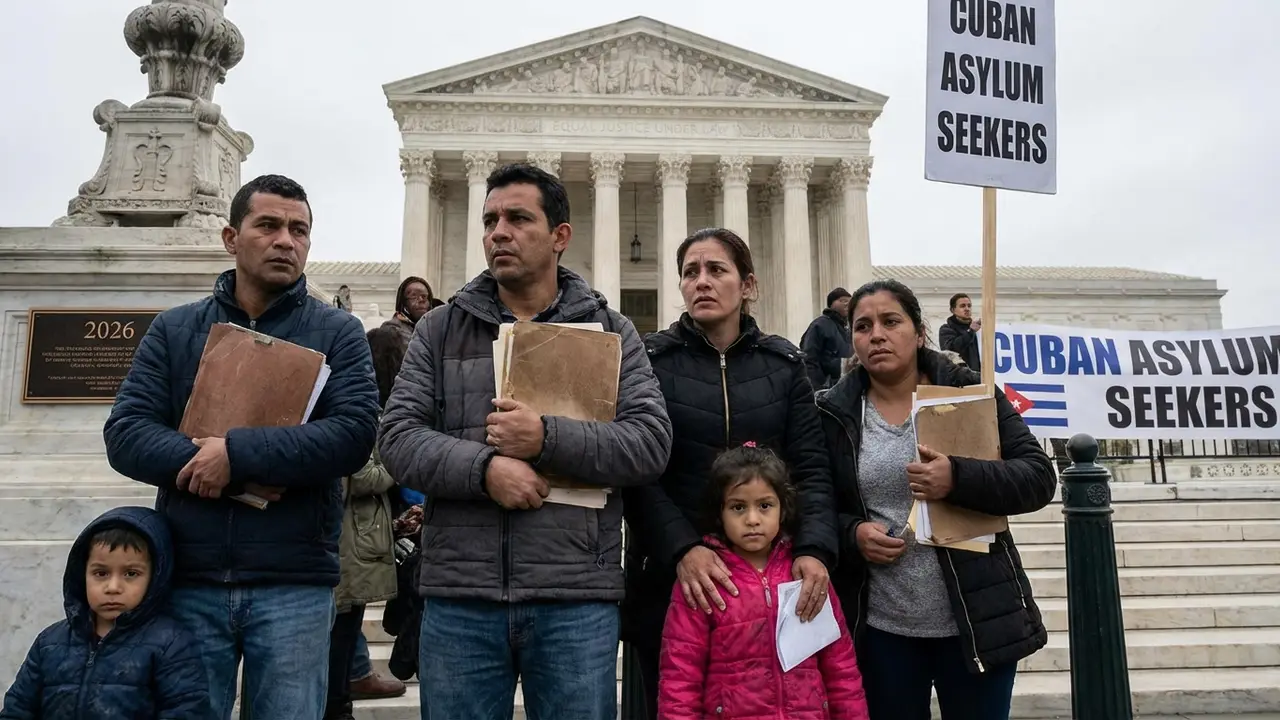
Illustration: Aroma de Cuba (AI)
Unprecedented Legal Crisis Unfolds
The U.S. Supreme Court delivered a devastating blow to over 532,000 migrants from Cuba, Haiti, Venezuela, and Nicaragua by staying the protective order issued by federal judge Indira Talwani that had temporarily blocked the revocation of their humanitarian parole status.
This decision eliminates the last legal barrier protecting thousands of Cubans from the CHNV (Cuba, Haiti, Nicaragua, Venezuela) program from immediate deportations, exposing entire families who have been established in the United States for years.
The Talwani Order: Last Legal Refuge
On January 14, 2026, Judge Indira Talwani of the U.S. District Court for Massachusetts had issued a temporary restraining order extending the “family reunification parole” status for immigrants whose status was set to expire as part of the Trump administration’s broad immigration crackdown.
“This order represented the only legal protection these migrants had against mass deportations,” explains Lindsay Toczylowski of the Immigrant Defenders Law Center.
The measure was seen as a temporary victory for over 300,000 Cubans who entered under the Biden administration’s humanitarian parole program, many of whom already have jobs, children in U.S. schools, and deep community ties.
Supreme Court Enables Mass Deportations
With the decision to stay the Talwani order, the Supreme Court effectively allows the Trump administration to proceed with:
- Immediate revocation of humanitarian parole status
- Expedited deportations without additional judicial review
- Family separation for those legally established in the U.S.
- Elimination of work protections and employment authorization
Bartlomiej Skorupa of Mobile Pathways warns about the impact: “We’re seeing families who entered legally being treated like criminals. Family separation will be massive.”
Devastating Impact on Cuban Community
Real Cases of Separation
María González, a Miami resident with two U.S. citizen children, describes her desperation: “We arrived legally in 2023 with humanitarian parole. My kids go to school here, I have a job. Now they’re going to deport me to Cuba where there are 16 hours of blackouts daily?”
Julia Benítez Pérez, 79, with chronic medical conditions, faces deportation after two years reunited with her family in Tampa: “In Cuba there’s no medicine for my diabetes. This is a death sentence.”
Alarming Statistics
- 532,000 migrants lose immediate protection
- 300,000+ Cubans specifically affected
- 56% no-show rate at hearings due to ICE terror
- 3% asylum approval rate in January 2026
Legal Context: CHNV Program Under Attack
The CHNV humanitarian parole program allowed citizens of Cuba, Haiti, Nicaragua, and Venezuela to legally enter the United States if they had sponsors and passed background checks.
Timeline of Destruction:
January 2025: Trump takes office promising to “end Biden’s illegal program”
January 2026: Kristi Noem massively revokes humanitarian protections
February 2026: Federal courts begin blocking individual deportations
March 2026: Supreme Court eliminates last mass legal protection
”Maximum Pressure” Strategy
The elimination of protections coincides with the energy crisis in Cuba generated by Trump’s oil blockade, where the island suffers 16 hours of daily blackouts and healthcare system collapse.
“It’s a coordinated strategy: make life impossible in the United States while Cuba collapses, forcing ‘voluntary return,’” analyzes Karen Musalo of the Center for Gender & Refugee Studies.
The Trump administration has already deported 5,169 Cubans in just two months, a record high in U.S. history.
Fragmented Legal Resistance
While the decision eliminates Talwani’s mass protection, immigration attorneys maintain individual strategies:
Limited Options Available:
- Individual habeas corpus petitions (24,000 already filed)
- 11th Circuit appeals under Mark Prada precedent
- Asylum applications with 3% approval rate
- Emergency relief motions for family separation
“Each individual case requires specific strategy, but we’ve lost mass protection,” warns Alejandro Vázquez Sánchez of Martí Noticias.
Timeline: How We Got Here
March 2025: Biden expands CHNV program, allowing 30,000 monthly entries
January 20, 2026: Trump inaugurated, promises immediate program termination
January 14, 2026: Judge Talwani blocks mass parole revocations
March 4, 2026: Supreme Court stays Talwani order
Today: 532,000 migrants lose protection, deportations can proceed
International Response
Canada has expressed concern about regional stability, already providing $8 million in emergency aid to Cuba. The United Nations has demanded information about separated families and detention conditions.
“The humanitarian implications extend far beyond U.S. borders,” notes international law expert Dr. Patricia Jiménez of Georgetown University.
FAQ
1. What does the Supreme Court “stay” actually mean?
The “stay” temporarily suspends Judge Talwani’s order, allowing the government to immediately revoke humanitarian parole while cases are litigated in lower courts. It’s a tactical victory for Trump that exposes migrants to immediate deportation.
2. Can Cubans with humanitarian parole be deported tomorrow?
Technically yes. Without Talwani protection, ICE can proceed with deportations of anyone whose humanitarian parole has been revoked, though each individual case may have specific legal remedies available.
3. What legal options remain available?
Individual habeas corpus petitions, asylum applications (3% approval rate), 11th Circuit appeals based on precedent, and emergency family separation relief. But there’s no mass protection.
4. How does this affect Cubans who already applied for the Cuban Adjustment Act?
Cubans with pending Cuban Adjustment Act applications may have some protection, but must immediately consult with specialized attorneys. Each case is different and requires individual legal analysis.
This decision marks a turning point in the 2026 Cuban migration crisis. To stay informed about legal developments and available options, subscribe to our updates and always consult with immigration attorneys specialized in Cuban cases.
Related Articles:
How we got here
Background
The first thing we published on this topic.
Cuba Records Second Magnitude 5 Earthquake in Three Days Near Santiago
A 5.0 magnitude tremor shook eastern Cuba, two days after a 5.6 quake in Guantánamo that damaged homes
45,000 Cubans Face Deportation Orders in the US
Some 550,000 Cubans vulnerable under Trump's immigration policies. Separated families and a community under pressure.
Related articles
ICE Cuts Cuban Arrests 40% in March: Strategy Shift or Pause?
Exclusive analysis of ICE's retreat from militarized operations after months of massive raids against Cubans in the US.
Supreme Court restricts asylum: blow to Cubans with I-220A
Unanimous March 7 decision limits federal court reviews of asylum cases, affecting thousands of Cubans with I-220A in appeals.
ICE Deports 170 Cubans on First 2026 Flight: 50 Criminals Included
The first ICE deportation flight to Cuba in 2026 transported 170 Cuban nationals, including 50 convicts of serious crimes like murder and rape.
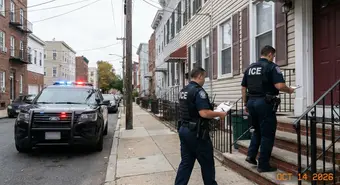
ICE Escalates Raids: 10,000 'Door-to-Door' Agents Target Cubans
JD Vance announces the largest deportation operation in decades with 10,000 new ICE agents and 'door-to-door' tactics specifically targeting Cubans.
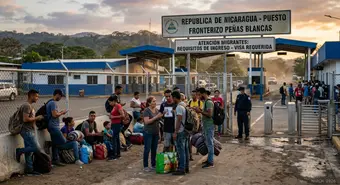
Nicaragua Closes 'Volcano Route': 200,000 Cubans Left Stranded
End of visa-free transit through Nicaragua since Feb 8 forces Cubans to seek more dangerous routes to US, increasing maritime crossings by 340%
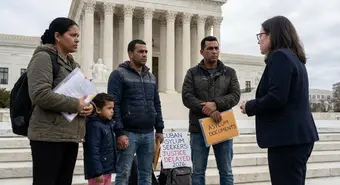
Supreme Court Restricts Asylum: New Legal Blow for Cubans with I-220A
Unanimous decision limits asylum appeals in federal courts, affecting thousands of Cubans who depend on this legal recourse.