Supreme Court restricts asylum: blow to Cubans with I-220A
Unanimous March 7 decision limits federal court reviews of asylum cases, affecting thousands of Cubans with I-220A in appeals.
5 min read
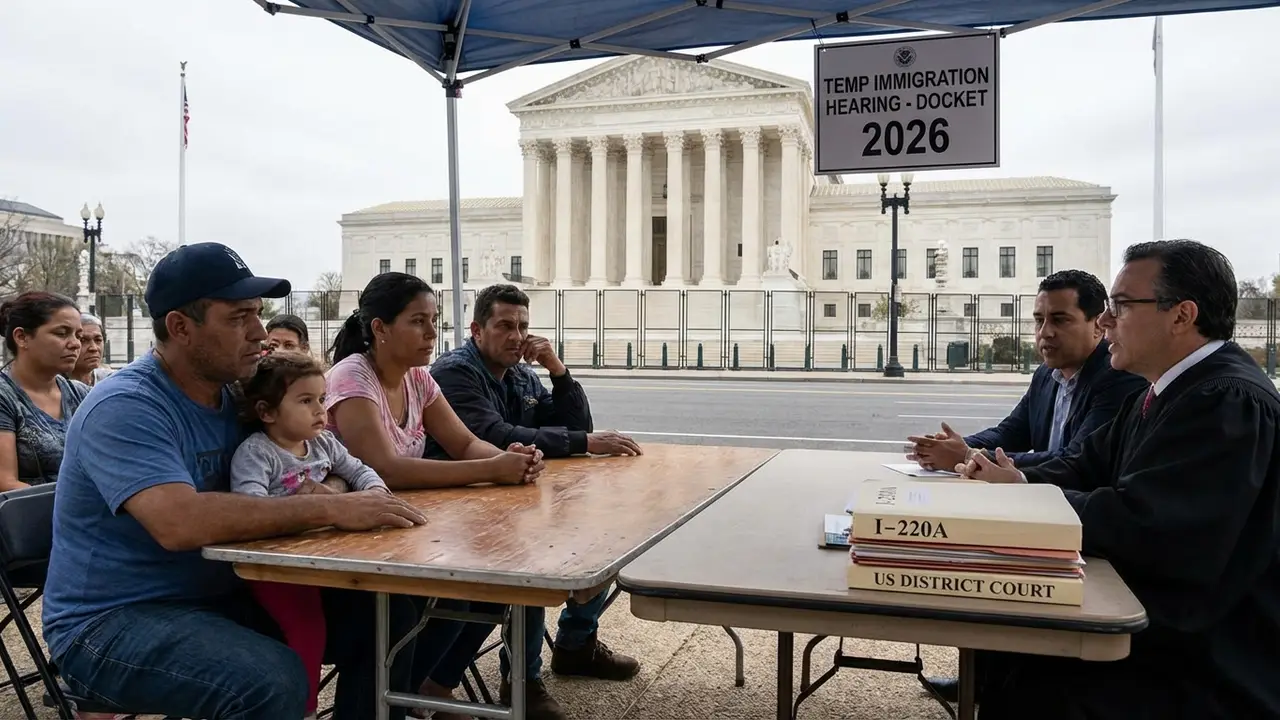
Illustration: Aroma de Cuba (AI)
The U.S. Supreme Court delivered another devastating blow to the migration protection system with a unanimous decision that drastically limits federal courts’ ability to review asylum denials. The March 7 ruling in Urias-Orellana v. Bondi directly affects thousands of Cubans holding I-220A forms who depend on political asylum as their only legal pathway to remain in the country.
⚖️ The radical shift in review standards
The decision establishes that appellate courts must apply a “substantial evidence standard” when reviewing decisions by immigration judges and the Board of Immigration Appeals (BIA). In practical terms, this means federal courts must uphold immigration authorities’ decisions if reasonable evidence supports them, even in cases determining whether someone has suffered persecution.
The new rule is clear: to overturn an asylum denial, an applicant’s evidence must be so compelling that it would force any reasonable judge to reach a different conclusion.
Before vs. After the Ruling
Before (until March 6, 2026):
- Federal courts could fully reexamine cases during appeals
- Broader review of whether facts constituted persecution
- Greater flexibility to reverse administrative decisions
After (since March 7, 2026):
- Courts must defer to immigration authorities’ decisions
- More restrictive standard: only “substantial” evidence sufficient
- Review limited to initial administrative process
📋 Who are the most affected?
Cubans with I-220A in Legal Limbo
The most severe impact falls on approximately 300,000 Cubans holding I-220A forms (Order of Release on Recognizance). This document, granting supervised release to migrants detained at the border, does not constitute legal admission or parole, leaving many Cubans in migratory limbo without direct access to the Cuban Adjustment Act.
For many of these migrants, political asylum had become one of the few viable options to regularize their immigration status. With the new criteria established by the Supreme Court, chances of overturning an asylum denial in federal courts are significantly diminished.
Typical Affected Cases
- Cubans arriving after 2017 without access to parole
- Migrants with I-220A who don’t qualify for the Cuban Adjustment Act
- Asylum seekers whose petitions were denied by immigration judges
- Cases pending appeal in federal circuits
⚖️ The case that changed the rules
The decision arose from the case of Douglas Humberto Urias-Orellana, a Salvadoran citizen who applied for asylum after entering the United States in 2021. Urias-Orellana claimed to have been threatened by a hitman in his home country.
Although the immigration judge found his testimony credible, they concluded the described incidents didn’t meet the legal threshold for persecution required by U.S. asylum law. The Board of Immigration Appeals upheld the decision, and subsequently the First Circuit also affirmed it.
In an opinion authored by Justice Ketanji Brown Jackson, the court emphasized that Congress designed the immigration system to defer to specialized agencies’ conclusions.
🌊 Impact on the Cuban migration crisis
This decision comes at a critical moment for the Cuban migration community, facing multiple simultaneous crises:
Migration Crisis Context
- 5,169 Cubans deported under the Trump administration (historic record)
- 300,000 Cubans in legal limbo after humanitarian parole revocation
- 340% increase in maritime crossings after land route closures
- Energy crisis in Cuba with 16-hour daily blackouts
Emblematic Affected Cases
- González Family (Miami): Three siblings with I-220A now face deportation without effective appeal possibility
- Julia Benítez Pérez (79 years old): Asylum applicant denied, her appeal options drastically reduced
- Over 24,000 habeas corpus petitions pending that could be affected
🔍 System with increased administrative influence
The ruling significantly strengthens immigration authorities’ role within the U.S. judicial system. By requiring federal courts to grant greater deference to administrative decisions, the Supreme Court has reinforced a model where much of an asylum seeker’s legal battle is determined in the initial stages of the immigration process.
Immediate Practical Consequences
- Drastic reduction in successful appeals
- Power concentration in immigration judges and BIA
- Reduced federal judicial oversight
- Increased pressure in initial administrative stages
💡 Limited options for Cubans
With this change, Cubans face an increasingly restrictive legal landscape:
Remaining Legal Pathways
- Cuban Adjustment Act (only for legally admitted or paroled)
- Family reunification (limited processing)
- Political asylum (now with extremely difficult appeals)
- Habeas corpus petitions (under greater scrutiny)
Defense Strategies
Immigration attorneys recommend:
- Exhaustive documentation from the initial case
- Detailed medical and psychological evidence
- Expert testimony on Cuban conditions
- Intensive preparation for administrative hearings
🏛️ Frequently Asked Questions
What exactly changed with this Supreme Court ruling?
The Supreme Court restricted federal courts to a “substantial evidence standard” when reviewing asylum denials, meaning they must uphold immigration authorities’ decisions if reasonable evidence supports them.
How does this specifically affect Cubans with I-220A?
Cubans with I-220A who depended on asylum as a legal pathway now face much lower odds of reversing denials in federal courts, limiting their appeal options.
What role do immigration authorities now play after this ruling?
The ruling reinforces immigration officials’ authority by requiring federal courts to defer to their decisions, thus centralizing the legal process in initial administrative stages.
Does this ruling affect cases already pending appeal?
Yes, the decision doesn’t immediately alter the legal status of thousands of Cubans awaiting resolutions, but could affect the success of future appeals in federal courts.
For thousands of Cubans awaiting resolutions to their cases, including many with I-220A, the decision doesn’t immediately alter their legal status, but could affect the success of future appeals in federal courts. The path to legal protection becomes narrower each day, while the Cuban migration crisis continues deepening under the Trump administration’s “maximum pressure” strategy.
How we got here
Background
The first thing we published on this topic.
Nicaragua Closes the Door: Ends Visa-Free Entry for Cubans
Nicaragua ends visa-free entry for Cuban citizens, closing one of the main migration routes to the United States.
Cuba Records Second Magnitude 5 Earthquake in Three Days Near Santiago
A 5.0 magnitude tremor shook eastern Cuba, two days after a 5.6 quake in Guantánamo that damaged homes
Related articles

CHNV Humanitarian Parole Program for Cubans Ends Officially
The CHNV program that benefited 300,000 Cubans is officially canceled. Supreme Court lifts protections following Trump's decision.

Supreme Court debates 'arrives in' US: asylum future at stake
Justices debate 'metering' policy that allows rejecting asylum seekers at border. Will affect 300,000 Cubans in limbo.
Supreme Court Lifts Protection: 532,000 Cubans Defenseless
Supreme Court stays federal judge's order that blocked humanitarian parole revocation, exposing thousands of Cubans to immediate deportation risk
ICE Cuts Cuban Arrests 40% in March: Strategy Shift or Pause?
Exclusive analysis of ICE's retreat from militarized operations after months of massive raids against Cubans in the US.
ICE Deports 170 Cubans on First 2026 Flight: 50 Criminals Included
The first ICE deportation flight to Cuba in 2026 transported 170 Cuban nationals, including 50 convicts of serious crimes like murder and rape.

ICE Escalates Raids: 10,000 'Door-to-Door' Agents Target Cubans
JD Vance announces the largest deportation operation in decades with 10,000 new ICE agents and 'door-to-door' tactics specifically targeting Cubans.