I-220A: The Lawsuit That Could Decide 500,000 Cubans' Future
Lawyers seek class-action status to have the I-220A recognized as parole, potentially allowing half a million Cubans to adjust status.
4 min read
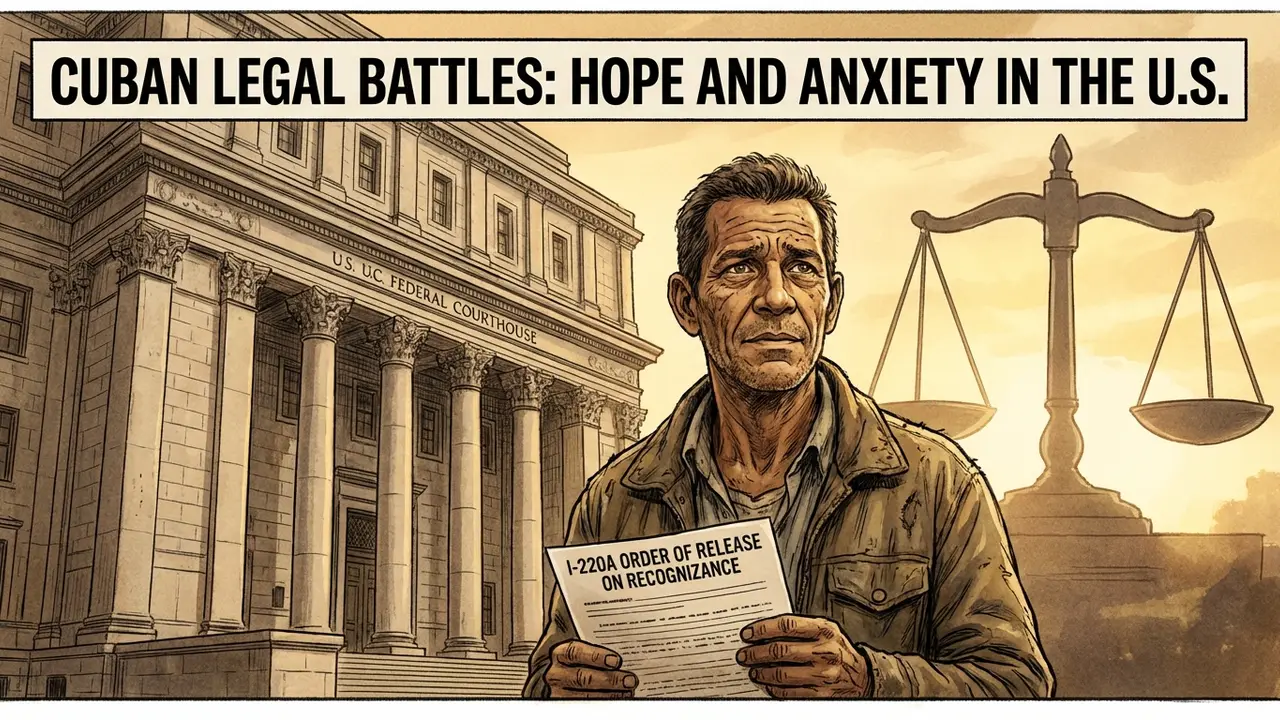
Illustration: Aroma de Cuba (AI)
The I-220A Lottery
Imagine arriving at the US border with your Cuban passport, turning yourself in to authorities, and having an officer hand you a document. That piece of paper — a decision lawyers say was essentially random — will determine whether you can build a legal life in this country or remain trapped in indefinite limbo.
That’s exactly what happened to an estimated 500,000 Cubans who crossed the southern border between 2019 and 2023. Some received parole, opening the door to adjust their status under the Cuban Adjustment Act. Others, under identical circumstances and sometimes on the same day, received an I-220A form — a release order that left them in no man’s land.
Today, that difference is at the center of an unprecedented legal battle that could redefine the immigration future of half a million people.
The Lawsuits That Could Change Everything
Attorney Mark Prada, based in Miami, is leading multiple lawsuits seeking judicial recognition that the I-220A should be considered equivalent to parole. His argument is straightforward — these individuals presented themselves to authorities to seek asylum and were released, something that legally can only occur through parole.
“The fact is that these people presented themselves at the border to immigration authorities to request asylum and were released. According to how the law works, that can only have occurred through parole.” — Mark Prada, immigration attorney
Legal actions are advancing on multiple fronts:
- Miami: Federal lawsuit seeking class-action certification — the broadest possible remedy
- California (2nd Circuit): Individual appeals
- Georgia (11th Circuit): Additional individual cases
If any of these lawsuits succeed, the impact would be historic. But Prada is cautious: “Given the impact of what we’re doing, I would assume the government would want to appeal.”
Living With I-220A Under Trump
The I-220A legal limbo has become a nightmare under the Trump administration. What was once a bureaucratic inconvenience is now an existential threat.
Liryenne Bello, a 37-year-old Cuban doctor who arrived in 2022, says she lives in “terror” of being arrested at a routine traffic stop. She has put her plans to have children on hold. Yaser Betancourt, a special education teacher in Texas, has spent nearly $6,000 on paperwork with no results and witnessed Cubans being arrested in court during routine hearings.
The numbers tell the story:
- 1,669 Cubans deported in 2025 — a record high
- Hundreds sent to third countries, including Mexico, Eswatini, and South Sudan
- Arrests during immigration hearings and ICE check-ins
- Trump canceled the family reunification program and froze visas for Cuba
Why Some Got Parole and Others I-220A
Nobody knows for certain. Authorities have never explained the criteria. An AP report suggests they were improvised decisions due to lack of space in detention facilities.
The result: divided families. Siblings who crossed together with opposite fates — one with residency, the other facing a deportation order. The arbitrariness has fueled a crisis of trust and fertile ground for misinformation on social media.
Yurisleidy Ávalos, who manages a Facebook group with over 33,000 affected Cubans, warns: “There are too many TikTok lawyers out there. Immigration misinformation can cost someone their freedom.”
What Comes Next
The lawsuits are moving forward, but the road is long. Even a favorable ruling will be appealed by the government, and the current political climate doesn’t favor immigrants.
For the 500,000 Cubans with I-220A, the wait continues. Some work as professionals, pay taxes, and follow every rule — but they live under the shadow of a deportation that could come at any moment.
As Yaser Betancourt put it: “I consider myself an exemplary citizen who has followed every rule. But my immigration status remains in limbo.”
Sources: El País, Havana Times, USCIS
Frequently asked questions
What is the I-220A form and why does it affect Cubans?
How many Cubans are affected by the I-220A issue?
What does the I-220A class-action lawsuit seek?
What are the chances of success for the lawsuit?
Sources
- USCIS · uscis.govprimary document
- El País · elpais.com
- Havana Times · havanatimes.org
How we got here
Background
The first thing we published on this topic.
Nicaragua Closes the Door: Ends Visa-Free Entry for Cubans
Nicaragua ends visa-free entry for Cuban citizens, closing one of the main migration routes to the United States.
Cuba Records Second Magnitude 5 Earthquake in Three Days Near Santiago
A 5.0 magnitude tremor shook eastern Cuba, two days after a 5.6 quake in Guantánamo that damaged homes
Related articles

The Drama of Cubans Deported from the US: Real Testimonies
1,669 Cubans deported in Trump's first year back. Stories of those returning to a Cuba in crisis with no home or future.

DHS Orders Arrest of Refugees with Asylum After 1 Year in U.S.
New policy allows indefinite detention of thousands of legal refugees, including Cubans with approved asylum. Rights groups call it a betrayal.

Florida Pays $1.7 Million to Police for ICE Collaboration
Volusia and Flagler counties receive state funds for immigration operations. Cases involving Cubans highlighted at official press conference.
Second Deportation Flight to Cuba in 2026: 116 Migrants, 302 Total
The U.S. deports 116 Cubans in the second flight of 2026. With 302 repatriated in two months, the pace far exceeds 2025.
The Ordeal of Cubans Deported to Guantánamo: Testimonies
Over 50 Cubans were sent to the Guantánamo naval base believing they were going to Havana. Their testimonies reveal blindfolds, deception, and isolation.

28% of ICE Detainees Choose Self-Deportation in Record 2025 Wave
Voluntary departures from ICE custody hit historic highs in 2025, with thousands of Cubans opting to self-deport amid harsher policies.