Cuban Rafters Rescued in Mexico and Caribbean as Sea Routes Surge
Seven rafters rescued off Quintana Roo and six by a Royal Caribbean cruise. Maritime routes resurge after Nicaragua closes its migration corridor.
4 min read
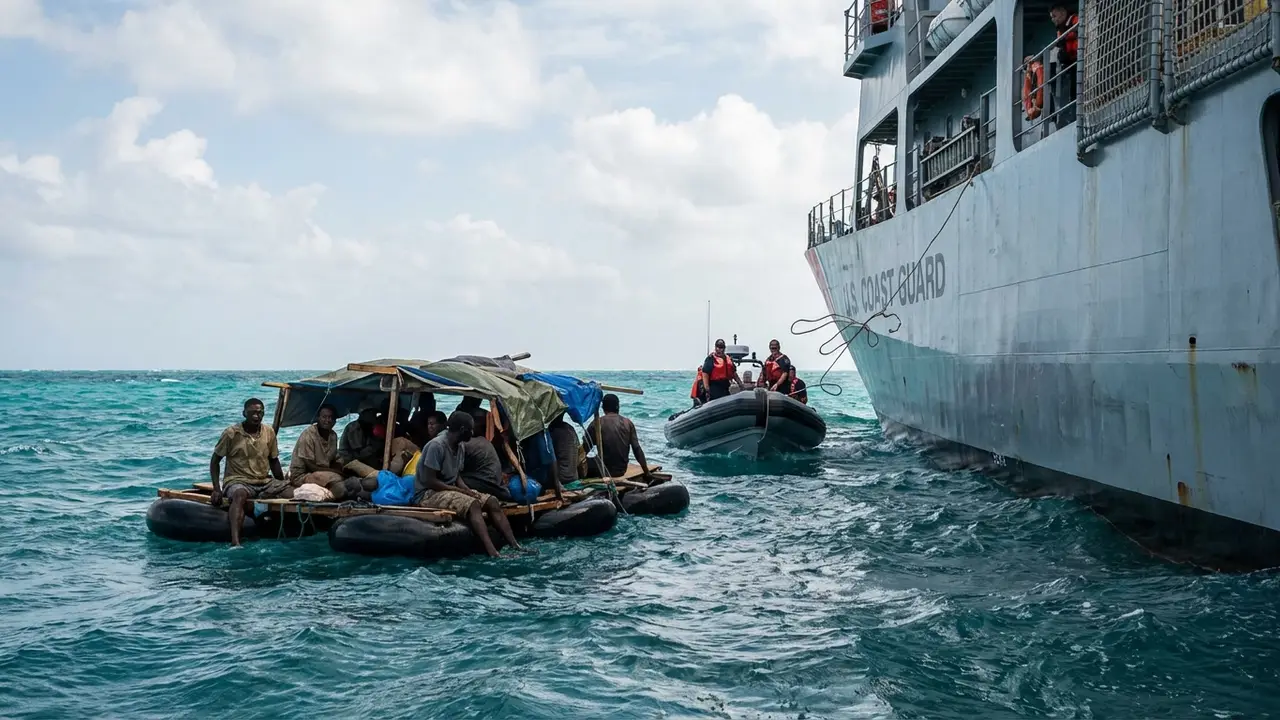
Illustration: Aroma de Cuba (AI)
Two Rescues in One Weekend
The weekend of February 15-16 laid bare a reality many feared: maritime routes from Cuba are surging again. In just 48 hours, at least 13 Cubans were rescued in two separate incidents across Caribbean waters.
Seven Rafters Off Quintana Roo
The Mexican Navy, through its Eleventh Naval Zone, rescued seven Cuban migrants who shipwrecked near Banco Chinchorro, a coral atoll off the coast of Quintana Roo. The rafters were first spotted by local fishermen from the community of Mahahual, who alerted authorities.
After the rescue, the seven Cubans were transferred to shore, where medical and immigration protocols were activated. All were reportedly suffering from dehydration and exhaustion but had no serious injuries.
Six Rescued by a Royal Caribbean Cruise
A day earlier, the Royal Caribbean cruise ship Radiance of the Seas came to a complete stop in waters near Cuba after detecting a vessel in distress. Passengers who documented the rescue on social media described the ship remaining motionless while the operation was coordinated.
“We are completely stranded waiting for the rescue of six people,” wrote passenger Mike Hoglander in a Facebook group. Another passenger on Reddit explained that the captain spotted the boat and stopped the ship in compliance with international maritime laws requiring assistance to people in danger at sea.
When the U.S. Coast Guard was unable to respond, the cruise crew conducted the rescue themselves. The rafters’ boat was already taking on water when they were reached. All six were brought aboard and later disembarked in the Cayman Islands, where they were placed in the custody of Customs and Border Control (CBC).
The Cayman Islands: An Involuntary Destination
Cayman Islands authorities confirmed that the six rescued individuals are adult Cuban men being processed under the British Overseas Territory’s immigration laws.
The archipelago has become an increasingly frequent arrival — or rescue — point for Cuban rafters. So far in 2026, the Cayman Islands have repatriated 13 Cubans to Havana, while another 23 remain in custody awaiting processing.
Caymanian authorities have warned they are preparing for a possible surge of irregular migrants from Cuba in the coming weeks.
The Nicaragua Effect
These rescues don’t happen in a vacuum. In early February 2026, Nicaragua eliminated visa-free travel for citizens of 128 countries, including Cuba. This decision definitively closed the so-called “volcano route,” the migration corridor that since 2021 had allowed Cubans to fly to Managua and make the overland journey to the U.S. southern border.
With the land route closed and legal migration pathways to the U.S. largely eliminated by the Trump administration — which canceled humanitarian parole, suspended CBP One, and froze visa processing for Cubans — options have narrowed drastically.
For many, the raft is once again the only way out.
A Recurring Pattern
Cuban migration history is marked by cycles of crisis and maritime exodus. The 1994 rafter crisis, when more than 35,000 Cubans took to the Florida Strait, led to migration agreements between Washington and Havana.
Thirty-two years later, the conditions that triggered that crisis are repeating in amplified form: a collapsed economy, constant blackouts, food and medicine shortages, and now the closure of virtually all legal migration routes.
The difference is that in 2026, Cubans who arrive by sea no longer benefit from the “wet foot, dry foot” policy repealed by Obama in 2017. Being rescued at sea or reaching shore no longer guarantees anything.
The Deadly Risk
Maritime crossings from Cuba are extremely dangerous. The Florida Strait, with its strong currents and unpredictable weather, has claimed thousands of lives over the decades. Improvised vessels — tire rafts, overloaded fishing boats, boards tied together with rope — are rarely equipped for the journey.
The seven rescued in Mexico likely departed from Cuba’s northern coast bound for the Yucatán Peninsula, a crossing of at least 200 kilometers of open sea. The six rescued near Cuba may have been heading for Florida’s coast, over 150 kilometers away.
In both cases, they survived. Many others are not as fortunate, and their stories are never told.
Frequently asked questions
How many Cuban rafters were rescued this weekend?
Why are maritime crossings from Cuba increasing?
What happens to Cuban rafters rescued in the Cayman Islands?
Are ships required to rescue people at sea?
How we got here
Background
The first thing we published on this topic.
Nicaragua Closes the Door: Ends Visa-Free Entry for Cubans
Nicaragua ends visa-free entry for Cuban citizens, closing one of the main migration routes to the United States.
Cuban man's death in ICE custody ruled homicide by medical examiner
Geraldo Lunas Campos died at Camp East Montana after being asphyxiated by guards according to official autopsy.
Related articles
Record Deportations: Cubans Trapped in Mexican Immigration Limbo
US deports Cubans to Mexico in historic numbers, creating a humanitarian crisis where thousands live in limbo with no return options.
Nicaragua Blocks Last Cuban Migration Route to the US
Nicaragua's decision to cancel visa-free travel for Cubans closes one of the last viable routes to the US, leaving thousands without migration options.

Double Migration Blow: Nicaragua and Trump Close Routes to Cubans
Nicaragua cancels visa-free entry while Trump suspends visa processing for 75 countries, leaving Cubans without legal options

Supreme Court Allows Trump to Revoke Parole for 500,000 Migrants
Supreme Court authorizes revocation of humanitarian parole for half million migrants from Cuba, Haiti, Venezuela, and Nicaragua in historic ruling.
Nicaragua Closes 'Volcano Route': 200,000 Cubans Left Stranded
End of visa-free transit through Nicaragua since Feb 8 forces Cubans to seek more dangerous routes to US, increasing maritime crossings by 340%
Direct Cuban Deportations to Tapachula: New Route That Bypasses Havana
US sends 2-3 weekly flights with deported Cubans directly to Tapachula, Mexico, avoiding Cuba in an unprecedented Trump administration tactic.