Supreme Court Allows Trump to Revoke Parole for 500,000 Migrants
Supreme Court authorizes revocation of humanitarian parole for half million migrants from Cuba, Haiti, Venezuela, and Nicaragua in historic ruling.
5 min read
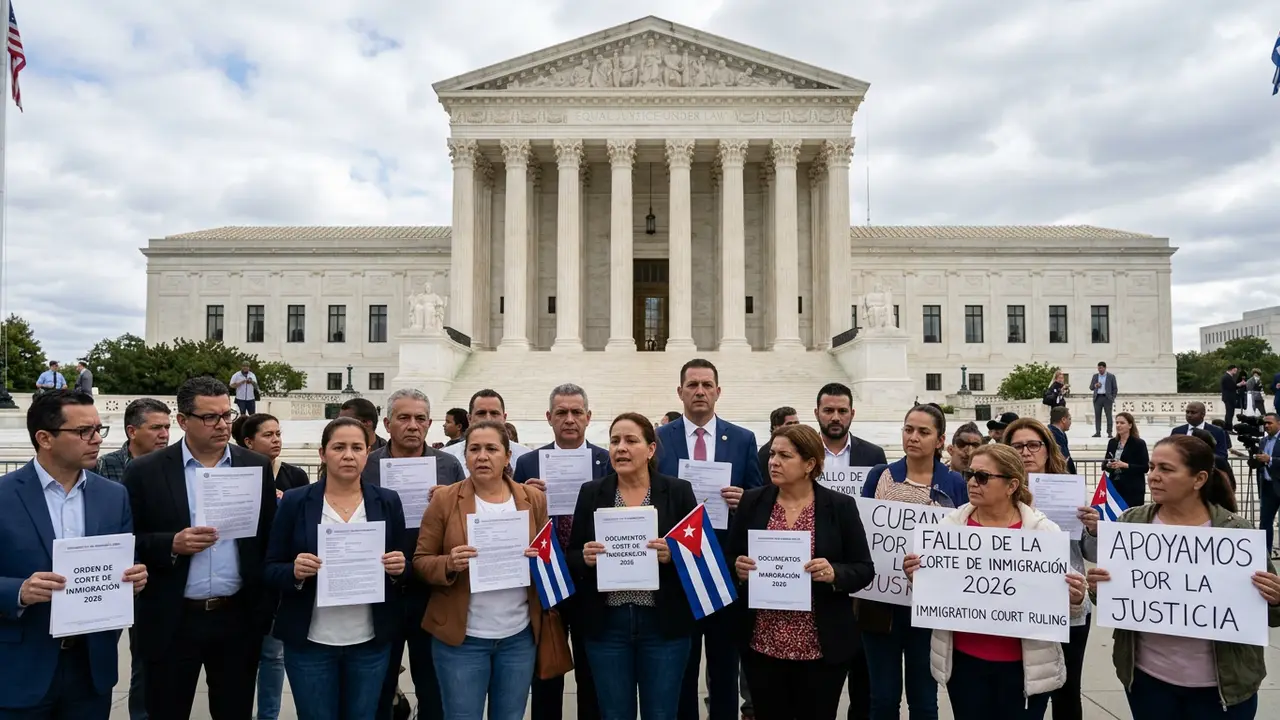
Illustration: Aroma de Cuba (AI)
In a historic decision that redefines the American immigration system, the U.S. Supreme Court has authorized the Trump administration to revoke “humanitarian parole” status for over 500,000 migrants from Cuba, Haiti, Venezuela, and Nicaragua, leaving hundreds of thousands vulnerable to immediate deportation.
The Definitive Legal Blow
The nation’s highest court decision, announced March 6, 2026, allows the executive branch to eliminate temporary protections that kept half a million people safe from deportation, including approximately 200,000 Cubans who arrived under the humanitarian parole program.
“The Supreme Court has given a green light to eliminate life-saving protections,” declared Lindsay Toczylowski, executive director of Immigrant Defenders Law Center. “We’re facing a humanitarian crisis of massive proportions.”
Terrifying Numbers
- 532,000 migrants lose immediate legal protection
- 200,000+ Cubans directly affected
- Immediate deportations authorized for March 2026
- Massive family separation anticipated nationwide
Cuba at the Storm’s Center
For the Cuban community in the United States, this decision represents the most devastating blow since the elimination of the “wet foot, dry foot” policy. Thousands of Cuban families who arrived under the CHNV humanitarian parole program now face the reality of immediate deportation.
María González, Cuban mother in Miami, breaks into tears: “I thought we were safe. My children were born here, but now they want to send us back to a country with no electricity, no food, where repression follows us.”
CHNV Program: From Hope to Nightmare
The CHNV program (Cuba, Haiti, Nicaragua, Venezuela), implemented under the Biden administration, allowed legal and orderly entry of up to 30,000 people monthly from these four countries. Now, with the Supreme Court decision, Trump has carte blanche to eliminate these protections without judicial oversight.
Maximum Pressure Strategy
This decision fits within Trump’s “maximum pressure” strategy toward Cuba and other countries he considers adversaries. Since January 2026, the Trump administration has:
- Eliminated the CBP One program that allowed asylum appointments
- Suspended immigrant visas for 75 countries
- Intensified ICE operations in Latino communities
- Deported more Cubans than any president in history
“The message is clear: there’s no safe place for those fleeing dictatorships in the hemisphere,” warns Bartlomiej Skorupa, director of Mobile Pathways.
Legal Resistance Collapses
The Supreme Court decision dismantles years of legal resistance that had partially halted mass deportations. Organizations like CLINIC (Catholic Legal Immigration Network) had filed federal lawsuits arguing constitutional violations, but the Court has decided to grant total “deference” to executive power in immigration matters.
The New Legal Paradigm
Minimal judicial oversight: Federal courts can no longer extensively review deportation decisions.
Expanded executive authority: DHS can revoke protections without exhaustive procedures.
Accelerated deportations: Legal obstacles to mass deportations are eliminated.
Immediate Humanitarian Impact
Immigrant Defenders Law Center reports that 56% of asylum seekers no longer appear at their hearings due to fear. With this new decision, it’s anticipated that:
- Asylum approval rates fall below 3%
- Thousands of families separate through selective deportations
- The asylum system collapses under administrative pressure
- Dangerous sea crossings increase from Cuba
Julia Benítez Pérez, 79, recently released after 9 months in ICE detention, reflects the drama: “I thought I would die in that prison. Now that I’m free, they tell me they can deport me anyway. Did I survive so much for this?”
International Precedent
This decision sets a dangerous precedent in international law, according to UN experts. The principle of “non-refoulement” —which prohibits returning people to countries where they face persecution— is severely weakened.
Canada has expressed concern about the regional impact, especially after announcing $8 million in emergency aid for Cuba due to the humanitarian crisis driving migration.
What Can Those Affected Do?
Limited Legal Options
- Habeas corpus writs - Though reduced, still possible
- Defensive asylum applications - With minimal success rates
- Cuban Adjustment Act - Only for those qualifying under strict criteria
- State protection - Some states challenge cooperation with ICE
Urgent Recommendations
Immigration lawyers advise:
- Do not travel outside the country without legal consultation
- Document all evidence of persecution in country of origin
- Maintain contact with legal support organizations
- Prepare emergency family plans
The Uncertain Future
With ICE expanding operations to 92,600 detention beds and Trump’s promise to deport “10 million people,” the Cuban community faces its greatest challenge since 1959.
“We’re seeing the systematic dismantling of the right to asylum in the United States,” concludes Lindsay Toczylowski. “The question is no longer whether there will be mass deportations, but when they’ll begin in earnest.”
Frequently Asked Questions
Does this decision affect all Cubans in the U.S.? No. It primarily affects those who arrived under CHNV humanitarian parole. Permanent residents and citizens are not directly affected.
What happens with pending I-220A cases? The decision doesn’t directly nullify I-220A cases, but significantly weakens available legal defenses.
Can states protect these migrants? Some states have declared non-cooperation with ICE, but deportations remain a federal power.
Is there any timeline for deportations? No specific schedule has been announced, but intensified operations are anticipated in coming weeks.
Special report by Zunzún for Aroma de Cuba. If this decision affects you, seek legal advice immediately. Time is crucial.
Updated: March 7, 2026 - 12:30 PM UTC
How we got here
Background
The first thing we published on this topic.
Cuba Records Second Magnitude 5 Earthquake in Three Days Near Santiago
A 5.0 magnitude tremor shook eastern Cuba, two days after a 5.6 quake in Guantánamo that damaged homes
45,000 Cubans Face Deportation Orders in the US
Some 550,000 Cubans vulnerable under Trump's immigration policies. Separated families and a community under pressure.
Related articles
Supreme Court Allows Trump to Revoke Parole for 500,000 Cuban Migrants
High Court authorizes elimination of temporary legal status for hundreds of thousands of Venezuelans, Cubans, Haitians, and Nicaraguans in the US
Federal Judge Orders Parole Restoration for Cuban CBP One Migrants
Historic ruling by Judge Burroughs overturns mass termination of humanitarian parole for migrants from Cuba, Venezuela, Haiti and Nicaragua
Double Migration Blow: Nicaragua and Trump Close Routes to Cubans
Nicaragua cancels visa-free entry while Trump suspends visa processing for 75 countries, leaving Cubans without legal options
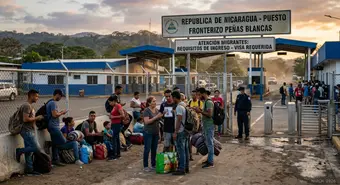
Nicaragua Closes 'Volcano Route': 200,000 Cubans Left Stranded
End of visa-free transit through Nicaragua since Feb 8 forces Cubans to seek more dangerous routes to US, increasing maritime crossings by 340%
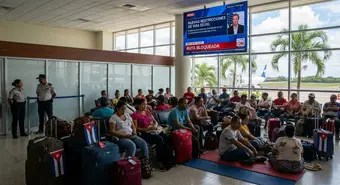
Nicaragua Blocks Last Cuban Migration Route to the US
Nicaragua's decision to cancel visa-free travel for Cubans closes one of the last viable routes to the US, leaving thousands without migration options.
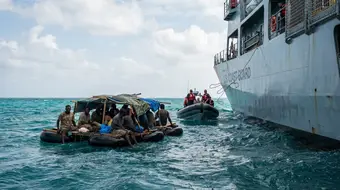
Cuban Rafters Rescued in Mexico and Caribbean as Sea Routes Surge
Seven rafters rescued off Quintana Roo and six by a Royal Caribbean cruise. Maritime routes resurge after Nicaragua closes its migration corridor.