The Drama of Cubans Deported from the US: Real Testimonies
1,669 Cubans deported in Trump's first year back. Stories of those returning to a Cuba in crisis with no home or future.
4 min read
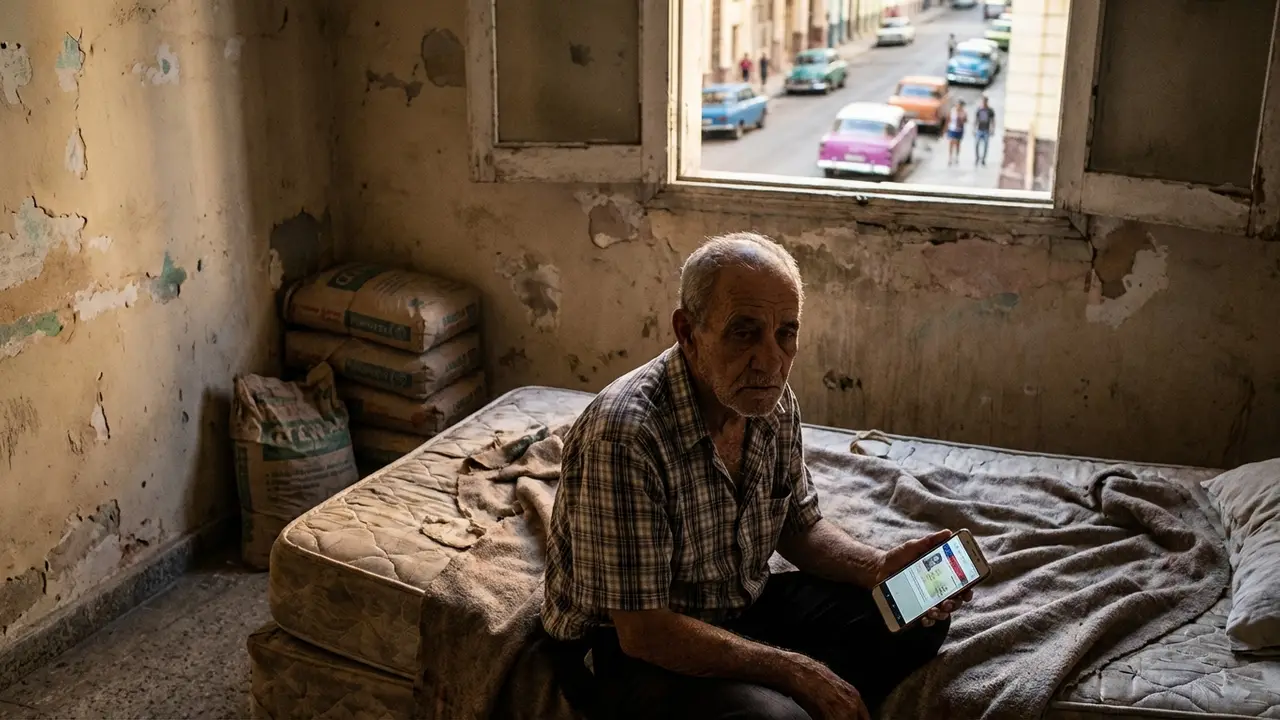
Illustration: Aroma de Cuba (AI)
The return looks nothing like the American dream. For Cubans deported from the United States, arriving back in Cuba is a double blow: returning to a country in deep crisis after having built — or tried to build — a life across the Florida Straits.
Michel’s Story: From Nebraska to Placetas
Michel arrived in the United States in 2022, taking the so-called “volcano route”: a flight to Nicaragua followed by thousands of kilometers overland to the US southern border. Like some 620,000 Cubans during Biden’s presidency, he turned himself in to Border Patrol and was released under I-220A and I-220B forms as an asylum seeker.
He settled in Nebraska. He committed no crimes — “not even a traffic ticket,” he says. But in October 2025, when he showed up for his annual appointment with his immigration officer, he was arrested and sent to a detention center.
A month later, in November, he was deported to Havana.
“After the medical check and the interview at the airport, they gave us a snack and put us on buses divided by province. We landed mid-morning and by the afternoon I was back in my hometown,” Michel recalls.
Returning to Nothing
What he found in Placetas, 300 kilometers east of Havana, was a blackout and the coldness of friends and relatives. His mother had died of COVID-19 in 2021. His father abandoned them as children. His ex-wife had moved to Spain with their son.
To finance the journey in 2022, Michel and his brother had sold the house they inherited from their mother. Now he slept in an apartment his brother had later purchased — practically uninhabitable, full of construction materials.
With money sent from abroad, he fixed up one room. “That was my salvation, because it kept me from having to live crashed at someone else’s home during the two months I spent in Cuba,” he says.
The Numbers Reveal the Scale
According to Havana Times, during the first year of Trump’s second term:
- 1,669 Cubans deported directly to the island — double the annual average of his first administration
- 300 more than all deportations executed by Biden in 2024
- Hundreds sent to third countries, mostly Mexico
- Extreme cases: three Cubans deported to Eswatini and South Sudan, African nations where Cuba doesn’t even have a consulate
Every Door Closed
What makes this situation particularly desperate is that Trump has systematically shut down every legal immigration pathway for Cubans:
- December 2025: canceled the family reunification program that had benefited Cubans since 2007
- January 2026: froze visa processing for 65 countries, including Cuba
- Humanitarian Parole and CBP One: eliminated
- Cuban Adjustment Act: suspended the right to apply for permanent residency after one year and one day, and citizenship after five years
Meanwhile, Nicaragua closed the migration route that hundreds of thousands of Cubans had used since 2021 to reach the US southern border.
Life in Limbo
Michel didn’t stay in Cuba. In January 2026 he traveled to Mexico, where he now lives in Ciudad Juárez, on the border with Texas. His wife Jennifer, a Mexican woman naturalized as a US citizen whom he married in 2025, is looking for work as a nursing assistant in Texas.
The provisional plan: she works in the US, he lives in Mexico. “Like that, until we see whether this man finishes his presidency or something happens,” Michel writes.
Did he consider staying in Cuba? “Not a chance,” he replies without hesitation. “After living abroad I couldn’t adapt. It’s very hard to return to blackouts, the heat, and the mosquitoes. Even with money you’re not safe. Who can guarantee you won’t get chikungunya?”
A Drama Just Beginning
With the energy crisis deepening and Trump’s pressure on Cuba intensifying — now with regime change in his sights — the situation for deported Cubans grows even more precarious.
They return to a country where 64% of the population suffers blackouts, where the dollar exceeds 500 pesos on the informal market, and where options for legal re-emigration are virtually nonexistent.
Michel’s drama is not unique. It’s the story of thousands of Cubans trapped between a country that doesn’t want them and one they don’t want to return to.
Frequently asked questions
How many Cubans has Trump deported in his second term?
What happens to deported Cubans when they arrive in Cuba?
Can deported Cubans legally return to the US?
Have Cubans been deported to third countries?
How we got here
Background
The first thing we published on this topic.
Cuba Records Second Magnitude 5 Earthquake in Three Days Near Santiago
A 5.0 magnitude tremor shook eastern Cuba, two days after a 5.6 quake in Guantánamo that damaged homes
45,000 Cubans Face Deportation Orders in the US
Some 550,000 Cubans vulnerable under Trump's immigration policies. Separated families and a community under pressure.
Related articles
The Ordeal of Cubans Deported to Guantánamo: Testimonies
Over 50 Cubans were sent to the Guantánamo naval base believing they were going to Havana. Their testimonies reveal blindfolds, deception, and isolation.
45,000 Cubans Face Deportation Orders in the US
Some 550,000 Cubans vulnerable under Trump's immigration policies. Separated families and a community under pressure.
Forced Return? Trump Weighs the Future of Cubans in the US
Analysis of Trump's 2026 migration plan: record deportation flights and the controversial 'choice' for Cubans to return home instead of detention.
Deportations 2026: Trump's New 'Choice' for Cubans in the US
Analysis of Trump's shifting migration policy: record deportation flights and the pressure of 'optional' return versus indefinite detention.
Guantanamo Deportations: Immigration Limbo Separating Families
54 Cubans deported to Guantanamo Naval Base live in limbo while their families struggle to understand Trump's new migration strategy.
Trump Deports More Cubans Than Any President: Record Numbers
Analysis of Trump's migration policies impact: 5,053 Cubans deported and the controversy over 'voluntary return' to a crisis-stricken Cuba.