U.S. Spent $40 Million Deporting Migrants to Third Countries
Senate report reveals Trump administration deported 300 people to countries they'd never lived in, raising concerns for Cubans in ICE custody.
4 min read
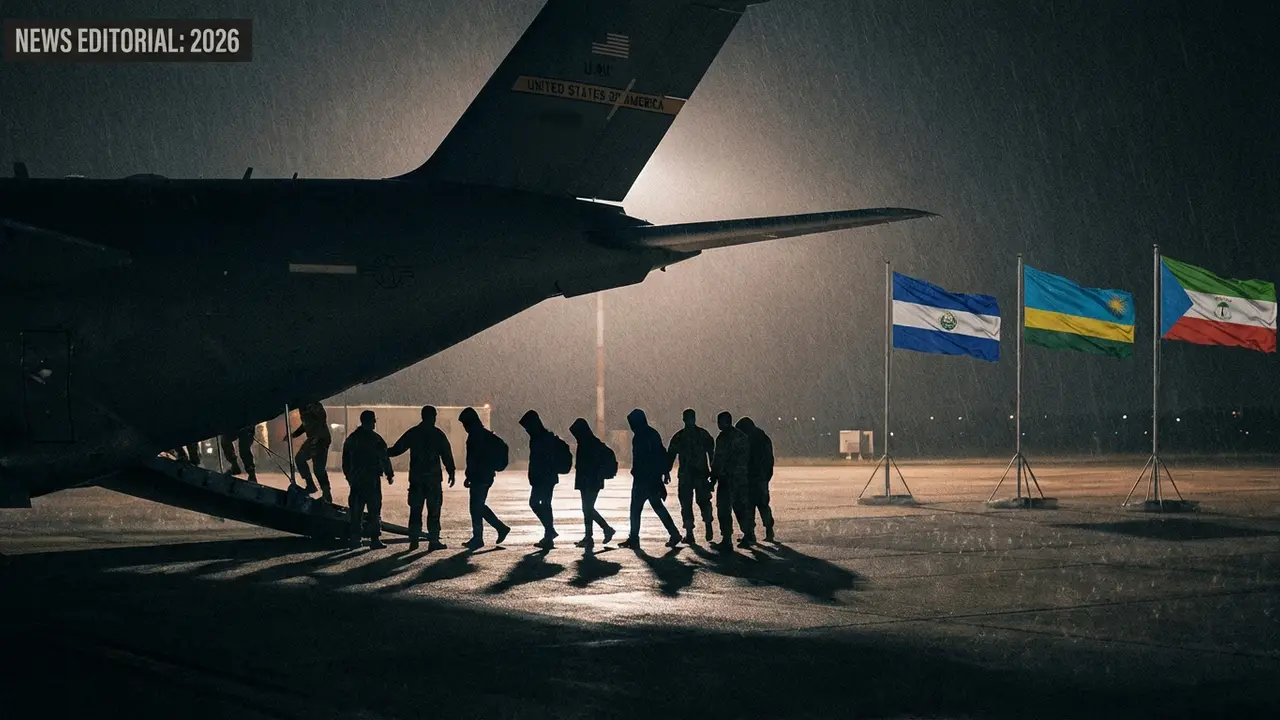
Illustration: Aroma de Cuba (AI)
An unprecedented report from the U.S. Senate Foreign Relations Committee has revealed that the Trump administration spent over $40 million to deport approximately 300 migrants to countries where they had never lived — a practice that human rights organizations call alarming and one that directly impacts the Cuban community.
From rare exception to standard practice
Third-country deportations were previously “a rare tool used only in exceptional circumstances,” according to the report titled At What Cost? Inside the Trump Administration’s Secret Deportation Deals. The Trump administration has now “expanded and institutionalized” this practice into a sprawling system of global removals.
The report, commissioned by Senator Jeanne Shaheen (D-NH), documents lump-sum payments ranging from $4.7 million to $7.5 million to five countries:
- El Salvador: received approximately 250 Venezuelan nationals
- Equatorial Guinea: 29 deportees
- Rwanda: undisclosed number
- Eswatini: undisclosed number
- Palau: agreement signed but no deportees yet
In total, $32 million in taxpayer funds went directly to foreign governments.
47 more agreements in the pipeline
What makes this situation even more concerning is the scale of expansion. According to internal documents reviewed by the Associated Press, there are 47 third-country agreements at various stages of negotiation:
- 15 have been concluded
- 10 are at or near conclusion
- 17 additional agreements involve countries accepting U.S. asylum seekers
The administration has even argued that formal agreements aren’t necessary to send people to these countries.
The Cuban connection
For the thousands of Cubans currently in ICE custody — an estimated 45,000 with deportation orders — this practice represents a real threat. We’ve previously documented how detained Cubans have been transferred to Guantánamo Bay Naval Base and subjected to multiple deportation attempts to different destinations.
The recent case of a young Cuban man with an I-220A who was shuffled between detention centers in California, Arizona, and Louisiana before finally being deported to Cuba illustrates how the system treats migrants as pieces on a geographic chessboard.
Zero oversight or accountability
Perhaps the most disturbing finding is the complete absence of oversight. Senate staff visited receiving countries and found:
- A guarded house with armed security in South Sudan holding deportees from Vietnam and Mexico
- U.S. officials who admitted they were instructed “not to follow up” on deportee treatment
- A Trump administration attorney who acknowledged in court that Ghana appeared to be violating agreement terms
“This report outlines the troubling practice by the Trump administration of deporting individuals to third countries — places where these people have no connection — at great expense to the American taxpayer,” stated Senator Shaheen.
The real cost: more than money
Beyond the $40 million, the report documents cases where migrants were deported to a third country only for the U.S. to pay for another flight to return them to their home country, doubling the expense with no benefit.
Secretary of State Marco Rubio defended the practice before the Senate: “We’ve arrested people that are members of gangs and we’ve deported them. We don’t want gang members in our country.”
However, critics point out that most third-country deportees have no criminal records and that the practice violates fundamental due process rights.
What’s next for Cuban migrants?
With the resumption of deportation flights to Cuba and the 28% increase in self-deportations, the Cuban community faces an increasingly hostile landscape. The expansion of third-country agreements adds another layer of uncertainty for those awaiting resolution of their immigration cases.
Human rights organizations like the American Immigration Council have intensified calls to investigate these practices, especially following the death of a Cuban man in ICE detention ruled a homicide.
Sources: Associated Press, Washington Post, Common Dreams, U.S. Senate Foreign Relations Committee Report
Frequently asked questions
What are third-country deportations?
How much has this deportation program cost?
How does this affect Cubans in ICE custody?
What oversight exists for deported migrants?
How we got here
Background
The first thing we published on this topic.
Fernández de Cossío: Cuba Open to US Dialogue, No Talks Yet
The Cuban Vice Minister of Foreign Affairs clarifies Havana's position amid Trump's claims about alleged bilateral negotiations.
Washington Demands Havana Stop Repudiation Acts Against Mike Hammer
The State Department demands Cuba cease 'repressive acts' against the American diplomat and calls the Cuban government an 'illegitimate regime.'
Related articles
Nicaragua Requires Visas From 128 Countries, Shutting Cuban Route
Ortega regime imposes consulted visas on Cubans, Venezuelans and 126 other nationalities under Trump pressure.
Cuba releases 51 prisoners: hope for exiled families?
Cuba announces release of 51 prisoners after Vatican negotiation, while 300,000 Cubans in US await immigration resolution under Trump

US plans Guantanamo camp for Cubans fleeing Trump's own oil blockade
General reveals military plans to detain Cuban refugees at Guantanamo while oil blockade deepens humanitarian crisis on the island
Cuba releases 51 prisoners after Trump ultimatum
The Cuban government released 51 political prisoners following Marco Rubio's 72-hour ultimatum. Analysis of implications for Cubans in exile.

Trump threatens regime change in Cuba: new migration era?
Trump's declarations about 'taking Cuba' create uncertainty for 300,000 Cubans in legal limbo as military options are evaluated.
UN Experts Condemn US Energy Blockade Against Cuba
Three UN rapporteurs call Trump's executive order blocking oil supplies to Cuba a grave violation of international law.