Cuban Security Forces Leave Venezuela Under US Pressure
Cuban military advisers and doctors are exiting Venezuela as Delcy Rodriguez yields to Washington's pressure, according to a Reuters exclusive.
3 min read
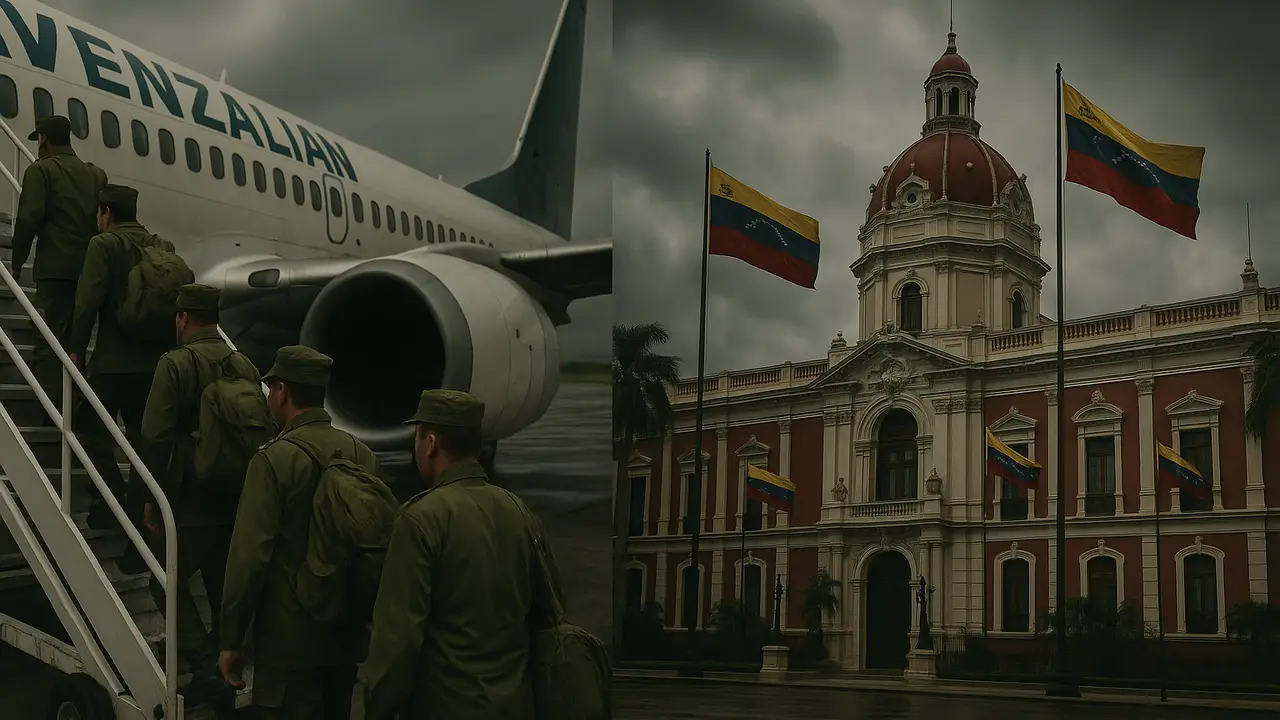
Illustration: Aroma de Cuba (AI)
In a bombshell exclusive that reshapes Latin America’s geopolitical landscape, Reuters reveals that Cuban security advisers and doctors are leaving Venezuela as Delcy Rodriguez’s government yields to intense pressure from Washington to dismantle Latin America’s most consequential leftist alliance.
The End of Cuba’s Guard at Miraflores
For the first time since Hugo Chávez came to power, Venezuela’s president relies on Venezuelan bodyguards for protection, according to four sources consulted by Reuters. Both Chávez and Nicolás Maduro depended on elite Cuban forces for personal security.
Inside the DGCIM — Venezuela’s feared counterintelligence unit — some Cuban advisers have been removed from their posts. Several Cuban medical workers and security advisers have traveled from Venezuela to Cuba on recent flights, according to the sources.
“The Cuban influence was absolutely essential to the survival of the Chavista government,” said Alejandro Velasco, an associate professor of history at New York University and a Venezuela expert.
32 Cubans Killed in Maduro’s Capture
The departure of Cuban forces comes weeks after the US military operation on January 3 that captured Maduro. According to the Cuban government, 32 Cuban soldiers and bodyguards were killed in the attack.
These military personnel were part of a deep security agreement between Caracas and Havana dating back to the late 2000s. Cuban intelligence agents were embedded throughout the military and the DGCIM, playing a fundamental role in neutralizing domestic opposition.
Trump Demands End to Alliance
After Maduro’s capture, Trump vowed to end the security relationship between Venezuela and Cuba. “Cuba lived, for many years, on large amounts of OIL and MONEY from Venezuela. In return, Cuba provided ‘Security Services’ for the last two Venezuelan dictators, BUT NOT ANYMORE!” he wrote on Truth Social on January 11.
A White House official confirmed to Reuters that the US has “a very good relationship with the leaders of Venezuela” and believes Rodriguez’s interests “align with advancing our key objectives.”
Severing Venezuela-Cuba ties is part of Washington’s broader strategy to pressure Cuba’s government. Since mid-December, Washington has blockaded Venezuelan oil shipments to Cuba, economically strangling the island.
Rodriguez Walks a Tightrope
Despite these actions, both countries have publicly maintained their relationship. On January 8, Delcy Rodriguez appeared alongside Cuban Foreign Minister Bruno Rodriguez at a memorial for victims of the US attack. She later spoke by phone with Díaz-Canel, affirming the two countries remained “united.”
But the reality on the ground tells a different story. Frank Mora, former US ambassador to the OAS, summarized the situation:
“Rodriguez wants to keep the Cubans at a distance until this situation calms down, until her hold on power is clear, but not entirely throw them under the bus, either.”
What Remains of Cuba’s Presence?
According to Reuters’ sources, some Cuban military advisers remain active in Venezuela. Cuban professors continue teaching at the state university for police and security forces (UNES). And US sources believe undercover intelligence agents likely remain in the country to monitor the political situation.
For Cuba, losing Venezuela is a devastating blow compounding the oil blockade, the energy crisis, and growing diplomatic isolation. The alliance that for two decades provided oil, money, and regional influence is unraveling under Washington’s pressure, leaving Havana more isolated than at any point since the fall of the Soviet Union.
Meanwhile, the White House says it is “talking to Cuba, whose leaders should make a deal.” The question is whether Havana has anything left to negotiate with.
Frequently asked questions
Why are Cuban forces leaving Venezuela?
How many Cubans died during Maduro's capture?
What role did Cubans play in Venezuelan security?
Does this mean the end of the Cuba-Venezuela relationship?
How we got here
Background
The first thing we published on this topic.
Fernández de Cossío: Cuba Open to US Dialogue, No Talks Yet
The Cuban Vice Minister of Foreign Affairs clarifies Havana's position amid Trump's claims about alleged bilateral negotiations.
Washington Demands Havana Stop Repudiation Acts Against Mike Hammer
The State Department demands Cuba cease 'repressive acts' against the American diplomat and calls the Cuban government an 'illegitimate regime.'
Related articles
US Pressure Leads Countries to Cancel Cuban Medical Missions in 2026
Bahamas, Guyana, and Guatemala suspend contracts with Cuban doctors under Washington's pressure. Rubio calls the program forced labor.
Mexico Confirms Talks to Mediate Between the U.S. and Cuba
President Sheinbaum reveals active discussions on Mexico facilitating dialogue between Washington and Havana amid deepening crisis.
Cuba on Edge: Will the Island Be Trump's Next Target After Iran?
Following Trump's military strikes on Iran and Venezuela, fears and expectations grow in Cuba about possible U.S. intervention.
Washington's Ultimatum to Cuba: Trump Demands Changes by Late 2026
The Trump administration warns the Díaz-Canel government to implement deep democratic changes by the end of 2026.
US Announces $6 Million Aid for Cuba; Havana: 'Hypocritical'
Washington sends humanitarian aid while maintaining oil blockade. Cuban Vice Minister Carlos Fernández de Cossío criticizes the contradiction in US policies.
Trump Deports to Venezuela, Iran Amid War: 650,000 Lose TPS
Deportations to conflict zones reveal Trump's migration brutality: 15,000 Venezuelans and 120 Iranians sent to war-torn countries