Mike Hammer: 'Yes, Cuba Will See Historic Change in 2026'
The top US diplomat in Havana confirmed secret contacts with the Cuban regime and predicted a transition that 'will surprise us all' this year.
5 min read
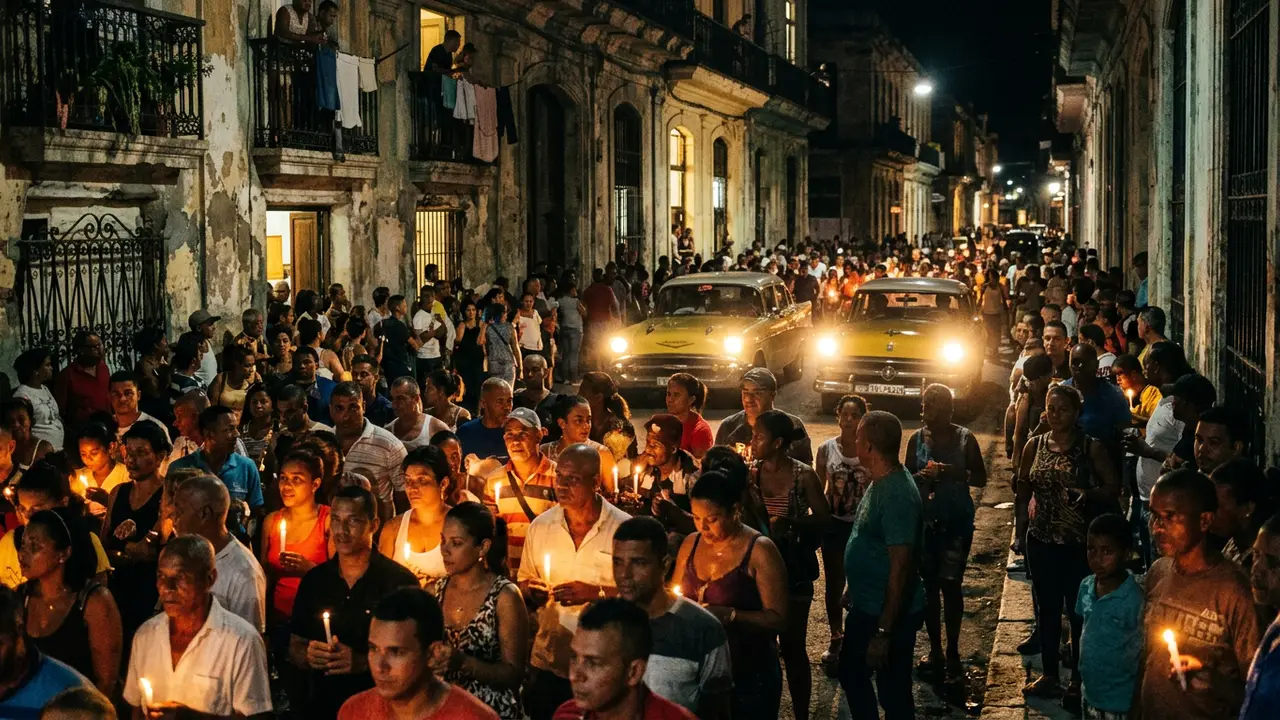
Illustration: Aroma de Cuba (AI)
The top US diplomat in Havana delivered today what many were waiting to hear — and what Cuba’s government fears most. In an exclusive interview with the Spanish newspaper ABC, published this morning and spreading rapidly across social media, Mike Hammer, US Chargé d’Affaires at the US Embassy in Cuba, confirmed what the Trump administration has been signaling for weeks:
“I would say yes, there will be a change. In what form? We’ll see.”
And he added, without hesitation: “the change is approaching.”
A Diplomat Who Has Spent 15 Months on Cuban Soil
Hammer, originally appointed during Joe Biden’s tenure, has spent more than 15 months traveling Cuba in person — an unusual step for a diplomat of his standing on the island. He has visited different provinces, spoken with ordinary citizens, entrepreneurs, activists, and community leaders. His presence discomforted the regime so much that the Ministry of the Interior organized acts of repudiation to hinder his work.
That ground-level experience lends weight to his words. This is not a Washington official speaking from a map room — it’s someone who knows the real situation inside Cuba.
Secret Contacts With the Regime
Perhaps the most explosive detail of the interview is Hammer’s confirmation that the Trump administration maintains direct contacts with people inside the Cuban regime itself who recognize the need for change.
“I will only repeat what the president has said — that there are communications with certain people. If some members of the Cuban regime say there is nothing, perhaps they are not informed, perhaps it’s not with them…” said Hammer.
He then added the phrase that will run across every headline: “Within the Cuban system there are individuals who realize that the project is finishing and who may be interested in making a change they see as necessary.”
This expands on what President Trump himself had previewed about negotiations with Cuba and what Marco Rubio outlined in Munich about economic opening as a condition for easing the blockade.
The Oil That Never Reached Cubans
Hammer revealed a figure that helps explain Washington’s energy blockade: 60% of the oil that reached Cuba before sanctions were tightened was resold on Asian markets, never benefiting the Cuban population directly.
“With these measures we do not want to make any Cuban suffer,” said the diplomat. According to his account, the revenue from those resales — combined with tourism profits controlled by the military conglomerate GAESA and the Castro family — was not reinvested in the economy. It went toward building more hotels and maintaining the machinery of power.
“Imagine a government that is willing to invest in the economy,” Hammer contrasted. “A situation in which tourism can come in and not feed one group, but truly benefit the Cuban people.”
This accusation comes as Cuba suffers blackouts of up to 20 hours per day, with its healthcare system on the brink of collapse and hospitals running out of medicines.
The Plan for “The Day After”
One of the most revealing aspects of the interview is Hammer’s confirmation that Washington has a plan for the post-regime transition. The US is not merely waiting for change — it is preparing for it.
“Different scenarios have been developed for a transition to a free Cuba, with the objective of avoiding chaos and allowing the transformation of a country whose economy and infrastructure were severely deteriorated,” he explained.
The diplomat anticipated that there will be “international goodwill” to support reconstruction, and stated that the central goal is a peaceful transition that avoids bloodshed and ensures the release of all political prisoners. He urged European countries to join in pressing for this outcome.
Meanwhile, the Russian tanker Sea Horse continues toward Cuba, challenging the US maritime pressure and complicating the diplomatic landscape. The standoff between Washington and Havana — and Moscow — is intensifying.
”It Will Surprise Us, Very Much So”
On the pace of change, Hammer chose optimism:
“It is a project that will take some time and require a great deal of effort, no doubt. But looking at the Cubans themselves, and the will that exists on the part of the Trump administration and others, I believe it will happen in a way that will surprise us, very much so.”
No one can say exactly what form that change will take. But the man America placed in charge of its mission in Havana — after 15 months on Cuban soil — says it is coming. And that it is coming this year.
For the millions of Cubans who have waited for decades, those words carry a different weight than past promises. These are not from a politician in Washington. They are from someone who has walked their streets, who understands the diaspora and their families still on the island, who knows what the energy crisis really means for ordinary people — and who said it out loud, this morning: the change is approaching.
Image: US Embassy in Havana, Cuba. Wikimedia Commons (CC BY-SA).
Sources: ABC Spain · Infobae · La Patilla
Frequently asked questions
Who is Mike Hammer and what is his role in Cuba?
What did Mike Hammer say about change in Cuba in 2026?
Are there real contacts between the US and the Cuban regime?
Does the US have a plan for 'the day after' in Cuba?
Sources
- ABC Spain · abc.es
- Infobae · infobae.com
- La Patilla · lapatilla.com
How we got here
Background
The first thing we published on this topic.
Fernández de Cossío: Cuba Open to US Dialogue, No Talks Yet
The Cuban Vice Minister of Foreign Affairs clarifies Havana's position amid Trump's claims about alleged bilateral negotiations.
Washington Demands Havana Stop Repudiation Acts Against Mike Hammer
The State Department demands Cuba cease 'repressive acts' against the American diplomat and calls the Cuban government an 'illegitimate regime.'
Related articles
Cuba at the UN: 'We are prepared for a total blockade'
Cuban ambassador Ernesto Soberón says the island has plans and resources to resist. Admits impact but rules out surrender.
Work Permit Restrictions 2026: What Cubans Need to Know
DHS announces the return of the 365-day wait rule for work permits for asylum seekers. Direct impact on the Cuban community.
US Pressure Leads Countries to Cancel Cuban Medical Missions in 2026
Bahamas, Guyana, and Guatemala suspend contracts with Cuban doctors under Washington's pressure. Rubio calls the program forced labor.
Mexico Confirms Talks to Mediate Between the U.S. and Cuba
President Sheinbaum reveals active discussions on Mexico facilitating dialogue between Washington and Havana amid deepening crisis.
Cuba Shipments from Miami: Restrictions and Political Pressure in 2026
Cubamax and Panavana suspend home delivery in Cuba. Cuban-American lawmakers push to halt shipments from the Port of Miami. What families need to know.
Diplomats in Havana Prepare Evacuation as Cuba Negotiates in Secret
Embassies in Havana draw down staff as WFP warns of imminent food crisis, while Cuba and the US hold secret talks in Mexico.