Roberto Salas: The Photographer Who Immortalized the Cuban Revolution
Roberto Salas receives Cuba's 2025 National Prize for Visual Arts for his work capturing six decades of Cuban history.
3 min read

Roberto Salas: The Eye That Captured the Revolution
Cuba has just crowned one of its most extraordinary visual chroniclers. Roberto Salas, the Cuban-American photographer whose lens immortalized defining moments of 20th-century Cuba, has been awarded the 2025 National Prize for Visual Arts.
The recognition comes after six decades of tireless work, from the Sierra Maestra mountains to the halls of the United Nations, through the battlefields of Vietnam.
An Encounter That Changed Everything
Roberto Salas’s story with Cuba began almost by chance. In 1955, at just 15 years old, he accompanied his father Osvaldo Salas—a renowned photographer whose images appeared in Life and The New York Times—to document a group of Cuban activists in Havana.
One of those activists was a young lawyer named Fidel Castro.
“He was a magnet for cameras, for photographers,” Salas recalls about that encounter that would define his career.
When Castro launched his revolutionary movement in 1956, the Salases—father and son—were invited to document it. Thus began a privileged access that no other photographer of the era had.
Images That Defined an Era
Roberto Salas’s photographs aren’t mere historical documents; they’re intimate portraits of a transformative moment:
- Castro and Hemingway (1960): The only photographic record of the meeting between the Cuban leader and the Nobel laureate
- Castro at the UN, New York (1960): The dramatic visit that captured worldwide attention
- The Bay of Pigs (1961): Visual testimony of one of the Cold War’s tensest moments
- “La Bandera y la Señora” (1957): His first image published in Life, which catapulted him to international recognition
Art critic Rafael Acosta de Arriba wrote about him: “Roberto Salas, witness of his time, belongs to a select group of photographers who have contributed to Cuban photography being considered art.”
Beyond Cuba
Salas’s talent wasn’t limited to his island of origin. He was a war correspondent in Vietnam, where his work earned him the Medal of Friendship from the Vietnamese Council of Ministers.
He also received:
- First Prize for Sports Photography, Reus, Spain (1970)
- Asahi Shimbun International Photographic Salon Prize, Tokyo, Japan
He is a founding member of both the Union of Writers and Artists of Cuba (UNEAC) and the Union of Cuban Journalists (UPEC).
The Master’s Philosophy
From his father, he learned not only technique but philosophy. When asked about his favorite photograph, Osvaldo Salas would reply: “I’m going to take it tomorrow.”
Roberto thought it was just a clever line. After his father’s death in 1992, he understood it was a concept: “You can always do better.”
A Well-Deserved Prize
The jury for the 2025 National Prize for Visual Arts included prominent figures from Cuban art, including Margarita Ruiz, Nelson Herrera Ysla, and Manuel Hernández (2024 National Prize winner).
Their decision was unanimous: Roberto Salas has elevated Cuban photography to the level of universal art.
At 85, Roberto Salas continues to prove what he always believed: the best photo is yet to be taken.
Frequently asked questions
Who is Roberto Salas?
What award did Roberto Salas receive in 2025?
What are Roberto Salas's most famous photographs?
Where can Roberto Salas's work be seen?
How we got here
Background
The first thing we published on this topic.
Old Havana Restoration Reaches a New Milestone
Rehabilitation work in the historic quarter reveals colonial frescoes from the 18th century.
Governments Issue Travel Warnings for Cuba Amid US Tensions
Canada, Argentina, Spain and other countries warn citizens about Cuba's crisis as Washington's oil blockade and prolonged blackouts affect the island.
Related articles
Nicolás Guillén: The Poet Who Made Cuban Son Sing
Discover the life and work of Nicolás Guillén, Cuba's National Poet who fused African rhythms with poetry to create the Afro-Cuban movement.
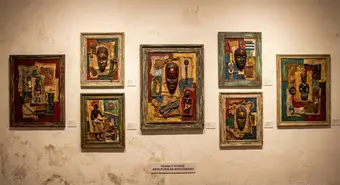
No Seasoning: Afro-Cuban Outsider Art Arrives in Miami
Historic exhibition brings together seven Afro-descendant Cuban outsider artists in North Miami. Features works by Luis Manuel Otero Alcántara.
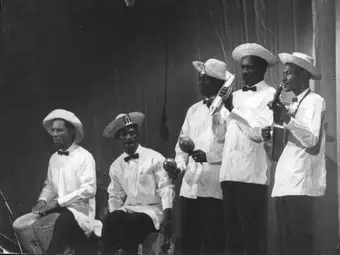
Changüí of Guantánamo: The Forgotten Root of Cuban Son
Discover changüí, the 200-year-old musical genre born in Guantánamo's sugar cane fields that gave birth to Cuban son.

New Cuban Cinema: ICAIC Gems That Defined a Generation
Discover the most influential Cuban films from the 60s-80s: Memories of Underdevelopment, Lucía, I Am Cuba, and Strawberry and Chocolate.
TITOVERSE: Cuba Launches Its First Animated Superhero Series
ICAIC debuts TITOVERSE: Genesis, Cuba's first animated superhero series aiming to capture global audiences with Cuban identity.
Jazz Plaza 2026: Havana Beats to Jazz Rhythms Amid Crisis
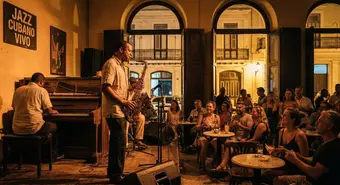
Jazz Plaza celebrated its 40th edition in Havana (Jan 25-Feb 1) with 286 international artists, proving Cuban music endures despite blackouts.