Cuba's 'Zero Option': Crisis Plan That May Spark Exodus
The regime activates its 1990s emergency protocol amid oil collapse. 20-hour blackouts and $14 monthly wages fuel emigration pressure.
4 min read
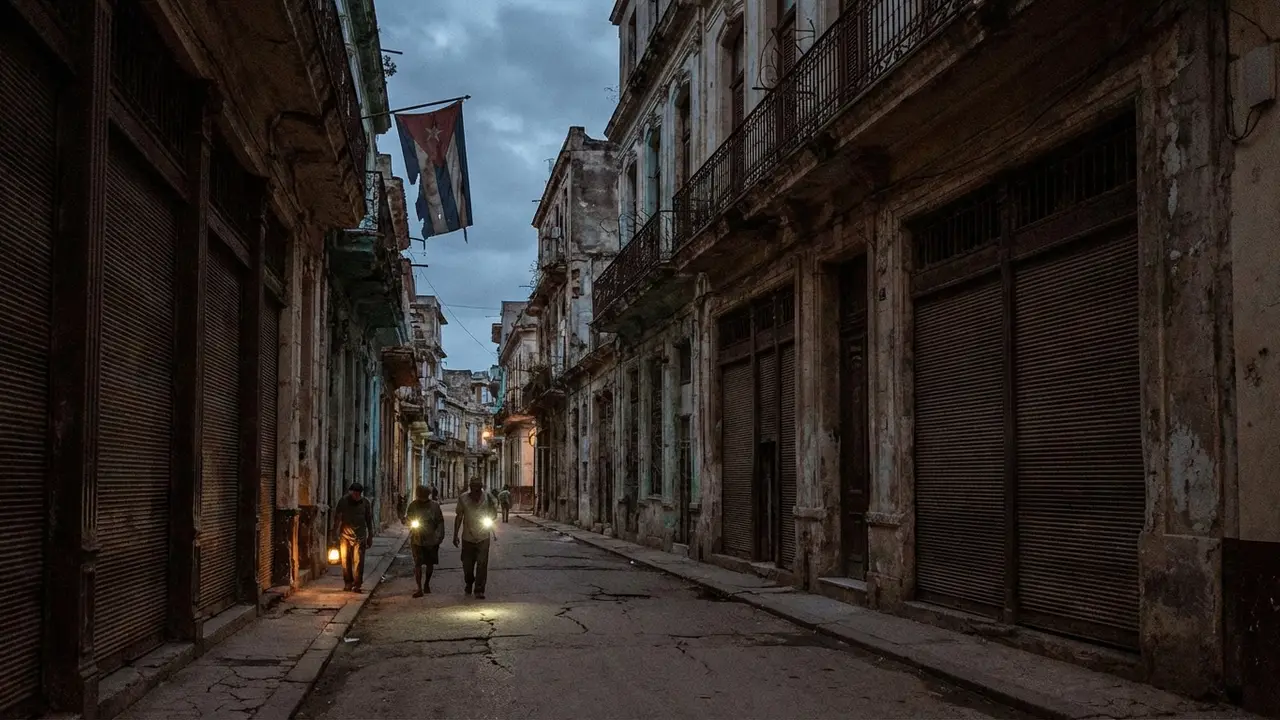
Illustration: Aroma de Cuba (AI)
The government of Miguel Díaz-Canel has announced the activation of the “Zero Option” — an emergency protocol conceived during the 1990s Special Period for a scenario without any oil supply. The measure, which evokes the darkest years Cuba has faced since the 1959 revolution, carries direct implications for Cuban migration.
A Ghost from the 1990s
The “Zero Option” was designed by Fidel Castro as a response to a hypothetical scenario in which Cuba received not a single barrel of oil. The plan includes extreme measures: total rationing, local food self-sufficiency, animal traction for transport, and coal or biomass for cooking.
According to CiberCuba, Díaz-Canel has promised to guarantee seven pounds of rice per person monthly and prioritize locally produced goods. However, testimonies collected by RTVE reveal that in several provinces, basic products don’t arrive regularly.
The Perfect Oil Storm
The current crisis was triggered by a lethal combination of factors:
- Trump’s executive order (January 29, 2026): tariffs on any country selling fuel to Cuba
- Venezuela’s collapse: Maduro’s capture in January cut off 27,000+ daily barrels
- Mexico withdraws: despite Sheinbaum’s protests, tanker shipments stopped under threat of sanctions
- Russia falls short: Putin promised humanitarian shipments but admits capacity is limited
As The Guardian reports, diplomats in Havana estimate the situation could reach “extreme suffering” within weeks.
20-Hour Blackouts and Hospitals Without Medicine
The effects are already devastating:
- Blackouts exceeding 20 hours daily across many provinces
- Over 60% of the country without power during peak hours
- Public transportation suspended in several cities
- University classes canceled
- Non-essential surgeries postponed
- Hotels closed during peak tourist season
- Airlines suspending flights due to kerosene shortages (official alert: “JET A1 NOT AVBL”)
- Aeroflot canceling its final Cuba flights before February 24
Havana Times describes an island where “no one knows what survival will look like next week.”
Cuban Peso Collapses to 500 per Dollar
On the informal market, the Cuban peso has fallen to 500 per dollar, down from 400 last summer. State wages now equal approximately $14 per month. Cuban economist Emilio Morales has publicly predicted the regime will not survive until summer.
Why the Zero Option Triggers Emigration
History is clear. When Cuba implemented similar measures during the Special Period, the result was the 1994 rafter crisis: tens of thousands of Cubans launching themselves into the Florida Straits on makeshift vessels.
Now conditions are potentially worse:
- 20% of the population has already emigrated in the past four years
- Land routes through Nicaragua just closed with new visa requirements
- Flights are being canceled due to fuel shortages
- No active parole program (CHNV suspended)
As El País notes, Cuba has arrived at this moment “without an ace up its sleeve or a firm strategic alliance” to protect it.
Rubio Speaks of “Economic Freedom” While the Island Goes Dark
At the Munich Security Conference, Secretary of State Marco Rubio suggested that giving the Cuban people “more freedom, not just political freedom but economic freedom” could be a way forward. But in Havana, diplomats are preparing for another scenario: the country being starved until people take to the streets.
U.S. Chargé d’Affaires Mike Hammer made it clear at a reception on January 28: “The Cubans have complained for years about ‘the blockade,’ but now there is going to be a real blockade.”
What’s Coming: Critical Weeks Ahead
The UN World Food Programme is already warning that fuel shortages are hampering humanitarian aid distribution following Hurricane Melissa. Embassies in Havana are drawing up contingency plans for a larger crisis.
For the Cuban diaspora, the message is stark: migration pressure will intensify, but the doors are closing simultaneously. A scenario that could repeat — or surpass — the tragedy of the 1994 rafter crisis.
Frequently asked questions
What is Cuba's 'Zero Option'?
Why did Cuba activate the Zero Option in 2026?
How does the Zero Option affect Cuban migration?
How many hours of blackouts is Cuba experiencing?
How we got here
Background
The first thing we published on this topic.
How Cubans Are Surviving the Fuel Rationing Crisis
Neighbors unite to cook with firewood, power cuts lasting up to 18 hours, and echoes of the Special Period. Testimonies from Havana on the energy crisis.
Cuba Postpones IT Convention 2026 Due to Energy Crisis
Cuba's main technology event, scheduled for March, is indefinitely postponed due to the 'extraordinary situation' facing the country.
Related articles
U.S. Considers Sending Limited Fuel Shipment to Cuba Amid Crisis
Washington weighs a humanitarian fuel delivery to Cuba as the island faces daily blackouts and critical shortages of cooking gas and diesel.
Cuba to Cut Power for 72 Hours to Businesses Breaking Energy Rules
ONURE orders minimum 72-hour blackouts for state and private businesses that fail to meet mandatory energy-saving plans amid deepening crisis.

Dialysis Patients in Cuba at Risk as Fuel Crisis Halts Transport
About 3,000 kidney patients in Cuba face reduced sessions and no medical transport as the energy crisis deepens.
Oil Tanker Nicos I.V. Arrives in Matanzas Amid Energy Crisis
An oil tanker entered Cuba's Matanzas Bay on Monday, the first since January amid the U.S. petroleum blockade.
Electric Vehicles Replace Classic Cars on Cuba's Streets
The fuel crisis accelerates Cuba's shift to electric tricycles and buses on the streets of Havana.
Cuba Goes Dark: Satellite Images Show 50% Drop in Nighttime Light
Bloomberg analysis using NASA data reveals Cuban cities have lost up to half their nighttime illumination amid the deepening energy crisis.