Cuba's Private Sector Now Importing Fuel: A Historic First
Cuban private businesses begin importing diesel in isotanks, breaking a 60-year state monopoly. Government also offers 8-year tax breaks for renewables.
3 min read
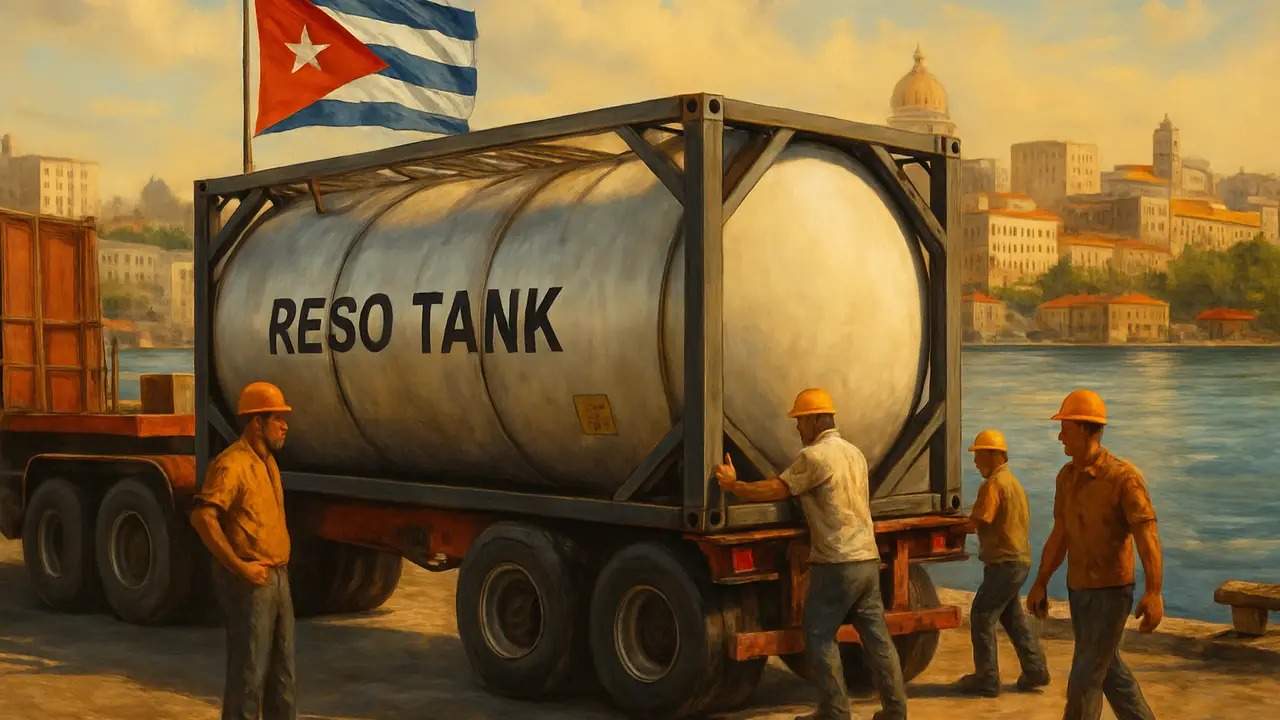
Illustration: Aroma de Cuba (AI)
In an unprecedented shift in Cuba’s economic history, private businesses have begun importing fuel directly to the island, breaking a state monopoly that lasted over six decades. The move comes amid a deepening energy crisis caused by the U.S. oil blockade.
The End of the State Fuel Monopoly
According to EFE via OnCubaNews, the Cuban government has held meetings with foreign entrepreneurs and local business owners to explain how private fuel imports can work.
The opening makes good on a November 2025 announcement by Foreign Trade Minister Oscar Pérez-Oliva, who said private and mixed enterprises would “shortly” be allowed to import their own fuel.
How does it work?
- Fuel is transported in T11 stainless steel isotanks (21,000–26,000 liters capacity)
- The containers fit on any standard cargo vessel
- Imports are processed through a state importing agency
- Extra safety certifications are required for hazardous materials
- Fuel is strictly for self-consumption — resale is banned
A Lifeline or a Drop in the Bucket?
The volumes involved are modest. Cuba needs roughly 110,000 barrels per day of oil (40,000 from domestic wells). Private imports can’t fill the national gap, but they can keep specific businesses running.
Several U.S.-based companies already hold specific licenses to export diesel in isotanks to Cuba, but only for private customers. Some entrepreneurs are also exploring purchases from other countries in the region.
The Sanctions Gray Zone
Trump’s January 29 executive order imposes tariffs on “goods imported into the United States that are products of any other country that directly or indirectly sells or in any way provides oil to Cuba.” But it doesn’t specify whether Cuba’s private sector is included.
EFE asked the U.S. Embassy in Havana for clarification; the embassy simply referred back to the original text. However, sources involved in the trade say they’ve received “signals” of tolerance from Washington.
The British weekly The Economist recently reported that the U.S. administration is considering allowing limited fuel supplies into the island for basic needs.
Cuba Also Offers 8-Year Tax Breaks for Renewables
In another significant measure published Thursday, Resolution 41/2026 from the Ministry of Finance and Prices establishes tax exemptions of up to eight years for renewable energy investments:
- Income or profit tax exemption during the investment recovery period (maximum 8 years)
- Customs duty elimination for solar panels, wind generators, biodigesters, photovoltaic pumps, and components
- Individuals can import this equipment without it counting toward non-commercial import limits
- Authorization to sell surplus energy to the National Grid
This follows Cuba’s record 800 MW solar generation achievement, showing the island’s renewable potential.
The Context: An Economy on the Edge
These openings arrive as Cuba faces its worst crisis in decades:
- 15% GDP decline over the past five years
- Over 20% of the population has emigrated
- Hospitals on minimal services
- Public transportation virtually nonexistent
- Ration system subsidies ending in April
Whether these measures represent genuine economic opening or desperate concessions remains to be seen. What’s clear is that the state monopoly on fuel has cracked — and in Cuba, that’s historic.
Frequently asked questions
Can Cuban private businesses import fuel?
What are T11 isotanks used for diesel imports?
Do U.S. sanctions affect these private fuel imports?
What tax incentives does Cuba offer for renewable energy?
How we got here
Background
The first thing we published on this topic.
How Cubans Are Surviving the Fuel Rationing Crisis
Neighbors unite to cook with firewood, power cuts lasting up to 18 hours, and echoes of the Special Period. Testimonies from Havana on the energy crisis.
Cuba Postpones IT Convention 2026 Due to Energy Crisis
Cuba's main technology event, scheduled for March, is indefinitely postponed due to the 'extraordinary situation' facing the country.
Related articles

Havana Drowning in Garbage: Only 44 of 106 Trash Trucks Operating
Cuba's fuel crisis paralyzes waste collection in Havana, creating a public health emergency with rising risks of dengue and leptospirosis.

Humanitarian Convoy 'Nuestra América' to Reach Havana March 21
International coalition organizes aid convoy by air, sea, and land to deliver food and medicine to Cuba. Greta Thunberg backs initiative.

Russian Tanker Sea Horse Heads to Cuba, Testing Trump's Oil Blockade
The Sea Horse carries 200,000 barrels of Russian diesel toward Cuba. It's expected in March and will test the US petroleum sanctions.

Cuba's Health System "On Brink of Collapse" Due to US Oil Blockade
Cuba's Health Minister tells AP: 5 million chronic patients affected, ambulances without fuel, hospitals without power.
Canada Weighs Cuba Aid as Sherritt Halts Moa Nickel Mine
Ottawa evaluates humanitarian options for Cuba after repatriating 27,900 tourists. Sherritt suspended Moa nickel mine operations amid the US blockade.

Dollar Hits 505 CUP: Cuba's Central Bank Reacts Too Little, Too Late
Cuba's informal dollar hit 505 CUP on Feb. 20. The Central Bank raised its rate to 463 — but the 42-peso gap exposes a deepening currency crisis.