Benny Moré: The Bárbaro del Ritmo Who Conquered Cuba and the World
63 years after his death, we remember Cuba's greatest singer. From cane cutter to legend with the Banda Gigante.
4 min read
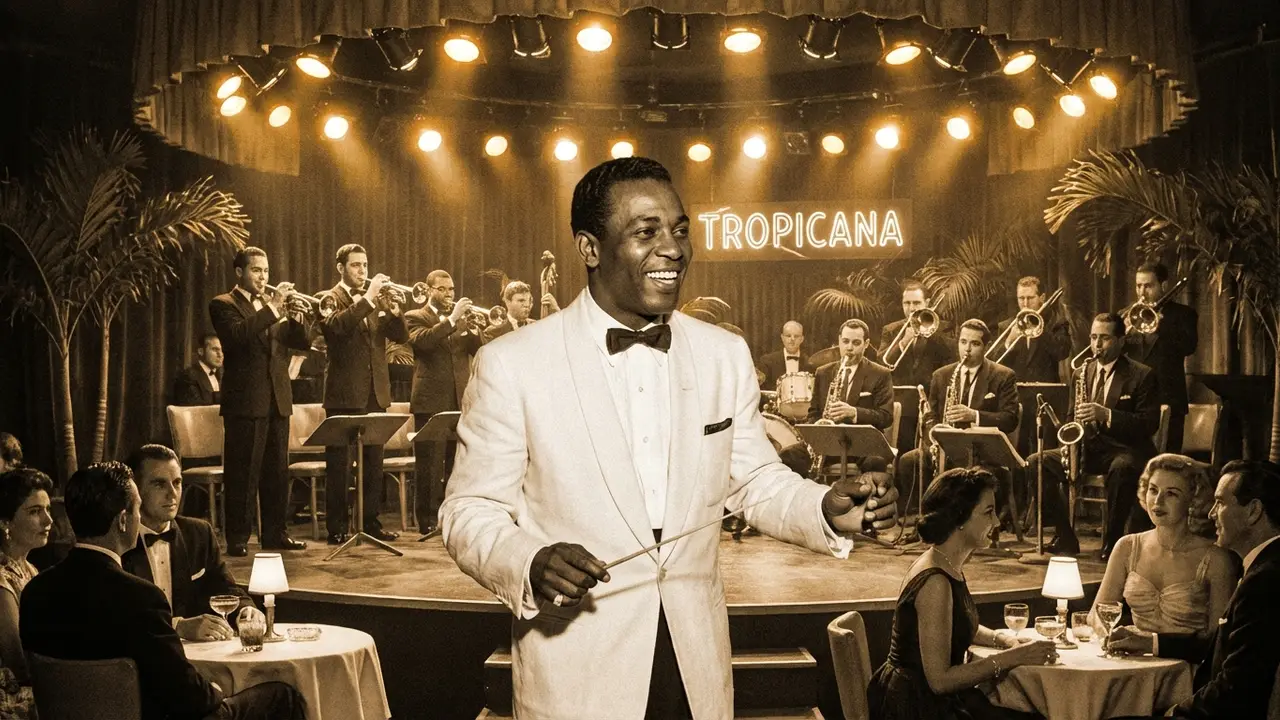
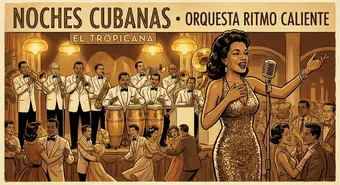
Illustration: Aroma de Cuba (AI)
On February 19, 1963, all of Havana wept. Bartolomé Maximiliano Moré Gutiérrez—the world knew him as Benny Moré—had died at 43. Tens of thousands of Cubans accompanied his coffin in a funeral that brought the capital to a standstill. Sixty-three years later, his voice remains the standard against which all Cuban music is measured.
From Santa Isabel de las Lajas to the World
Benny was born on August 24, 1919, in Santa Isabel de las Lajas, a small town in what was then Santa Clara Province (today Cienfuegos). He was the eldest of 18 siblings. His maternal great-great-grandfather, Ta Ramón Gundo Moré, had been brought as a slave from the Kingdom of Kongo—according to family legend, he was the son of a tribal king.
At six years old, Benny built his first guitar: a stick and a sardine can as a sound box. At 17, he migrated to Havana seeking fortune. He sold fruits, medicinal herbs, cut sugarcane with his brother Teodoro. With the savings from one harvest season, he bought his first real guitar in Morón.
The Rise: From CMQ to Mexico
In 1940, Benny returned to Havana, living off street music. His first big moment came on the radio program “La Corte Suprema del Arte” (The Supreme Court of Art) on CMQ. At his first appearance, the failure bell rang and he was booed off stage. He competed again and won first prize.
That victory opened the doors to Conjunto Matamoros, one of Cuba’s most prestigious groups. In 1945, he traveled with them to Mexico. When the conjunto returned to Havana, Benny stayed—he changed his name from Bartolo to Benny because in Mexico “bartolo” was slang for donkey.
In Mexico City, Benny recorded with Pérez Prado the mambos that would make him internationally famous: “Bonito y Sabroso,” “Pachito Eché,” “La Múcura,” “Anabacoa.” They recorded 28 songs together. It was bandleader Chucho Rodríguez who, impressed by his virtuosity, baptized him “El Bárbaro del Ritmo” (The Wild Man of Rhythm).
The Banda Gigante: His “Tribe”
In 1952, Benny returned to Cuba as an international star but almost unknown in his homeland. He worked with Bebo Valdés and Orquesta Aragón. But when he discovered that director Ernesto Duarte was excluding him from certain events because he was Black, Benny made a historic decision: to form his own orchestra.
On August 3, 1953, the Banda Gigante debuted on CMQ’s “Cascabeles Candado” program. Sixteen musicians—trumpets, trombones, saxophones, Cuban percussion—under the baton of a man who couldn’t read a single musical note. Benny would sing the parts to his arrangers, who would transcribe them. It was pure musical instinct.
The “tribe,” as Benny affectionately called his band, conquered Cuba. They played at Tropicana, La Campana, Hotel Riviera. They recorded hits like “Santa Isabel de las Lajas” (a tribute to his hometown), “Cienfuegos,” “Mi Saoco,” “Cómo Fue.” Benny was the undisputed king of Cuban dance halls.
El Sonero Mayor
What made Benny unique was his mastery of soneo—the art of vocal improvisation in Cuban son. He could take any melody and transform it with his improvisations. He participated in legendary “controversias” (vocal duels) with other greats like Cheo Marquetti and Joseíto Fernández.
He sang everything: son, mambo, bolero, guaracha, cha-cha-chá. His fluid tenor voice had an expressiveness no one has matched. Critics and musicians agree: Benny Moré was the greatest singer Cuba has ever produced.
He rejected European tours out of fear of flying—he had survived three plane crashes. After the 1959 Revolution, while many musicians emigrated, Benny stayed: “My people are here,” he said.
The End of El Bárbaro
Alcoholism took its toll. On February 19, 1963, at 43 years old, Benny Moré died of liver cirrhosis in Havana. Cuba lost its greatest voice.
Today, a bronze statue commemorates him on Cienfuegos’ Paseo del Prado. The Benny Moré Institute preserves his legacy. He was posthumously inducted into the International Latin Music Hall of Fame. His songs continue to play wherever Cuban music is danced.
Sixty-three years after his death, El Bárbaro del Ritmo remains the standard. As he himself sang: “Bonito y sabroso, bailan el mambo las mexicanas…”—and Cuba, and the whole world, keep dancing with him.
Want to learn more about Cuban music legends? Read about Nueva Trova or discover how Cimafunk brings Afro-Cuban funk to the world.
Frequently asked questions
Why was Benny Moré called 'El Bárbaro del Ritmo'?
Could Benny Moré read music?
When and how did Benny Moré die?
What are Benny Moré's most famous songs?
How we got here
Background
The first thing we published on this topic.
Cuban Music Conquers the Latin Grammys
Cuban artists sweep the ceremony with awards in multiple tropical music categories.
Son Cubano: The Rhythm That Conquered the World
From the mountains of Oriente to Broadway stages. History, instruments, and legends of the musical genre that defines Cuba.
Related articles
Alberto Korda: The Photographer Behind the World's Most Iconic Image
Meet Alberto Korda, the Havana photographer who captured Guerrillero Heroico, the most reproduced photo of Che Guevara.
Gonzalo Rubalcaba Wins Fourth Grammy: Tribute to Benny Moré
Cuban pianist conquers 2026 Grammy with homage to Benny Moré and Nat King Cole alongside Yainer Horta and Joey Calveiro.
Cuban Hip-Hop: From Alamar to the World, Cuba's Rap Revolution
The history of Cuban hip-hop from Alamar to today. How rap became the voice of a generation during Cuba's Special Period crisis.
Benny Moré: The Wildman of Rhythm Who Defined Cuban Music
Life and legacy of Benny Moré, Cuba's greatest singer. From the sugarcane fields of Lajas to conquering Havana and Mexico with his unique voice.
Bad Bunny at Super Bowl LX: Cuba Present on the World's Biggest Stage
Bad Bunny included the Cuban flag in Super Bowl LX, moving Cubans amid crisis. Analysis of the most Latino halftime show in history.
El Ciervo Encantado Breaks with Cuban State After 30 Years
Cuba's most important experimental theater group announces split from Ministry of Culture after years of censorship.